



Health & Education
We all want the best care possible for our horses. The Heath & Education section covers both Learning Institutions, Organizations as well as many sources for equine assistance including Veterinarians and Farriers.
For those who want a to formally study horses, the Education section includes College Riding, Equine Studies, and Veterinary Schools. Learn about the wide variety of horses in the Horse Breeds section. Supplements and Treatments Therapy are also included in the section.
Everyone can learn from Fine Art and there are some specialty Museums that might surprise you.
Horses as a therapy partner enrich the lives of the disabled. These facilities are listed in our Therapeutic Riding section. To help children and young adults build confidence and grow emotionally, please see the resources available on the Youth Outreach page.
Looking for a place to keep your horse? You can find it in the Horse Boarding section. Traveling? Find a Shipping company or Horse Sitting service if your horse is staying home!
Want to stay up to date with the latest training clinics or professional conferences? Take a look at our Calendar of Events for Health & Education for the dates and locations of upcoming events.
Do we need to add more? Please use the useful feedback link and let us know!
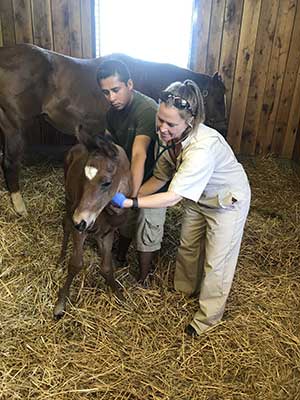
Please define Neonatal Care for Foals? Do all foals require neonatal care? What are the main cases in which neonatal care is advised?
Merriam-Webster.com defines NEONATE as : a newborn child or mammal. The “Neonatal Period” is the time when the newborn undergoes a physiological adjustment from the uterine environment to extrauterine life. In humans this is considered from birth to one month, however in the more precocious equine, we generally consider this to be the first 7 days of postnatal life.
Therefore when considering “neonatal care” we are referring to the routine preventative care and initial assessment of the newborn foal within the first 24 hours of life as well as any further follow up and treatment warranted based on physical exam and basic bloodwork.
All foals should be examined by a veterinary professional as there are many problems that begin with very subtle discrepancies that an owner may not become aware of until disease is advanced. Neonatal foals can deteriorate rapidly, so early detection and treatment is essential for the best outcome.
Neonatal care may be required sooner and be more extensive for higher risk foals such as those associated with dystocia (obstructed labor), premature placental separation (red bag), placentitis, prematurity, meconium staining (fetal diarrhea), failure of passive transfer, and those foals who have not stood and nursed by 3-4 hours of age.
Read more: Foal Q & A with Rood & Riddle’s Dr. Laurie Metcalfe
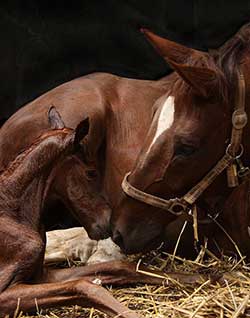
An unfortunate side effect for mares with foaling dates that occur unnaturally early in the year is longer gestations by an average of 10 days and foals born on average 10lbs lighter. Environmental light influences the development of the foal in utero and regulates when a mare will foal.
Nature intended that foals be born during the longer days of late spring and summer – and nature tends to have her way. Stimulating the longer day lengths associated with the natural breeding season by fitting pregnant mares with Equilume Light Masks or Stable Lights has been shown in clinical trials to eliminate these side effects in most mares, instead helping the mare deliver her foal on-time and with an optimum birth weight.
We recommended that Long Day light therapy be initiated for pregnant mares 90 days prior to their foaling due date for best breeding outcomes and optimum foal health.
Read more: The Equilume Light Masks Helps Pregnant Mares Foal on Time with Optimum Birth Weights
- Working with Horses to Develop Skills - Five Reasons Why It Works!
- Possible Link Between Selenium and Cribbing in Horses
- Lighting For Breeding and Performance
- Rider Biomechanics: Using Sensors to See How the Rider Influences the Horse (7:24)
- The Art of Seeing Lameness
- Wild Horses Can Re-balance The Ecosystem: Good For Outdoor Sports; Reduces Wildfires & Toxic Smoke
- Getting to the Point: Equine Acupuncture
- Equine Connection: International Horse Certification Course with Business Training
- Care of the Mare and Foal at Weaning
- Dental Basics: The Who, What, When, How and Why of Floating Teeth
- How Myofascial Bodywork Helps Horses
- The Effects of Routine Morning Exercise on Muscle Response
- Is the Great British Shire Horse About to Go Extinct?
- Red Light at Night Facilitates Recovery and Rest
- Breathing Easy: A Key to Equine Health and Performance
- Alfalfa and the Insulin Resistant Horse - The True Story
- Burning And Learning?
- The Canadian Horse: Discover a Versatile Breed Rich in History
- Core Equine Disease Risks Increase Amid Mosquito Season
- Equilume Stable Light Can Influence Body Composition and Biological Rhythms in Horses-in-training