




Health & Education
We all want the best care possible for our horses. The Heath & Education section covers both Learning Institutions, Organizations as well as many sources for equine assistance including Veterinarians and Farriers.
For those who want a to formally study horses, the Education section includes College Riding, Equine Studies, and Veterinary Schools. Learn about the wide variety of horses in the Horse Breeds section. Supplements and Treatments Therapy are also included in the section.
Everyone can learn from Fine Art and there are some specialty Museums that might surprise you.
Horses as a therapy partner enrich the lives of the disabled. These facilities are listed in our Therapeutic Riding section. To help children and young adults build confidence and grow emotionally, please see the resources available on the Youth Outreach page.
Looking for a place to keep your horse? You can find it in the Horse Boarding section. Traveling? Find a Shipping company or Horse Sitting service if your horse is staying home!
Want to stay up to date with the latest training clinics or professional conferences? Take a look at our Calendar of Events for Health & Education for the dates and locations of upcoming events.
Do we need to add more? Please use the useful feedback link and let us know!
by Jen Roytz
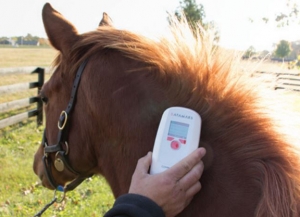
Microchipping is quickly becoming the global industry standard for equine identification, especially those being used for competition purposes. The FEI (the International Equestrian Federation–the international governing body of equestrian sports) began integrating microchips into the registration and identification process of horses competing internationally in 2013, and countries such as Australia, Germany, France, Great Britain, Ireland and New Zealand have been using microchips in Thoroughbreds for years. This past year the U. S. Equestrian Federation and U. S. Hunter Jumper Association began requiring horses be microchipped in order to compete in sanctioned competitions beginning Dec. 1, 2018.
It was in 2017 that The Jockey Club began requiring microchipping and digital registration of Thoroughbreds in the U. S., and that crop will begin racing later this year. Following suit, the Thoroughbred Racing Protective Bureau (TRPB) announced this past December that in 2020 any Thoroughbred making its first lifetime start will require a digital tattoo in order to race as traditional lip tattoos are phased out.
The digital tattoo is a digital certification of a horse’s identity that is accessible through The Jockey Club. To receive a digital tattoo, a horse will have its microchip scanned by a TRPB technician, who will authenticate the horse’s identity through comparing the foal photos and markings on file to a visual inspection. Once the horse’s identity is confirmed, the technician will take and upload updated photos of the horse to the breed registry.
Read more: Horse Health: Microchipping a Superior Form of Identification
by Eygló Svala Arnarsdóttir.
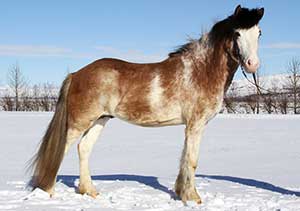
The story of Ellert broke in Iceland earlier this month, when the biweekly newspaper Bændablaðið ran a story on it. The four-year stallion is currently in training and shows good promise. Its parents are the honour prize stallion Sær frá Bakkakoti, and Kengála frá Búlandi, neither of which has a white spotting pattern, and should not be able to have a foal in this colour. Thus it was clear from the get-go that Ellert was unlike other horses. Ellert’s parentage has been confirmed with genetic testing.
It has yet to be seen what Ellert’s offspring will look like, what their colour will be like. It is possible that they will have a similar pattern to Ellert, but another possibility is that their colour will be completely white. In that case, this new colour belongs to a group of colours that have been termed dominant white. Currently, dominant white is not known to exist in horses in Iceland.
- Foal Q & A with Rood & Riddle’s Dr. Laurie Metcalfe
- The Equilume Light Masks Helps Pregnant Mares Foal on Time with Optimum Birth Weights
- Working with Horses to Develop Skills - Five Reasons Why It Works!
- Possible Link Between Selenium and Cribbing in Horses
- Lighting For Breeding and Performance
- Rider Biomechanics: Using Sensors to See How the Rider Influences the Horse (7:24)
- The Art of Seeing Lameness
- Wild Horses Can Re-balance The Ecosystem: Good For Outdoor Sports; Reduces Wildfires & Toxic Smoke
- Getting to the Point: Equine Acupuncture
- Equine Connection: International Horse Certification Course with Business Training
- Care of the Mare and Foal at Weaning
- Dental Basics: The Who, What, When, How and Why of Floating Teeth
- How Myofascial Bodywork Helps Horses
- The Effects of Routine Morning Exercise on Muscle Response
- Is the Great British Shire Horse About to Go Extinct?
- Red Light at Night Facilitates Recovery and Rest
- Breathing Easy: A Key to Equine Health and Performance
- Alfalfa and the Insulin Resistant Horse - The True Story
- Burning And Learning?
- The Canadian Horse: Discover a Versatile Breed Rich in History