




Health & Education
We all want the best care possible for our horses. The Heath & Education section covers both Learning Institutions, Organizations as well as many sources for equine assistance including Veterinarians and Farriers.
For those who want a to formally study horses, the Education section includes College Riding, Equine Studies, and Veterinary Schools. Learn about the wide variety of horses in the Horse Breeds section. Supplements and Treatments Therapy are also included in the section.
Everyone can learn from Fine Art and there are some specialty Museums that might surprise you.
Horses as a therapy partner enrich the lives of the disabled. These facilities are listed in our Therapeutic Riding section. To help children and young adults build confidence and grow emotionally, please see the resources available on the Youth Outreach page.
Looking for a place to keep your horse? You can find it in the Horse Boarding section. Traveling? Find a Shipping company or Horse Sitting service if your horse is staying home!
Want to stay up to date with the latest training clinics or professional conferences? Take a look at our Calendar of Events for Health & Education for the dates and locations of upcoming events.
Do we need to add more? Please use the useful feedback link and let us know!
by William E. Simpson II
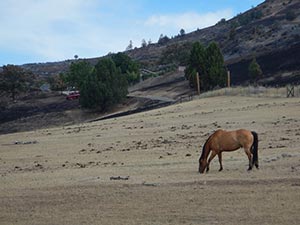
Some initial observations of the positive effect that wild horses have on the fire regime
First let me say that after 7-days on the fire line, I am pretty beat... in order to make morning briefing at Camp Creek (aka D.P. 43) at 8:00, I have to wake up at 5 AM to get at least get some of my chores done, and then after attending to my writing when I get home, I hit the pillow about 11:00. So I have some token idea from this recent experience of what the firefighters are dealing with as to fatigue. And in this triple digit heat, firefighters wearing a full Nomex fire suit with a layer of cotton clothing is not helping.
Obviously our local 52 adult wild horses have very little spotty but good effect on fuel loading as ODF firefighter Jake K. said. This is because their work is spread-out over grass and brush fuels across about 2-thousand acres where they range. Nevertheless, their evolved signature mutualisms with forbs, plants and trees can be observed and are undeniable.
by Liz Piacentini
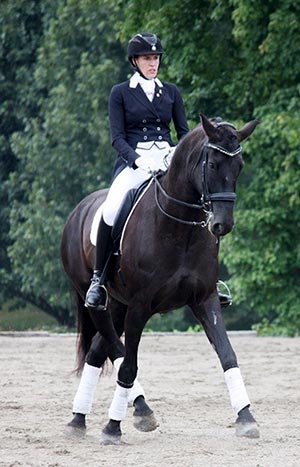
Canada’s best kept secret is out! The Canadian Horse is successfully participating in just about every discipline. While not well known, the Canadian once played a vital role in Canadian and US history. Recognized as the National Horse of Canada since 2002, the Canadian is big in heart and strength, making the breed both a serious competitor and enjoyable equine partner.
The Canadian horse, or le Cheval Canadien, has been part of North American history for over 350 years. The breed’s ancestors originated from the Royal Stables of France where King Louis XIV housed his collection of over 2,000 horses of the finest stock.
When the French settled Quebec, King Louis XIV recognized early settlers would require horses. Between 1665-1671, he sent several shipments of carefully selected horses to help develop this rugged new land that was void of existing herds. He chose horses with strength and soundness to help settlers clear and farm the land, yet elegant enough to transport Noblemen and Clergy. According to a 2014 Texas A&M genetic study conducted by E. Gus Cothran, the original mares and stallions were likely of Breton, Norman and Belgian stock.
The Canadian horse quickly became the early settlers’ biggest asset. His compact, muscular body, thick winter coat, rock-hard feet, and willing attitude earned him the nickname, “the Little Iron Horse." For 200 years, the founding herd bred in relative isolation, becoming a genetically distinct breed. By the mid-1800’s, the population reached an estimated 150,000 horses and earned the reputation for out-pulling and out-working larger breeds.
Read more: The Canadian Horse: Discover a Versatile Breed Rich in History
- Core Equine Disease Risks Increase Amid Mosquito Season
- Equilume Stable Light Can Influence Body Composition and Biological Rhythms in Horses-in-training
- Inflammation: It’s Not Just In Joints
- Horsepower: How Digital Technology is Transforming the Equine World
- Exercising and Training Horses in Hot Weather
- Choose Hemp Instead of Soy for Your Horse!
- Equine Odontoclastic Tooth Resorption and Hypercementosis
- What is the Ideal Conditioning Program for an Eventer?
- Is Your Horse a Slave in a Sand Box?
- Surprise! It's Twins!
- Dental Surgery and Extractions
- A Rejected Foal and a Brokenhearted Mare Saved Each Other
- Miniature Horse Therapy: Great Big Good Things in Small Packages
- Man O’ War Project Helping the Soldiers of War Heal
- Is Icing Still a Valid Treatment for Injuries?
- Must-Have Secret Training Tools
- My Daughter is My Hero
- Horse Training: 7 Essential Steps for Safely Handling Your Horse's Feet
- Kinesiology Taping for Horses—It’s a Thing!
- AVMA Proposes Elimination Of Farrier Exemption From Veterinary Practice Act