




Health & Education
We all want the best care possible for our horses. The Heath & Education section covers both Learning Institutions, Organizations as well as many sources for equine assistance including Veterinarians and Farriers.
For those who want a to formally study horses, the Education section includes College Riding, Equine Studies, and Veterinary Schools. Learn about the wide variety of horses in the Horse Breeds section. Supplements and Treatments Therapy are also included in the section.
Everyone can learn from Fine Art and there are some specialty Museums that might surprise you.
Horses as a therapy partner enrich the lives of the disabled. These facilities are listed in our Therapeutic Riding section. To help children and young adults build confidence and grow emotionally, please see the resources available on the Youth Outreach page.
Looking for a place to keep your horse? You can find it in the Horse Boarding section. Traveling? Find a Shipping company or Horse Sitting service if your horse is staying home!
Want to stay up to date with the latest training clinics or professional conferences? Take a look at our Calendar of Events for Health & Education for the dates and locations of upcoming events.
Do we need to add more? Please use the useful feedback link and let us know!
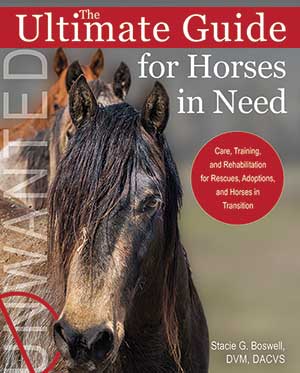
Today, more and more individuals are choosing to give an unwanted horse a second chance. Whether through purchase, adoption, or rescue, the horse in the “wrong” situation has a chance to find his way to the “right one.” Dr. Stacie Boswell’s goal is to restore health and comfort to every horse in transition, and to help him learn how to function as the horse he is expected to be. In her new book THE ULTIMATE GUIDE FOR HORSES IN NEED she has compiled hundreds of case studies highlighting the areas of concern in the rescue and details proactive methods of handling common medical problems and health issues, from nutrition and dentistry to deworming and hoofcare to traumatic injury and emergency rescue scenarios.
“Dr. Stacie Boswell has created a book that is packed with extremely valuable information for not only equine rescues, but a book that horse owners in general can also glean a lot from. She takes a pragmatic and all-inclusive approach to explaining the good, the bad, and the ugly involved when it comes to operating an equine rescue successfully. The Ultimate Guide for Horses in Need is a must-have book for both current rescues and those thinking of taking the leap into horse rescue—the importance of knowledge in this field cannot be underestimated if you want to run a truly successful rescue operation, and Dr. Boswell provides a solid foundation of that knowledge.” —Ashley Harkins, Director, United Horse Coalition
Read more: A Vet’s Guidance for Saving Horses in Need, Plus Training Your Eye to Nail the Distance
by Eleanor M. Kellon, VMD
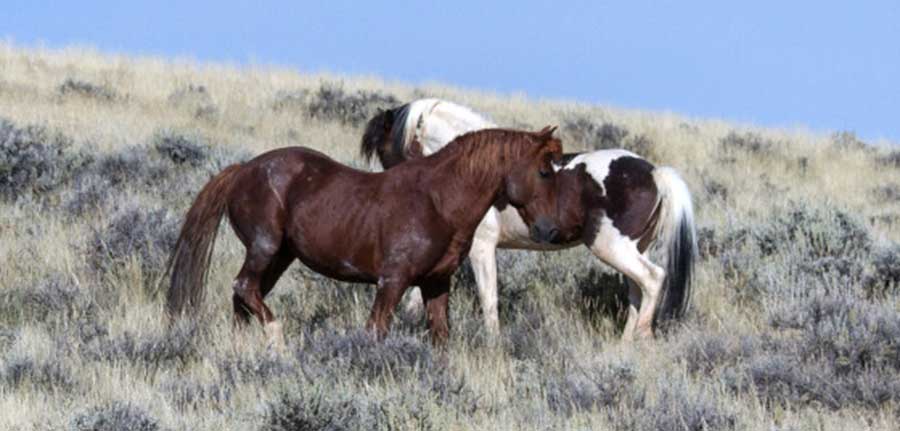
Eating grass seems like the most natural thing in the world for a horse, but the grass in managed pastures bears little resemblance to what is available to a feral horse. The other part of the scenario that is very different, is that the feral horse will often travel an average of 20 miles a day — much more exercise than domesticated horses get.
Exercise is the best way to keep insulin and glucose in good control. Otherwise, tight restriction of sugar and starch intake to no more than 10% of the diet is needed.
Spring growths of grass at their peak almost invariably exceed that limit. They are extremely dangerous for any horse with problems in controlling insulin. Areas that experience considerable regrowth in the fall after high summer heat, may have a similar high sugar scenario at that time.
- Disaster Preparedness
- Need Help Reopening Your Equine Business Amidst Covid-19? Barton Rodgers TempDefend™ Sensor Solution is Your Answer!
- Why I Did the Mustang Makeover—and Why I’d Do It Again
- Improve the Horse’s Balance, Movement, and Self-Carriage with These Easy Tail Exercises
- Q&A: Managing Arthritis in Horses
- The Benefits of Riding to Music
- How to Feed a Severely Neglected Rescue Horse
- Josh Lyons with Lyons Legacy Partner With Horses in Need
- Equine Disaster Preparation and Response
- Colostrum -- An Exceptional Superfood!
- What the Heck is PEMF Anyway?
- Deworming Your Horse? Reference this Comprehensive Q&A
- Equine Enteric Coronavirus
- Is Your Horse Protected Against These Disease Risks?
- Equine-Facilitated Psychotherapy: Facing Trauma With a Horse by Their Sides
- University of Kentucky’s Department of Veterinary Science Responds to Nocardioform Placentitis
- Odd Couples
- Born to Stretch — Long and Low
- Don’t Be So Hard On Yourself; 10 Ways to Stay Positive About Showing
- 3 Tips for Horse Riding With Epilepsy (and Confidence)