




Health & Education
We all want the best care possible for our horses. The Heath & Education section covers both Learning Institutions, Organizations as well as many sources for equine assistance including Veterinarians and Farriers.
For those who want a to formally study horses, the Education section includes College Riding, Equine Studies, and Veterinary Schools. Learn about the wide variety of horses in the Horse Breeds section. Supplements and Treatments Therapy are also included in the section.
Everyone can learn from Fine Art and there are some specialty Museums that might surprise you.
Horses as a therapy partner enrich the lives of the disabled. These facilities are listed in our Therapeutic Riding section. To help children and young adults build confidence and grow emotionally, please see the resources available on the Youth Outreach page.
Looking for a place to keep your horse? You can find it in the Horse Boarding section. Traveling? Find a Shipping company or Horse Sitting service if your horse is staying home!
Want to stay up to date with the latest training clinics or professional conferences? Take a look at our Calendar of Events for Health & Education for the dates and locations of upcoming events.
Do we need to add more? Please use the useful feedback link and let us know!
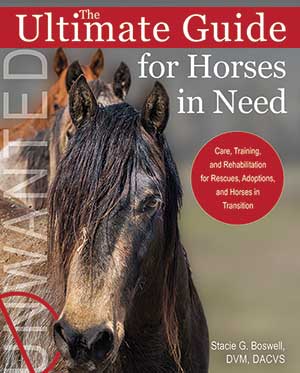
By Dr. Stacie Boswell
In order to prepare yourself and your horse for a possible disaster, the first step is to learn about your locale. Evaluate disasters your community has experienced in the past. Look at your terrain and determine what type of disaster is most likely. Consider where, specifically, your horse is housed. He could be at the base of a forest, near a river, or on the plains, rendering him susceptible to fire, flood, or tornadoes. If you live near railroad tracks or industry, hazmat exposure may be a real threat.
Find your local community emergency response team (CERT). Contact may be available through your local extension office. There is a CERT in every state. Learn what they recommend—they know local disasters best. Although many evacuation guidelines are general, it does you no good to prepare for a volcano if you live in Kansas. Training and credentialing workshops are available nationwide for individuals interested in learning to be a team member of a certified rescue effort.
Plan Ahead
The severity and number of weather-related disasters is on the rise. According to a Federal Emergency Management Agency (FEMA) survey, fewer than 40 percent of people have an emergency plan. After careful consideration of the possible disasters that may strike in your area, organize yourself and prepare. Your horses are your responsibility, and good preparation will keep you ready in case you are displaced for any reason.
by CL Cimino
In 2020, seemingly without warning, the world changed. The COVID-19 virus seemed to attack everywhere, simultaneously. Businesses and lives were disrupted. Now we focus on getting back to work safely. We must figure out the next steps—how to open our business and how to stay in business if there is a second wave of COVID-19. And, how do we prepare for the future beyond COVID-19.
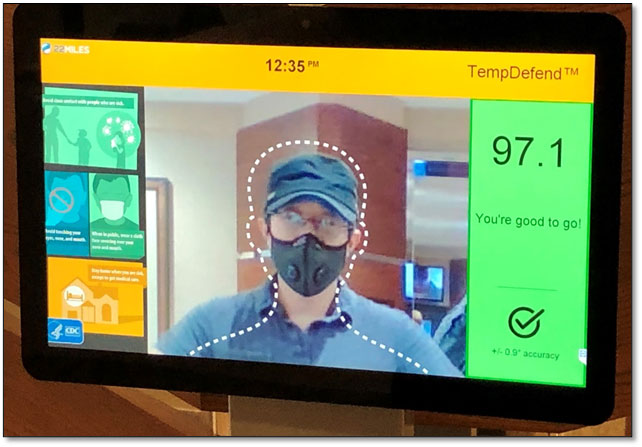
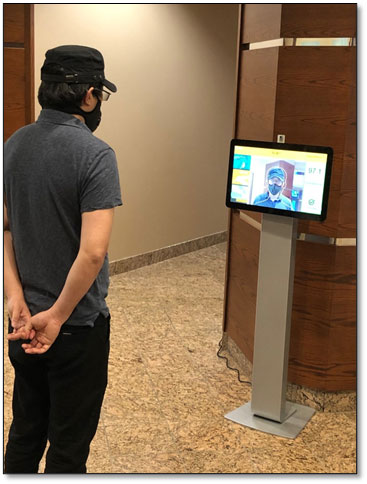
We are concerned first-and-foremost with the welfare and health of employees, participants, fans and customers - what are the initial steps a business should follow? Businesses are required to provide reasonable protections for their workers. Thermal Scanning is a critical component of demonstrating to your customers, local, state and government agencies that your business is taking reasonable protection measures.
March 17, 2020 the U.S. Equal Employment Opportunity Commission (EEOC) issued an update to its guidance that now expressly acknowledges that employers may implement temperature screening measures in response to the current COVID-19 pandemic. The EEOC noted that “because the CDC (Centers for Disease Control and Prevention) and state and local health authorities have acknowledged community spread of COVID-19, and issued attendant precautions, employers may measure employees’ body temperature.”
Challenges for the Equine Business
No business is immune to the ravages of the virus: we must figure out what to do—how to stay in business—and how to protect ourselves and others while we wait for the long-awaited vaccination that hopefully will save millions of lives.
So, what can the equine industry do, to safeguard against the spread of the virus and assure our participants, fans and customers that horse business administrators are concerned first-and-foremost with their welfare and health?
Racetracks, polo grounds, veterinary clinics, horse shows, rodeos, boarding farms, horse sales pavilions—all have different roles within multi-billion-dollar international equine industry. The reality is that, diverse as may be their missions—they all have two things in common, the very foundations of their endeavors: horses, and the humans who love them. Those humans may be owners, trainers, farriers, grooms, hotwalkers, or fans. Whichever the role, the humans in horse businesses need to be protected from the virus.
- Why I Did the Mustang Makeover—and Why I’d Do It Again
- Improve the Horse’s Balance, Movement, and Self-Carriage with These Easy Tail Exercises
- Q&A: Managing Arthritis in Horses
- The Benefits of Riding to Music
- How to Feed a Severely Neglected Rescue Horse
- Josh Lyons with Lyons Legacy Partner With Horses in Need
- Equine Disaster Preparation and Response
- Colostrum -- An Exceptional Superfood!
- What the Heck is PEMF Anyway?
- Deworming Your Horse? Reference this Comprehensive Q&A
- Equine Enteric Coronavirus
- Is Your Horse Protected Against These Disease Risks?
- Equine-Facilitated Psychotherapy: Facing Trauma With a Horse by Their Sides
- University of Kentucky’s Department of Veterinary Science Responds to Nocardioform Placentitis
- Odd Couples
- Born to Stretch — Long and Low
- Don’t Be So Hard On Yourself; 10 Ways to Stay Positive About Showing
- 3 Tips for Horse Riding With Epilepsy (and Confidence)
- Physical Signs of Damage Caused by Ill-Fitting Saddles
- Conception Failure in Mares: Seven Causes