




Health & Education
We all want the best care possible for our horses. The Heath & Education section covers both Learning Institutions, Organizations as well as many sources for equine assistance including Veterinarians and Farriers.
For those who want a to formally study horses, the Education section includes College Riding, Equine Studies, and Veterinary Schools. Learn about the wide variety of horses in the Horse Breeds section. Supplements and Treatments Therapy are also included in the section.
Everyone can learn from Fine Art and there are some specialty Museums that might surprise you.
Horses as a therapy partner enrich the lives of the disabled. These facilities are listed in our Therapeutic Riding section. To help children and young adults build confidence and grow emotionally, please see the resources available on the Youth Outreach page.
Looking for a place to keep your horse? You can find it in the Horse Boarding section. Traveling? Find a Shipping company or Horse Sitting service if your horse is staying home!
Want to stay up to date with the latest training clinics or professional conferences? Take a look at our Calendar of Events for Health & Education for the dates and locations of upcoming events.
Do we need to add more? Please use the useful feedback link and let us know!
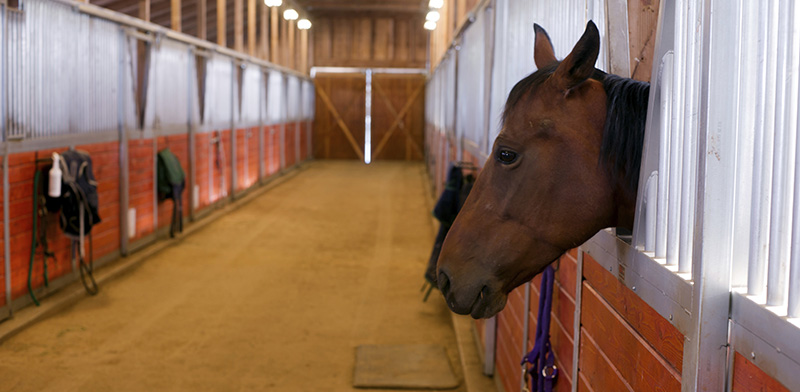
When the winds are up and temperatures drop we want our horses to be comfortable and protected. Nestling into a cozy stable may seem like a good solution but there are health risks lurking in a tightly closed up barn.
That cozy barn may not be best for lung health.
Horses actually breathe easier in cold, dry air. However, this winter advantage is lost when horses are confined to a poorly ventilated barn where humidity and particulate matter in the air is high.
A variety of airborne substances have been implicated in causing lung irritation. Ammonia from bacterial breakdown of urea in urine is a well documented lung irritant in a variety of species. "Organic dust" is also an offender. This includes microscopic particulate matter from mites, plant material (e.g. beta-glucans), feces, bacteria and their products (endotoxin) and fungal spores.
Keeping stalls clean and the building well ventilated are the first steps in reducing exposure. Using wood chips or synthetic bedding (e.g. paper based) reduces plant and fungal matter but must be used in all the stalls. Horses are also exposed when hay or straw are stored in the same building, even in a loft. Horses with signs of respiratory tract irritation should have their hay and bucket fed meals thoroughly wet down. Always strive to remove horses from the barn when stalls are being cleaned and aisles swept.
Read more: Air Quality in the Barn - That Cozy Barn May Not Be Best for Lung Health
Waiting until the wildfire approaches dangerously close is no time to draw up a disaster preparedness plan. Learning the hazards of storing hay is too late after the barn is reduced to ashes and all is lost. It is not a scenario that one fathoms will ever happen to them, until it does.
Returning expert guest speaker Rebecca Gimenez-Husted will be available all week to provide insight and answer all your burning questions. Gimenez has travelled the world providing training in Technical Large Animal Rescue Techniques (TLAER website) and has published numerous critiques, techniques and journal articles on the topic. Rebecca edited the only textbook available to the fire service and veterinarians on technical rescue of large animals.
As a volunteer firefighter in Gray, GA, Rebecca is doing R&D work with University of Edinburgh (UK), EKU (KY) and several veterinary schools. A past Logistics Officer for FEMA’s Veterinary Medical Assistance Team (VMAT -2), decorated combat veteran and a Major in the US Army Reserves (retired); Rebecca offers a wealth of information and is active in various organizations related to disaster preparedness.
Read more: Practice Preparedness and Prevention - Resources on Barn Fire Prevention
- Fecal Transplants for Animals
- I Have the Wrong Horse: Now What?
- Gratitude & Horses: Healing the Cracked Places
- From the Research Farm to Your Feed Room: Applying Study Results to Improve KER EO-3
- Neuromuscular Support Nutrients
- The Roadmap to PTSD in Horses
- Is Your Horse Happy and Comfortable? Find Out with This Simple Body Exploration
- Appaloosa - The Most Beautiful Horse Breed in the World
- Stress and Your Horse's Brain
- Horse Training Power Tip: Loading Difficult Horses Into Trailers
- Electrolyte Problems in Endurance Horses
- U.S. Rep. Steve Cohen Ushers Horse Transportation Safety Act to Passage
- A Vet’s Guidance for Saving Horses in Need, Plus Training Your Eye to Nail the Distance
- Grazing the Metabolic Horse
- Disaster Preparedness
- Need Help Reopening Your Equine Business Amidst Covid-19? Barton Rodgers TempDefend™ Sensor Solution is Your Answer!
- Why I Did the Mustang Makeover—and Why I’d Do It Again
- Improve the Horse’s Balance, Movement, and Self-Carriage with These Easy Tail Exercises
- Q&A: Managing Arthritis in Horses
- The Benefits of Riding to Music