



Health & Education
We all want the best care possible for our horses. The Heath & Education section covers both Learning Institutions, Organizations as well as many sources for equine assistance including Veterinarians and Farriers.
For those who want a to formally study horses, the Education section includes College Riding, Equine Studies, and Veterinary Schools. Learn about the wide variety of horses in the Horse Breeds section. Supplements and Treatments Therapy are also included in the section.
Everyone can learn from Fine Art and there are some specialty Museums that might surprise you.
Horses as a therapy partner enrich the lives of the disabled. These facilities are listed in our Therapeutic Riding section. To help children and young adults build confidence and grow emotionally, please see the resources available on the Youth Outreach page.
Looking for a place to keep your horse? You can find it in the Horse Boarding section. Traveling? Find a Shipping company or Horse Sitting service if your horse is staying home!
Want to stay up to date with the latest training clinics or professional conferences? Take a look at our Calendar of Events for Health & Education for the dates and locations of upcoming events.
Do we need to add more? Please use the useful feedback link and let us know!
by Dr. Eleanor Kellon, VDM
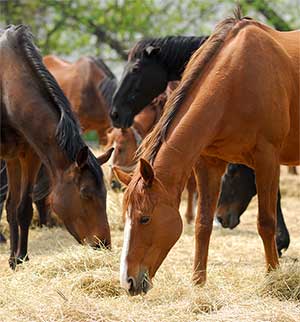
It's never bad to be aware of things that may be toxic to your horse, but precautions can be carried too far if you don't know the details. Yes, selenium is a potentially toxic mineral (they all are) but deficiency is much more common.
An owner contacted me because she had a hay selenium assay done which showed she was feeding about 3 mg per day from the hay, but she was horrified to realize the horse had been receiving another 2 mg per day on top of that. The bare minimum requirement for an average size horse is 1 to 2 mg/day.
However, bare minimum requirements are a long way away from toxic and even the 5 mg/day is considerably below any intake that would be dangerous. It is estimated an average size horse would need to take in at least 20 mg/day to be at risk for chronic toxicity - i.e. toxicity that takes weeks to months to show up. Acute toxicity takes over 1500 mg/day.
Naturally occurring chronic toxicity can occur with hays having over 5 ppm selenium ( = 50 mg in 22 lbs of hay) but this is rare. Natural toxicity is more likely in animals grazing on very high selenium soils where wild selenium accumulator plants, which contain several hundred ppm selenium, are growing. The highest selenium soils in the USA occur in pockets of Wyoming and South Dakota. These soils are high saline shales with an alkaline pH.
Acute toxicity causes a neurological derangement called "blind staggers" and is fatal. Chronic toxicity, "alkali disease", causes loss of mane and tail hair plus disrupted hoof growth resulting in separation of the hoof capsule at the coronary band. Another symptom of selenium toxicity is a DMSO or garlic-like odor on the breath. Recovery from chronic toxicosis takes up to 10 months if the hooves slough off. Again, both of these are rare.
From the UC Davis Veterinary Genetics Laboratory
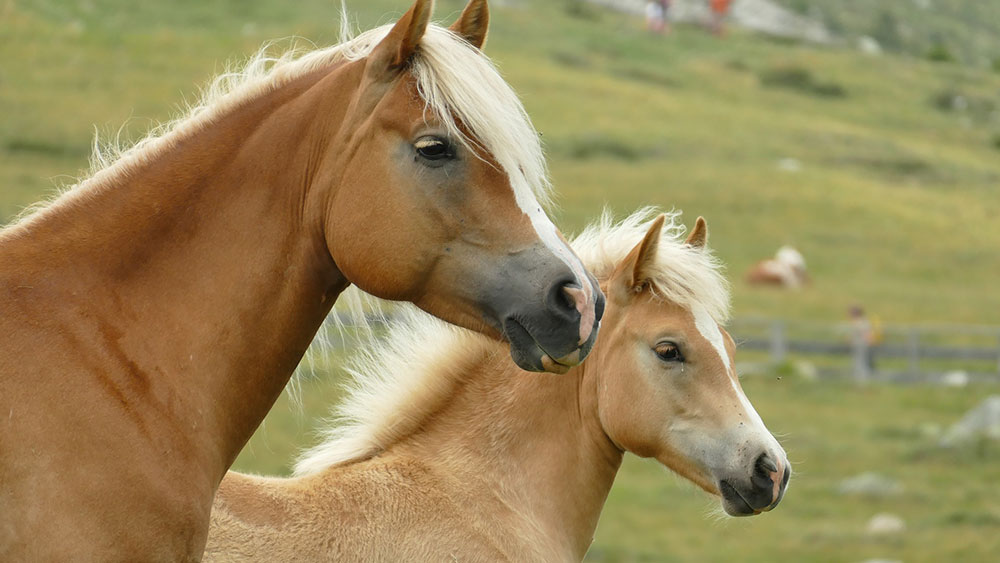
New research has reported the warmblood fragile foal syndrome (WFFS) allele in 21 breeds. The study, an international collaboration led by UC Davis Veterinary Genetics Laboratory Director Rebecca Bellone, screened more than 4,000 horses from 38 different horse breeds in the United States and Europe.
Affected breeds were mainly warmbloods, with the highest carrier frequencies (17%) observed in Hanoverians and Danish Warmbloods. The allele was not detected in two warmblood breeds, the Swedish Warmblood and Zangersheide Warmblood, but sample sizes for both breeds in this study were small (16 and 10, respectively). The average WFFS carrier frequency across all warmbloods tested was 11%. Non-warmblood breeds included Haflinger, American Sport Pony, and Knabstrupper. The WFFS allele had previously been reported at a low frequency in Thoroughbreds (2.4% carrier frequency in 716 Thoroughbreds tested).
The study also investigated the long standing hypothesis that the mutation originated in the Arabian breed, specifically with the stallion Bairactar Or. Ar., based on a similar disease that was reported in the 19th century. DNA from a museum sample from the stallion did not contain the WFFS allele. Further testing in 300 Arabians did not support an Arabian origin for this disease. The origin of the WFFS allele remains unknown.
Warmblood fragile foal syndrome is an inherited defect of connective tissue characterized by hyperextensible, abnormally thin, fragile skin and mucous membranes that are subject to open lesions. The disease is present at birth and affected foals are euthanized shortly after birth due to the poor prognosis of this untreatable condition.
- Veterinarians are Considering Lecithin for Treating and Preventing Ulcers
- Tetanus: Your Horse’s Risk May Be Greater Than You Think
- Pitfalls of Fecal Checks for Parasites
- Cavallo Q&A: Horse Time for Healing
- The Last Half of Pregnancy
- Equestrian Diversity Project Spotlight: Ebony Horsewomen
- Equine Guelph at the University of Guelph in Canada presents "Journey of the Digestive Tract"
- Tennessee Walking Horse Stakeholders, Animal Protection Organizations Announce Historic Effort to End Abusive Practice of ‘Soring’ and Ensure Sound Economic Future for the Breed
- Air Quality in the Barn - That Cozy Barn May Not Be Best for Lung Health
- Practice Preparedness and Prevention - Resources on Barn Fire Prevention
- Fecal Transplants for Animals
- I Have the Wrong Horse: Now What?
- Gratitude & Horses: Healing the Cracked Places
- From the Research Farm to Your Feed Room: Applying Study Results to Improve KER EO-3
- Neuromuscular Support Nutrients
- The Roadmap to PTSD in Horses
- Is Your Horse Happy and Comfortable? Find Out with This Simple Body Exploration
- Appaloosa - The Most Beautiful Horse Breed in the World
- Stress and Your Horse's Brain
- Horse Training Power Tip: Loading Difficult Horses Into Trailers