





Health & Education
We all want the best care possible for our horses. The Heath & Education section covers both Learning Institutions, Organizations as well as many sources for equine assistance including Veterinarians and Farriers.
For those who want a to formally study horses, the Education section includes College Riding, Equine Studies, and Veterinary Schools. Learn about the wide variety of horses in the Horse Breeds section. Supplements and Treatments Therapy are also included in the section.
Everyone can learn from Fine Art and there are some specialty Museums that might surprise you.
Horses as a therapy partner enrich the lives of the disabled. These facilities are listed in our Therapeutic Riding section. To help children and young adults build confidence and grow emotionally, please see the resources available on the Youth Outreach page.
Looking for a place to keep your horse? You can find it in the Horse Boarding section. Traveling? Find a Shipping company or Horse Sitting service if your horse is staying home!
Want to stay up to date with the latest training clinics or professional conferences? Take a look at our Calendar of Events for Health & Education for the dates and locations of upcoming events.
Do we need to add more? Please use the useful feedback link and let us know!
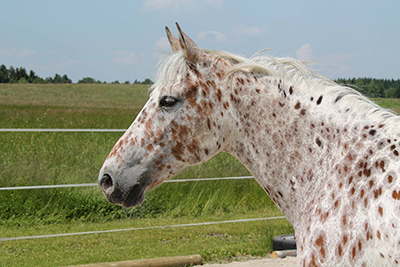
Walkaloosa Horse Association History
Although the Walkaloosa Registry is fairly new, the Walkaloosa horse has been around for centuries.
Appaloosa breeders claim to have the oldest recognizable breed known to man, a claim which is backed by drawings of spotted horses in the pre-historic ice caves of France. Paso Fino breeders consider their breed to be the oldest breed in the Western Hemisphere; the ancestors of the Paso Fino came to the New World with Columbus on his second voyage from Spain. The Paso Fino horses were the preferred mounts of the Conquistadors; Paso Fino literally translated is “smooth gait” and some of those horses also carried the spotted coat patterns of what is known as the Appaloosa today.
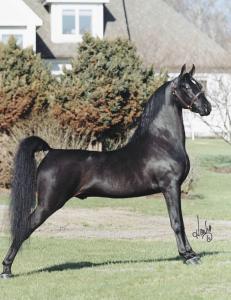
Courtesy of the American Morgan Horse Association
In 1789, George Washington became the first president of the United States and the U.S. Constitution was signed into law. That same year in Springfield, Massachusetts, a small bay colt named Figure was born. This colt was instrumental in building the new country and founded America's original equine breed, the Morgan.
The Morgan was the first recognized horse breed in the United States. It is the official state animal of both Vermont and Massachusetts. Other breeds have claimed existence in colonial times, but today only the Morgan can trace his bloodlines to a common ancestor. The Morgan has influenced other breeds, including Tennessee Walking Horses, Quarter Horses, Standardbred, and American Saddlebreds.
The Morgan horse is easily recognized by his proud carriage, upright graceful neck, and distinctive head with expressive eyes. Deep bodied and compact, the Morgan has strongly muscled quarters. His intelligence, willingness, zest for life, and good sense is blended with soundness of limb, athleticism, and stamina. In addition, Morgan thriftiness and longevity have made this breed a good bargain for more than 200 years.
- Big, Black and Beautiful! The History of the Majestic Friesian Horse
- Unwanted Horse Coalition Releases New Operation Gelding Program Policies for 2017
- Introducing the Trakehner: The Oldest of Warmblood Breeds
- Profiling the American Quarter Horse, A Very Versatile Breed
- Small but Mighty! See the Benefits of Feed Balancers
- Is My Hay Green Enough?
- Britain's Oldest Horse Breed in Battle for Survival
- Moriesians: Friesians and Morgans
- Horsemanship and Behavior
- Akhal-Teke, a Horse Like Shimmering Gold
- Six Ways to Feed Performance Horses for Greater Achievement
- Meeting Increased Summer Hydration Needs
- Meet the American Bashkir Curly Horse Breed
- Joint Prep and Conditioning for Show Season
- Why Does My Performance Horse Have a Weak Top Line?
- Bringing Compassion to the Horse Industry
- Horse Tales for the Soul "Never Look a Draft Horse in the Mouth"
- 5 Simple Ways to Increase the Range of Motion in Your Hips
- 7 Equine Emergencies and How to Treat Them
- Equine Therapy 502 (video feature)