





Health & Education
We all want the best care possible for our horses. The Heath & Education section covers both Learning Institutions, Organizations as well as many sources for equine assistance including Veterinarians and Farriers.
For those who want a to formally study horses, the Education section includes College Riding, Equine Studies, and Veterinary Schools. Learn about the wide variety of horses in the Horse Breeds section. Supplements and Treatments Therapy are also included in the section.
Everyone can learn from Fine Art and there are some specialty Museums that might surprise you.
Horses as a therapy partner enrich the lives of the disabled. These facilities are listed in our Therapeutic Riding section. To help children and young adults build confidence and grow emotionally, please see the resources available on the Youth Outreach page.
Looking for a place to keep your horse? You can find it in the Horse Boarding section. Traveling? Find a Shipping company or Horse Sitting service if your horse is staying home!
Want to stay up to date with the latest training clinics or professional conferences? Take a look at our Calendar of Events for Health & Education for the dates and locations of upcoming events.
Do we need to add more? Please use the useful feedback link and let us know!
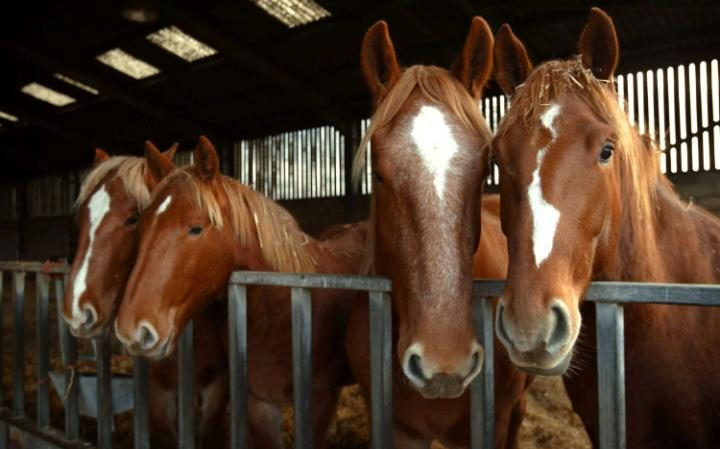
by Patrick Sawer, Senior Reporter, Telegraph UK
Photo Credit: Justin Sutcliffe, Rare Suffolk Punch horses at the Hollesly Open Prison Stud Farm
For centuries they ploughed the fields of England, shaping much of the landscape of East Anglia, before being harnessed for battle during the First World War.
Yet the Suffolk Punch horse - Britain's oldest native breed - is now critically endangered, its numbers in sharp decline a victim of the rapid mechanisation of agriculture.
The plight of the breed – deemed to be rarer than the giant panda or even the Siberian tiger – has moved one landowner to appeal for an organised campaign to save them from oblivion.
If we lost the Suffolk Punch we couldn’t really say we are a nation of animal lovers.
Clare, Countess of Euston, whose estate in Suffolk was once worked by Suffolk Punch horses, said Britain should feel ashamed of itself if it stood by and did nothing to save the breed.
“If we lost the Suffolk Punch I think it would mean we couldn’t really say we are a nation of animal lovers. They are the most magnificent and beautiful of the breeds,” she said.
There are now just 300 Suffolk Punch horses left in the UK, threatening the health and viability of the breed which once formed the backbone of rural life.
Standing sixteen hands high and weighing over a tonne, yet graceful at full gallop, the Suffolk Punch has been described as having “the face of an angel and the backside of a farmer’s daughter”.
Read more: Britain's Oldest Horse Breed in Battle for Survival
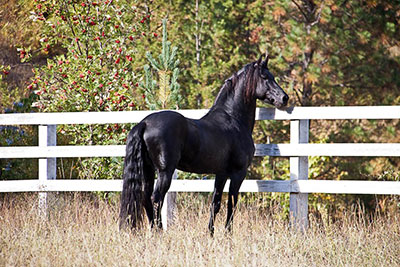
Moriesians: A combination of Friesians (from the dark ages of Europe) and Morgans (from Colonial America).
The Moriesian Horse is the result of a breeding program initiated in the United States to produce horses that combine the elegance and charisma of the Friesian with the versatility of the Morgan. They display an up-headed stature, expressive face, compact body and long thick mane and tail.
Their slope of shoulder and movement tends to be more Friesian-like which gives them a regal appearance. Their average size of 15.0 to 16.0 hands makes them comfortable for most riders.
Lighter boned than a Friesian, Moriesians have more of the qualities sought after in a sport horse. The balance and symmetry of this animal is truly art in motion. They make natural show animals that are magnificent to watch, ride and drive.
Many have shown themselves to excel in combined driving competitions and have proven apt competitors in classical dressage.
Moriesians are adaptable and eager to perform. Coming from two breeds known for their heart, mild manners, and friendly dispositions Moriesians make wonderful family horses. The breed is honest and willing to please. Its versatility brings lasting value to the owner.
The Friesian horse reportedly dates back 3000 years though the horse we know today was developed in the twelfth century in northern Europe. Friesians were ridden by the Teutonic Knights and used as war horses for the crusades. They could carry large loads, exist on meager rations, and were agile enough to be effective in battle.
- Horsemanship and Behavior
- Akhal-Teke, a Horse Like Shimmering Gold
- Six Ways to Feed Performance Horses for Greater Achievement
- Meeting Increased Summer Hydration Needs
- Meet the American Bashkir Curly Horse Breed
- Joint Prep and Conditioning for Show Season
- Why Does My Performance Horse Have a Weak Top Line?
- Bringing Compassion to the Horse Industry
- Horse Tales for the Soul "Never Look a Draft Horse in the Mouth"
- 5 Simple Ways to Increase the Range of Motion in Your Hips
- 7 Equine Emergencies and How to Treat Them
- Equine Therapy 502 (video feature)
- Deworming Medications, Residual Time, and Egg Reappearance
- Accuracy of Testing
- Why should you do Fecal Egg Counts on your Horse?
- Horse Breeds