



Health & Education
We all want the best care possible for our horses. The Heath & Education section covers both Learning Institutions, Organizations as well as many sources for equine assistance including Veterinarians and Farriers.
For those who want a to formally study horses, the Education section includes College Riding, Equine Studies, and Veterinary Schools. Learn about the wide variety of horses in the Horse Breeds section. Supplements and Treatments Therapy are also included in the section.
Everyone can learn from Fine Art and there are some specialty Museums that might surprise you.
Horses as a therapy partner enrich the lives of the disabled. These facilities are listed in our Therapeutic Riding section. To help children and young adults build confidence and grow emotionally, please see the resources available on the Youth Outreach page.
Looking for a place to keep your horse? You can find it in the Horse Boarding section. Traveling? Find a Shipping company or Horse Sitting service if your horse is staying home!
Want to stay up to date with the latest training clinics or professional conferences? Take a look at our Calendar of Events for Health & Education for the dates and locations of upcoming events.
Do we need to add more? Please use the useful feedback link and let us know!
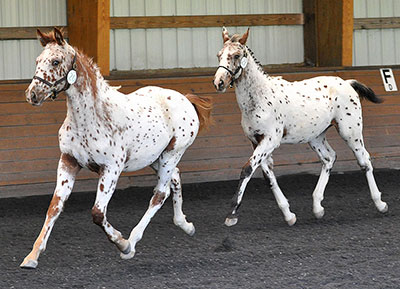
The Knabstrupper horse is an old and rare breed, originally developed in Denmark the horses come from the same original stock as the Spanish horses that gave rise to the Appaloosa. The Knabstrupper and the Appaloosa share the same unusual color patterns, they are the ‘spotted’ horses. The color variations range from the whole body spots of the classical Leopard pattern (sometimes called “Tiger’ pattern), in bay, black and chestnut to the blanket spotting and to varnish roan and snowflake patterns.
While their unusual color patterns make them eyecatching and different to look at, what makes the Knabstrupper really special is their superb temperaments and willing kind natures. Bred as working horse and selected as much for attitude and ability as beauty the Knabstrupper is a true family horse.
Read more: Introducing the Rare, Colorful and Beautiful Knabstrupper Breed
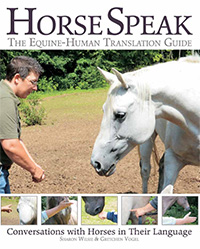
by Sharon Wilsie and Gretchen Vogel
This excerpt is reprinted with permission from Trafalgar Square Books.
Humans greet each other with a formal handshake the first time they meet, and horses have a similar system. The Greeting Ritual is the basic platform I have created to teach humans how Conversations with horses can exist.
The Greeting Ritual consists of three separate moments in which horses that are meeting touch noses on the Greeting Button. The speed at which they may perform these three touches varies from lightning-fast to very slow.
The reason for three official touches is simple: there is much to say in a first, formal greeting, and it takes two subsequent touches to sort it all out. Plus, I find that horses learn about the world around them in processes of three or more.
First Touch: Formal Greeting, “Hello,” and Copycat
A horse’s pecking order is different from a dog’s, for example, because horses are concerned with how to run and move together in case of emergency. In a horse’s world, any moment could bring danger, and the more alpha a horse is in pecking order, the more responsible that horse is for fending off attackers.
In dog psychology, the alpha dog calls the shots, but in horse psychology, to lead is to be responsible for the welfare of those that are weaker. The only difference in horse social order occurs between stallions. A herd is typically made up of grandmothers, aunts, mothers, and daughters.
There is one dominant stallion, and he not only guards his ladies from other rogue stallions, but from mountain lions, wolves, and bears. Stallions that have no mares band together in bachelor herds, and although they can enjoy some rowdy play, they tend to develop strong emotional bonds with each other and follow the same herd dynamics as any other herd.
Domestic horses are bought and sold and moved from barn to barn, and have to deal with new herd members often. Sometimes they are not turned out directly with other horses and can only socialize over a fence, if at all. But the formal Greeting Ritual remains essential for horses who are just meeting each other to be able to sort out who will tell who what to do.
The First Touch is much like a formal human handshake. It is the “Hello” followed by an immediate question: “Where are you in the pecking order?” Horses size each other up and assess very quickly as much as they can about each other’s herd status.
There is much more to it than just calling one “Alpha,” because a healthy herd has many diverse roles that get played out: the “Peacemaker,” the “Bully,” the “Sentry,” and the “Joker,” to name a few.
- A Breed from the Appalachian Mountains, Introducing the Mountain Pleasure Horse!
- UHC Gelding Clinics 2017
- Walkaloosa Horses and Their Colorful Coats
- The Morgan Horse: America's First Breed
- Big, Black and Beautiful! The History of the Majestic Friesian Horse
- Unwanted Horse Coalition Releases New Operation Gelding Program Policies for 2017
- Introducing the Trakehner: The Oldest of Warmblood Breeds
- Profiling the American Quarter Horse, A Very Versatile Breed
- Small but Mighty! See the Benefits of Feed Balancers
- Is My Hay Green Enough?
- Britain's Oldest Horse Breed in Battle for Survival
- Moriesians: Friesians and Morgans
- Horsemanship and Behavior
- Akhal-Teke, a Horse Like Shimmering Gold
- Six Ways to Feed Performance Horses for Greater Achievement
- Meeting Increased Summer Hydration Needs
- Meet the American Bashkir Curly Horse Breed
- Joint Prep and Conditioning for Show Season
- Why Does My Performance Horse Have a Weak Top Line?
- Bringing Compassion to the Horse Industry