





Health & Education
We all want the best care possible for our horses. The Heath & Education section covers both Learning Institutions, Organizations as well as many sources for equine assistance including Veterinarians and Farriers.
For those who want a to formally study horses, the Education section includes College Riding, Equine Studies, and Veterinary Schools. Learn about the wide variety of horses in the Horse Breeds section. Supplements and Treatments Therapy are also included in the section.
Everyone can learn from Fine Art and there are some specialty Museums that might surprise you.
Horses as a therapy partner enrich the lives of the disabled. These facilities are listed in our Therapeutic Riding section. To help children and young adults build confidence and grow emotionally, please see the resources available on the Youth Outreach page.
Looking for a place to keep your horse? You can find it in the Horse Boarding section. Traveling? Find a Shipping company or Horse Sitting service if your horse is staying home!
Want to stay up to date with the latest training clinics or professional conferences? Take a look at our Calendar of Events for Health & Education for the dates and locations of upcoming events.
Do we need to add more? Please use the useful feedback link and let us know!
Eleanor M. Kellon, VMD
Everyone has heard about the ketogenic diet by now, or "keto" for short. It is basically a reinvention of the Atkins diet with more emphasis on eating fat. Fasting, starvation, and no or low, simple carbohydrate diets trigger a higher rate of fat oxidation to spare glucose. In omnivores and dogs, a by-product of fat oxidation is the production of ketones — hence the name.
The best diet for EMS horses is similar to ketogenic in that simple carbohydrate intake is very low. However, carb and fat calories are replaced by fiber calories. That very basic fact of equine nutrition and physiology is ignored by a proposal to treat EMS with a ketogenic diet.
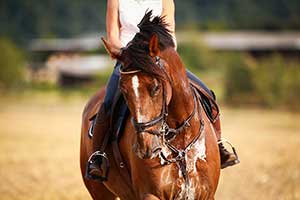
Even mild dehydration can have an effect on performance. Once you know the basics, it's not that difficult to supplement electrolytes correctly, but many people don't know how - and the consequences may be taking more of a toll than is realized.
Electrolytes are minerals that exist in the body in their free, ionized form - i.e. carrying an electrical charge. Cations like calcium, potassium and sodium have positive charges. Anions like chloride, bicarbonate and sulfate are negative.
Movement of electrolytes makes excitatory activity possible, such as muscles contracting, nerves firing and the heart beating. Electrolyte concentrations and gradients also allow the body to hold normal amounts of water (hydration) and the kidneys to adjust the concentration of urine.
Sweat is a major avenue of loss for sodium, potassium, chloride and to a lesser extent calcium and magnesium, but it's not the only avenue.
- Muzzle Adjustments May Prevent Teeth Damage
- 12 Stretches to Release Lower Back and Hip Pain In Riders
- Horse Health: You Can Lead a Horse to Water…
- Is it Time to Change Bits?
- Maintain Your Horse’s Safety This Fourth of July
- Health and Exercise Science student research quantifies horse gait, movement for equine therapy
- 10 Facts About Equine West Nile Virus
- Tracking Five Millennia of Horse Management with Extensive Ancient Genome Time Series (Part 4 of 4)
- Tracking Five Millennia of Horse Management with Extensive Ancient Genome Time Series (Part 3 of 4)
- With Wet Weather Comes A New Hoof Problem: Retracted Soles
- Tracking Five Millennia of Horse Management with Extensive Ancient Genome Time Series (Part 2 of 4)
- Tracking Five Millennia of Horse Management with Extensive Ancient Genome Time Series (Part 1 of 4)
- Breeding: Make Sure You Cover the Basics!
- Vitamin C – Friend or Foe?
- Disaster Preparation Tips for Horse Owners
- Mild Equine Asthma Can Distinguish Winners from Losers on the Racetrack
- The Academic Equestrian: 10 Horse Personality Types
- Equine Temperament: Nature, Nurture or Both?
- Incorporating Mindfulness: Game Changer for Horse & Rider
- The Influence of Rider:Horse Bodyweight Ratio