




Health & Education
We all want the best care possible for our horses. The Heath & Education section covers both Learning Institutions, Organizations as well as many sources for equine assistance including Veterinarians and Farriers.
For those who want a to formally study horses, the Education section includes College Riding, Equine Studies, and Veterinary Schools. Learn about the wide variety of horses in the Horse Breeds section. Supplements and Treatments Therapy are also included in the section.
Everyone can learn from Fine Art and there are some specialty Museums that might surprise you.
Horses as a therapy partner enrich the lives of the disabled. These facilities are listed in our Therapeutic Riding section. To help children and young adults build confidence and grow emotionally, please see the resources available on the Youth Outreach page.
Looking for a place to keep your horse? You can find it in the Horse Boarding section. Traveling? Find a Shipping company or Horse Sitting service if your horse is staying home!
Want to stay up to date with the latest training clinics or professional conferences? Take a look at our Calendar of Events for Health & Education for the dates and locations of upcoming events.
Do we need to add more? Please use the useful feedback link and let us know!
by Juliet M. Getty, Ph.D.
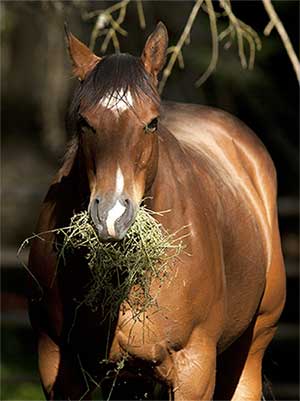
Do you feed your horse flaxseeds? You likely do. Good job! Flaxseeds are a wonderful source of fat, quality protein, water-soluble fiber, and have amazing health benefits. Read on and get all the facts about this excellent whole food.
Flaxseeds are high in fat
The type of fat is what makes them so special. What differentiates flaxseeds from other high fat foods is its fatty acid profile. Most of the fat in flaxseeds is in the form of two polyunsaturated fatty acids -- linoleic acid (LA) and alpha-linolenic acid (ALA). Your horse requires them to be healthy. But his body is not capable of producing them. (The same is true for you!) So, it is up to you to add them to his diet. Consequently, by definition, LA and ALA are referred to as essential fatty acids (EFAs).
by Marcella Gruchalak
Horse shopping is stressful, especially when you don’t bring home the horse you thought you bought.
Horse shopping is an extremely stressful and overwhelming situation. Looking for a horse that’s the perfect fit takes time and plenty of searching. You browse multiple search engines such as Facebook, Google and Craigslist, scanning hundreds of ads daily. Finally, you narrow it down to which horses you’d like to visit. The horses you’ve picked out have a description meeting your qualifications and their videos show healthy, sound moving, sane minded animals.
Regardless of the well written ad, high quality videos and pleasant phone conversation with the current owner, once you’re on site ready to meet and ride the horse, there can be multiple red flags that indicate this horse isn’t what’s advertised.
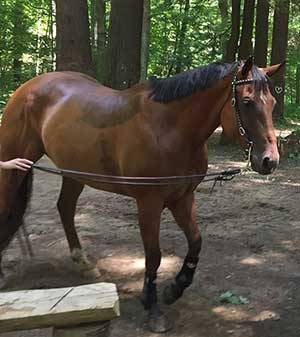
1. Upon arrival the horse is sweaty. If the horse you’re going to see is sweaty, especially in the area where the saddle sits, this is a good indicator that the horse has been worked before you arrived. The horse may be high energy and the owner may have worked her beforehand to guarantee you a more pleasant ride.
This situation may be the most difficult to bridle (pun intended). Two ways to grapple with this circumstance are to be frank and ask why the horse has sweat marks or to arrive early to prevent it from happening.
Read more: 5 Red Flags You Should Not Ignore When Horse Shopping (And How to Address Them)
- The Secret to Healthy Horses? Keep it Simple!
- Horse Health: Equine Influenza and How to Minimize Your Risk
- Managing Horses in Hot Weather
- Ketogenic Diet for Horses? Pass
- The Right Way to Dose Electrolytes
- Muzzle Adjustments May Prevent Teeth Damage
- 12 Stretches to Release Lower Back and Hip Pain In Riders
- Horse Health: You Can Lead a Horse to Water…
- Is it Time to Change Bits?
- Maintain Your Horse’s Safety This Fourth of July
- Health and Exercise Science student research in equine therapy
- 10 Facts About Equine West Nile Virus
- Tracking Five Millennia of Horse Management with Extensive Ancient Genome Time Series (Part 4 of 4)
- Tracking Five Millennia of Horse Management with Extensive Ancient Genome Time Series (Part 3 of 4)
- With Wet Weather Comes A New Hoof Problem: Retracted Soles
- Tracking Five Millennia of Horse Management with Extensive Ancient Genome Time Series (Part 2 of 4)
- Tracking Five Millennia of Horse Management with Extensive Ancient Genome Time Series (Part 1 of 4)
- Breeding: Make Sure You Cover the Basics!
- Vitamin C – Friend or Foe?
- Disaster Preparation Tips for Horse Owners