





Health & Education
We all want the best care possible for our horses. The Heath & Education section covers both Learning Institutions, Organizations as well as many sources for equine assistance including Veterinarians and Farriers.
For those who want a to formally study horses, the Education section includes College Riding, Equine Studies, and Veterinary Schools. Learn about the wide variety of horses in the Horse Breeds section. Supplements and Treatments Therapy are also included in the section.
Everyone can learn from Fine Art and there are some specialty Museums that might surprise you.
Horses as a therapy partner enrich the lives of the disabled. These facilities are listed in our Therapeutic Riding section. To help children and young adults build confidence and grow emotionally, please see the resources available on the Youth Outreach page.
Looking for a place to keep your horse? You can find it in the Horse Boarding section. Traveling? Find a Shipping company or Horse Sitting service if your horse is staying home!
Want to stay up to date with the latest training clinics or professional conferences? Take a look at our Calendar of Events for Health & Education for the dates and locations of upcoming events.
Do we need to add more? Please use the useful feedback link and let us know!
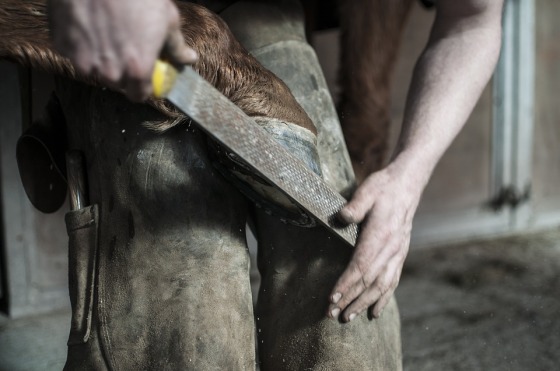
Winter weather puts a strain on all body tissues with special challenges for the hooves. Don't skimp on hoof care over the winter.
Cold weather reduces blood flow to the extremities and unless your horse is doing a lot of exercising hoof growth is going to slow considerably. This means problems like cracks or chips won't be growing out. If the horse is shod, nail holes will enlarge and shoes become loose before enough foot has grown for a reset.
Pulling the shoes for the winter and putting a good roll on the hoof wall both protects the wall and encourages growth by improving circulation in the hoof. If you need a further boost, try Jiaogulan.
The combination of cold, low humidity and decreased circulation can lead to a dry hoof wall and heel cracks. For the wall and sole, my preferred dressing is a light coat of pine tar. For coronary band and heels/bulbs, simple is best - petroleum jelly or Cornhusker's lotion. If painful cracks develop, nothing beats Zim's Crack Creme (great for split skin on hands too).
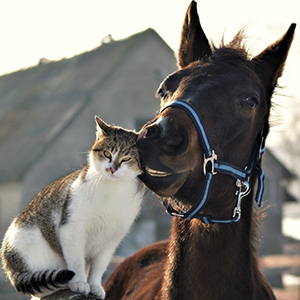
Veterinarian shares 8 tips for looking after our most resourceful felines.
Barn cats are kings and queens at horse farms and ranches, keeping away varmints like moles, mice and consequentially, even snakes. But even the most independent outdoor cats can benefit from added protection and routine care.
For advice on caring for barn cats, we turned to Oklahoma State University's Assistant Clinical Professor with the College of Veterinary Medicine, Dr. Sarah Peakheart.
Purrr-use these top tips for thriving barn cats:
- Offer any outdoor cats (and dogs) a safe, warm place to sleep. A heated or insulated cat house is perfect for keeping outdoor cats in winter months cozy. Also, ensure they have plenty of food and fresh water. Consider a heated water bowl to help prevent frozen water during wintertime.
- Make plenty of noise before starting up your vehicles or farm equipment, especially during the colder months when outdoor cats look for places to stay warm, like under the hood of your vehicle. Dr. Peakheart warns others to, “Make sure you bang on the hood before starting the car to give them a chance to get out.”
- Construct a perch or loft area, so barn cats have a safe space from potential predators. “Offer them a few choices,” encourages Dr. Peakheart. “Cats love high perches or small holes they can dive into, if needed.”
- Spay and neuter to prevent litters, as well as to deter them from roaming away, fighting with others and overall, from channeling their inner ‘Tomcat.’
- Pilates for Horses—It’s a Thing
- Fix the Horse That’s Behind the Bit
- Training the Equestrian Body and Mind with Yoga
- Here Comes The Sun ~ But It’s Not Good For Everyone
- New Rotavirus Revealed with Dr Emma Adam (43:34)
- Any Horse in Regular Work is a Performance Horse
- Lose Your Fear of Selenium
- UC Davis-led Study Investigates Distribution of the Warmblood Fragile Foal Syndrome Allele in Multiple Breeds
- Veterinarians are Considering Lecithin for Treating and Preventing Ulcers
- Tetanus: Your Horse’s Risk May Be Greater Than You Think
- Pitfalls of Fecal Checks for Parasites
- Cavallo Q&A: Horse Time for Healing
- The Last Half of Pregnancy
- Equestrian Diversity Project Spotlight: Ebony Horsewomen
- Equine Guelph at the University of Guelph in Canada presents "Journey of the Digestive Tract"
- Tennessee Walking Horse Stakeholders, Animal Protection Organizations Announce Historic Effort to End Abusive Practice of ‘Soring’ and Ensure Sound Economic Future for the Breed
- Air Quality in the Barn - That Cozy Barn May Not Be Best for Lung Health
- Practice Preparedness and Prevention - Resources on Barn Fire Prevention
- Fecal Transplants for Animals
- I Have the Wrong Horse: Now What?