




Health & Education
We all want the best care possible for our horses. The Heath & Education section covers both Learning Institutions, Organizations as well as many sources for equine assistance including Veterinarians and Farriers.
For those who want a to formally study horses, the Education section includes College Riding, Equine Studies, and Veterinary Schools. Learn about the wide variety of horses in the Horse Breeds section. Supplements and Treatments Therapy are also included in the section.
Everyone can learn from Fine Art and there are some specialty Museums that might surprise you.
Horses as a therapy partner enrich the lives of the disabled. These facilities are listed in our Therapeutic Riding section. To help children and young adults build confidence and grow emotionally, please see the resources available on the Youth Outreach page.
Looking for a place to keep your horse? You can find it in the Horse Boarding section. Traveling? Find a Shipping company or Horse Sitting service if your horse is staying home!
Want to stay up to date with the latest training clinics or professional conferences? Take a look at our Calendar of Events for Health & Education for the dates and locations of upcoming events.
Do we need to add more? Please use the useful feedback link and let us know!
Dr. Laurie Metcalfe reviews what is involved in a new foal exam and the importance of prevention and early detection of potential problems to give a foal the best chance for success.
Read more: The New Foal Exam with Dr Laurie Metcalfe - Rood & Riddle Stallside Podcast
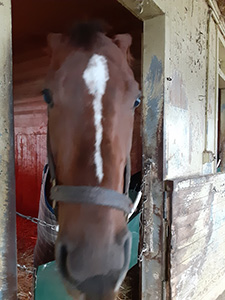
Common signs of ‘misbehavior’ can be a direct result of pain.
When Korrina Tomes-Hughes – horsewoman, wife and mother of four – acquired a horse who often squealed and kicked out, she told her husband they had a year to solve the issues. “If a horse isn’t safe, they don’t stay at our house,” she said. “Considering a 1,200-pound horse versus our littlest kid of 40 pounds, there can be no taking chances when it comes to safety.”
It is important to bring up any behavior-related issues with your veterinarian, so they can examine your horse for any potential pain and discomfort that may be directing the behavior you’re seeing. And, that’s just what this family did. “You can’t just write [a horse] off for a bad day, or even a bad week. And when you have a mare, you especially have to make sure she is comfortable,” she said.
Pinpointing the Problem
To diagnose the issue, Korrina’s veterinarian examined the mare, Cash Flip Seven, and soon discovered the mare’s estrus cycle was to blame for her, at times, poor behavior. “When she cycles, she cycles hard. It’s painful for her,” said Korrina. She was acting up because of the pain she experienced from estrus, which is common, according to a study conducted by University of Pennsylvania School of Veterinary Medicine. The study noted several behaviors directly linked to overall physical discomfort, which can often be overlooked and labeled as “mareish.”
- Wintertime Equine Nutrition: 3 Facts
- The Heart of Laminitis Care
- Our First Year with Dr Peter Morresey and Dr Bart Barber
- What’s New in Equine Healthcare with Dr Peter Morresey and Dr Bart Barber
- EHV-1 Research Study and Infection Control Tips
- Hoof Care in Winter
- Caring for Barn Cats?
- Pilates for Horses—It’s a Thing
- Fix the Horse That’s Behind the Bit
- Training the Equestrian Body and Mind with Yoga
- Here Comes The Sun ~ But It’s Not Good For Everyone
- New Rotavirus Revealed with Dr Emma Adam (43:34)
- Any Horse in Regular Work is a Performance Horse
- Lose Your Fear of Selenium
- UC Davis-led Study Investigates Distribution of the Warmblood Fragile Foal Syndrome Allele in Multiple Breeds
- Veterinarians are Considering Lecithin for Treating and Preventing Ulcers
- Tetanus: Your Horse’s Risk May Be Greater Than You Think
- Pitfalls of Fecal Checks for Parasites
- Cavallo Q&A: Horse Time for Healing
- The Last Half of Pregnancy