





Health & Education
We all want the best care possible for our horses. The Heath & Education section covers both Learning Institutions, Organizations as well as many sources for equine assistance including Veterinarians and Farriers.
For those who want a to formally study horses, the Education section includes College Riding, Equine Studies, and Veterinary Schools. Learn about the wide variety of horses in the Horse Breeds section. Supplements and Treatments Therapy are also included in the section.
Everyone can learn from Fine Art and there are some specialty Museums that might surprise you.
Horses as a therapy partner enrich the lives of the disabled. These facilities are listed in our Therapeutic Riding section. To help children and young adults build confidence and grow emotionally, please see the resources available on the Youth Outreach page.
Looking for a place to keep your horse? You can find it in the Horse Boarding section. Traveling? Find a Shipping company or Horse Sitting service if your horse is staying home!
Want to stay up to date with the latest training clinics or professional conferences? Take a look at our Calendar of Events for Health & Education for the dates and locations of upcoming events.
Do we need to add more? Please use the useful feedback link and let us know!
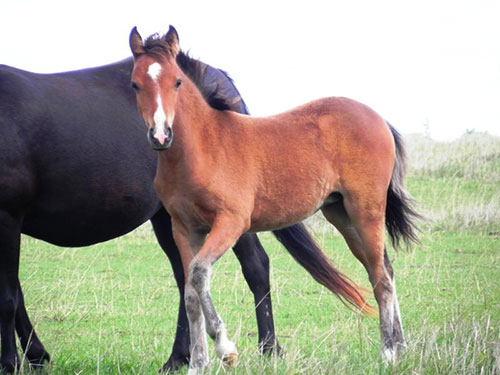
by Jackie Bellamy-Zions, Equine Guelph
The foal’s gut undergoes many changes as it develops rapidly. More and more, we are learning how the colonization of a gut correlates to good health. Exploring the differences in foal microbiomes and how those differences may tie in with overall health has PhD Candidate, Jennifer MacNicol, very excited about the potential advancements the research could yield in the field of equine neonatal care.
MacNicol, from the Department of Animal Bioscience at the Ontario Agricultural College will be working under the direction of Ontario Veterinary College researcher, Dr. Luis Arroyo, in a project planned to begin this summer studying mare/foal pairs to gain knowledge of how the horse’s gut environment matures. Research in genomics is rapidly expanding our knowledge of digestive health but is it is not well understood why diarrhea can become life-threatening in some foals while others recover without additional symptoms.
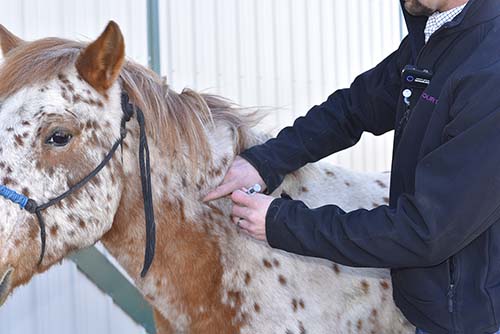
An entomologist and veterinarian discuss the unremitting mosquito.
While much of the Western half of the United States endures near historic drought levels, one might anticipate this year’s mosquito season to be a walk in the park.
No Rain, No Problem for Mosquitoes
“Just because we don’t have rain, doesn’t mean we don’t have mosquitoes,” explains Department Head for Entomology and Plant Pathology at Oklahoma State University, and former livestock entomologist, Justin Talley, PhD. “Some of the most significant West Nile virus outbreak years have been associated without significant rainfall. Be aware, just because you don’t see water, doesn’t mean there are no breeding areas around.”
Dr. Talley shared how the Culex mosquito, which is responsible for transmitting core equine diseases such as West Nile virus (WNV), can populate in the most unsuspecting places. Standing, puddling water is not needed. “One would think that wet years equal more equine West Nile virus cases; however, the type of mosquitoes transmitting these equine diseases can develop in muddy water or a storm drain. There’s a lot of water you don’t see.”
Even a tiny hole in a tree – with just a bit of water – is enough for the Culex mosquito to repopulate within.
“The thing about mosquitoes is they’re very diverse in the habitat they can modify to, and it’s their adaptive behaviors that allow them to be successful,” Dr. Talley said.
Read more: Mosquitoes Undeterred by Drought – 4 Tips to Protect Your Horse
- An Equine Methionine Crisis is Brewing
- Beware Supplemental Iron
- Sugar Does Not Cause Equine Metabolic Syndrome
- Welcome to London College of Animal Osteopathy (LCAO) (2:17)
- Katie Navarra Coaching - Reset: Reconnect: Reframe
- The New Foal Exam with Dr Laurie Metcalfe - Rood & Riddle Stallside Podcast
- Solving a Mare’s ‘Behavioral’ Problems
- Wintertime Equine Nutrition: 3 Facts
- The Heart of Laminitis Care
- Our First Year with Dr Peter Morresey and Dr Bart Barber
- What’s New in Equine Healthcare with Dr Peter Morresey and Dr Bart Barber
- EHV-1 Research Study and Infection Control Tips
- Hoof Care in Winter
- Caring for Barn Cats?
- Pilates for Horses—It’s a Thing
- Fix the Horse That’s Behind the Bit
- Training the Equestrian Body and Mind with Yoga
- Here Comes The Sun ~ But It’s Not Good For Everyone
- New Rotavirus Revealed with Dr Emma Adam (43:34)
- Any Horse in Regular Work is a Performance Horse