




Health & Education
We all want the best care possible for our horses. The Heath & Education section covers both Learning Institutions, Organizations as well as many sources for equine assistance including Veterinarians and Farriers.
For those who want a to formally study horses, the Education section includes College Riding, Equine Studies, and Veterinary Schools. Learn about the wide variety of horses in the Horse Breeds section. Supplements and Treatments Therapy are also included in the section.
Everyone can learn from Fine Art and there are some specialty Museums that might surprise you.
Horses as a therapy partner enrich the lives of the disabled. These facilities are listed in our Therapeutic Riding section. To help children and young adults build confidence and grow emotionally, please see the resources available on the Youth Outreach page.
Looking for a place to keep your horse? You can find it in the Horse Boarding section. Traveling? Find a Shipping company or Horse Sitting service if your horse is staying home!
Want to stay up to date with the latest training clinics or professional conferences? Take a look at our Calendar of Events for Health & Education for the dates and locations of upcoming events.
Do we need to add more? Please use the useful feedback link and let us know!
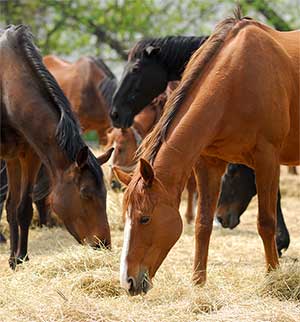
I've written about soil, sulfur and Methionine deficiency often. But everything I see says it's getting worse. - Dr. Eleanor Kellon, Staff Veterinary Specialist for Uckele Health & Nutrition
Methionine is an essential amino acid, meaning horses must get it from their diet. It is critical in protein synthesis since many proteins start with methionine and without it synthesis will stop.
Methionine is the king of the sulfur-containing amino acids which give strength to hair, hoof horn, skin and tendons/ligaments. It is the precursor for SAM-e, a mood stabilizer, and the major antioxidant glutathione.
Methionine is a methyl donor required for the synthesis of L-creatine and L-carnosine. These compounds are critical to muscle function and athletic performance.
Soybean, peas and beet pulp are poor methionine sources. Historically, grains, brans and other seed meals were adequate sources. Hays easily met the 0.2% sulfur content most authorities recommend to support production of good levels of sulfur-containing amino acids. This is changing.
I am increasingly seeing hay analyses with sulfur below 0.2%, even below 0.1%. This means soil levels are low so grains will also be affected. What’s going on?
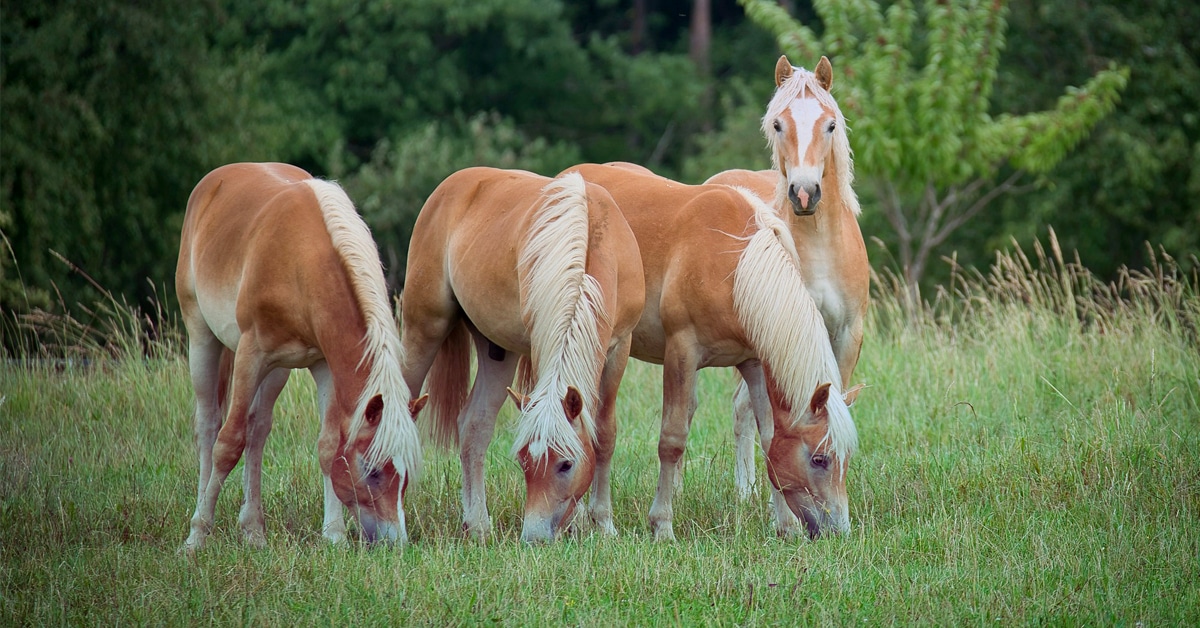
Iron deficiency anemia does not exist in adult horses. - Eleanor M. Kellon, VMD
It's common knowledge that horses with anemia and performance horses should get iron supplements to build their blood – right? Wrong!
Close to 70% of the body's active — not stored — iron is in the red blood cell pigment hemoglobin where it functions to bind oxygen from the lungs and carry it to the tissues. Iron is also the active binding element of myoglobin, the pigment that makes muscle red and acts to temporarily store oxygen in muscle and deliver it to the aerobic metabolic pathways for generation of energy. Iron is an indispensable component of hundreds of other proteins and enzymes in the body.
The body also takes advantage of iron's high reactivity to shuttle free electrons in the chain reaction that generates energy from foods in the form of adenosine triphosphate (ATP). A few antioxidant enzymes also use iron, and iron is used in body systems that detect dangerously low levels of oxygen.
However, iron's free and easy contribution in free radical reactions can have a black side. In white blood cells it is used to generate free radicals which are used to destroy invading organisms. When unchecked, that same capacity to generate free radicals can easily damage tissues.
While horses can be anemic for a variety of reasons, iron deficiency is not one of them. Except for foals raised in stalls with no access to dirt, iron deficiency anemia has never been found in a horse.
- Sugar Does Not Cause Equine Metabolic Syndrome
- Welcome to London College of Animal Osteopathy (LCAO) (2:17)
- Katie Navarra Coaching - Reset: Reconnect: Reframe
- The New Foal Exam with Dr Laurie Metcalfe - Rood & Riddle Stallside Podcast
- Solving a Mare’s ‘Behavioral’ Problems
- Wintertime Equine Nutrition: 3 Facts
- The Heart of Laminitis Care
- Our First Year with Dr Peter Morresey and Dr Bart Barber
- What’s New in Equine Healthcare with Dr Peter Morresey and Dr Bart Barber
- EHV-1 Research Study and Infection Control Tips
- Hoof Care in Winter
- Caring for Barn Cats?
- Pilates for Horses—It’s a Thing
- Fix the Horse That’s Behind the Bit
- Training the Equestrian Body and Mind with Yoga
- Here Comes The Sun ~ But It’s Not Good For Everyone
- New Rotavirus Revealed with Dr Emma Adam (43:34)
- Any Horse in Regular Work is a Performance Horse
- Lose Your Fear of Selenium
- UC Davis-led Study Investigates Distribution of the Warmblood Fragile Foal Syndrome Allele in Multiple Breeds