





Health & Education
We all want the best care possible for our horses. The Heath & Education section covers both Learning Institutions, Organizations as well as many sources for equine assistance including Veterinarians and Farriers.
For those who want a to formally study horses, the Education section includes College Riding, Equine Studies, and Veterinary Schools. Learn about the wide variety of horses in the Horse Breeds section. Supplements and Treatments Therapy are also included in the section.
Everyone can learn from Fine Art and there are some specialty Museums that might surprise you.
Horses as a therapy partner enrich the lives of the disabled. These facilities are listed in our Therapeutic Riding section. To help children and young adults build confidence and grow emotionally, please see the resources available on the Youth Outreach page.
Looking for a place to keep your horse? You can find it in the Horse Boarding section. Traveling? Find a Shipping company or Horse Sitting service if your horse is staying home!
Want to stay up to date with the latest training clinics or professional conferences? Take a look at our Calendar of Events for Health & Education for the dates and locations of upcoming events.
Do we need to add more? Please use the useful feedback link and let us know!
Dr. Scott Weese, University of Guelph Researcher, outlines best practices for Horse Farm Infection Control.
Read more: Infection Disease Control tips for Horse Farms - Dr. Scott Weese (15:62)
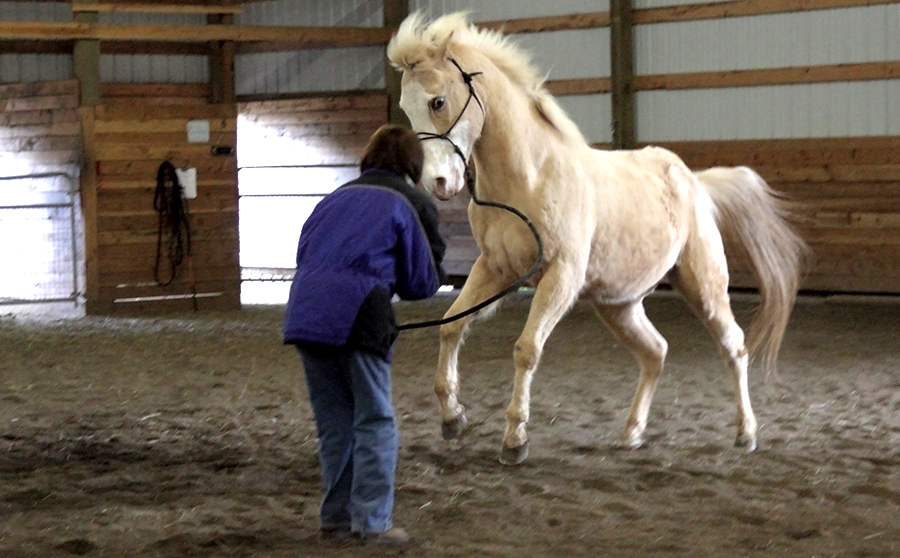
by Missy Wryn
Are you baffled by a sudden change in your horse’s behavior? Did it seem to come on suddenly, out of the blue with no warning? Is your horse trying to bite you or kick at you, or is he getting pushy or bucking for no apparent reason? Behavior changes in your horse can be baffling, frustrating and sometimes downright dangerous! If gone unaddressed horses can end up being abused, sold or even euthanized unnecessarily.
I have often been the last stop for a horse that is otherwise on their way to be auctioned or euthanized due to problem and dangerous behavior. In order to get to the source of the behavior, I have a lengthy intake process where the answers to my numerous questions are a road map to the source of the problem behavior. Here are some questions I ask that the answers can be very telling:
- When did you first notice the behavior change?
- Think back, was your horse trying to tell you something before the behavior became a problem?
- If so, in what way was your horse trying to tell you, for example little nips, pinny ears, cinchy, crow hopping?
-
Did you and/or your horse have an accident?
- If so what were the details?
-
Was there anything going on at the barn at the time the behavior changed?
- Did anything change in your horse’s environment i.e. did your horse lose a barn mate to moving or death?
- Has there been any change in feed or supplements?
- Has your horse ever had dental work?
- If so when was the last time?
- Were power tools used?
- Was sedation used and if so was it heavy or light?
- Did the dental specialist or veterinarian work with your horse’s head high in the air or did the specialist/vet work from their knees with your horse’s head down?
- If your horse is in a stall, how many hours a day does your horse spend in the stall?
- Does your horse pace, crib or have stall bound behaviors?
- What position in the herd is your horse with other horses?
- Does your horse get picked on?
As you go through this exercise don’t dismiss even the silliest thought that comes to mind, it may be a clue to unraveling your horse’s change in behavior; write down everything that you can think of.
- Hydrolyzable Carbohydrates and the Metabolic Horse
- Rood & Riddle Stallside Podcast - 0:03 / 27:14 • Intro The Most Interesting Guest so Far with Dr Bart Barber - Episode 50!
- Catching the Horse in a Paddock with Teresa Kackert (5:29)
- Equine Guelph Declares February Colic Prevention Education Month
- The History Of Equine Slaughter In The United States (Part 2 In A Series)
- Rood & Riddle Stallside Podcast - The PET Scan, Old Technology, New Applications with Dr Katie Garrett and Dr Jose Bras (33:01)
- To Shoe or Not to Shoe? An Excerpt from Shoeing the Modern Horse
- Rood & Riddle Stallside Podcast - The Time is Right for Your Barren Mare’s Check up with Dr Pete Sheerin (37:37)
- Ten Tips for Lunging Your Horse
- 5 Tips to Help You Train Your Horse
- Stem Cells Under Investigation as a Possible Future Treatment for Equine Asthma
- Fitness for the Pregnant Rider - an excerpt from "Ultimate Exercise Routines for Riders"
- Published: Canagliflozin for Control of Refractory Equine Hyperinsulinemia and Laminitis
- Building Your Horse’s Confidence
- Help Nix the Culex Mosquito that Transmits 3 of 5 Core Equine Diseases
- Communication Between Human and Horse
- Research into Development of the Foal’s Gut Could Advance Treatment of Critical Cases of Diarrhea
- Mosquitoes Undeterred by Drought – 4 Tips to Protect Your Horse
- An Equine Methionine Crisis is Brewing
- Beware Supplemental Iron