




Health & Education
We all want the best care possible for our horses. The Heath & Education section covers both Learning Institutions, Organizations as well as many sources for equine assistance including Veterinarians and Farriers.
For those who want a to formally study horses, the Education section includes College Riding, Equine Studies, and Veterinary Schools. Learn about the wide variety of horses in the Horse Breeds section. Supplements and Treatments Therapy are also included in the section.
Everyone can learn from Fine Art and there are some specialty Museums that might surprise you.
Horses as a therapy partner enrich the lives of the disabled. These facilities are listed in our Therapeutic Riding section. To help children and young adults build confidence and grow emotionally, please see the resources available on the Youth Outreach page.
Looking for a place to keep your horse? You can find it in the Horse Boarding section. Traveling? Find a Shipping company or Horse Sitting service if your horse is staying home!
Want to stay up to date with the latest training clinics or professional conferences? Take a look at our Calendar of Events for Health & Education for the dates and locations of upcoming events.
Do we need to add more? Please use the useful feedback link and let us know!
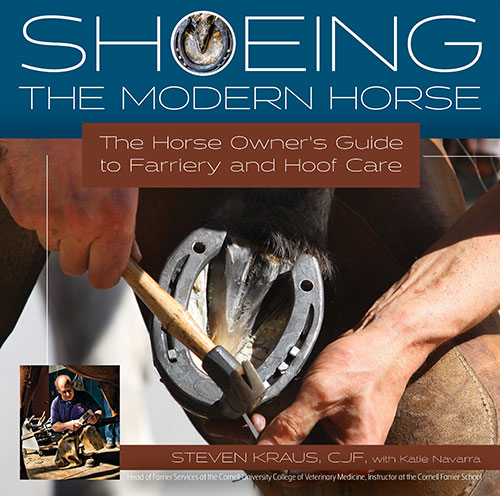
By Steven Kraus, CJF, with Katie Navarra
To shoe or not to shoe? If you’ve ever wondered which is better for your horse, you’re not alone.
The internet is full of opinions for you to consider. People have strong beliefs on both sides of the debate, which has created confusion and philosophical disputes rather than focusing on what is best for the modern horse.
Rather than ask, Are shoes necessary? or Is going barefoot better than being shod?, think of each horse as an individual. You will find the best answer for any horse when you take this approach. Horses live in diverse environments and are in many types of work, which contribute to deciding the best option for each horse.
With that in mind, it’s impractical to think that one method of hoof care is the only way to take care of all horses’ feet. Horseshoes may all look the same in the back of your farrier’s truck, but there is no such thing as one method or one horseshoe for all horses. “Cookie cutter” style shoeing or trimming does not work. Whether you choose to leave a horse barefoot, or use a shoe, trimming is the foundation of your horse’s hoof care.
Making Objective Observations
Observation and analysis of each horse, and not emotions, must guide the decision-making process to determine the best management of any horse. Good horsemanship, such as knowing the horse, his function, how to properly train, care for and use him offers the best answer in the barefoot versus shoeing debate. Often, there is more than one solution to consider, and the decision of which method to use should be based on facts and data. The WIDTH Protocol (see below) can establish if any horse is a good candidate to remain barefoot or is better served with horseshoes from an objective rather than subjective point of view. This protocol was developed using my observations working on horses in the central New York State region, shoeing almost 250,000 hooves over a nearly 50-year career. Ask yourself the following questions:
Work: What Does the Horse Do?
There are a multitude of ways horses are kept and used. Some are highly competitive, others perform in harsh environments, and some spend most of their time on turnout doing nothing at all. Most horses live somewhere between. Considering how often the horse works, the surface he works on, and his natural hoof quality are all part of the equation.
Read more: To Shoe or Not to Shoe? An Excerpt from Shoeing the Modern Horse
Theriogenologist Dr. Pete Sheerin joins Dr. Bart Barber and Dr. Peter Morresey to talk about the steps you can take to get your barren mare ready for the upcoming breeding season. The trio discusses the wide variety of issues that can cause your mare’s infertility and how you can intervene to improve the chances of a successful pregnancy.
- Ten Tips for Lunging Your Horse
- 5 Tips to Help You Train Your Horse
- Stem Cells Under Investigation as a Possible Future Treatment for Equine Asthma
- Fitness for the Pregnant Rider - an excerpt from "Ultimate Exercise Routines for Riders"
- Published: Canagliflozin for Control of Refractory Equine Hyperinsulinemia and Laminitis
- Building Your Horse’s Confidence
- Help Nix the Culex Mosquito that Transmits 3 of 5 Core Equine Diseases
- Communication Between Human and Horse
- Research into Development of the Foal’s Gut Could Advance Treatment of Critical Cases of Diarrhea
- Mosquitoes Undeterred by Drought – 4 Tips to Protect Your Horse
- An Equine Methionine Crisis is Brewing
- Beware Supplemental Iron
- Sugar Does Not Cause Equine Metabolic Syndrome
- Welcome to London College of Animal Osteopathy (LCAO) (2:17)
- Katie Navarra Coaching - Reset: Reconnect: Reframe
- The New Foal Exam with Dr Laurie Metcalfe - Rood & Riddle Stallside Podcast
- Solving a Mare’s ‘Behavioral’ Problems
- Wintertime Equine Nutrition: 3 Facts
- The Heart of Laminitis Care
- Our First Year with Dr Peter Morresey and Dr Bart Barber