




Health & Education
We all want the best care possible for our horses. The Heath & Education section covers both Learning Institutions, Organizations as well as many sources for equine assistance including Veterinarians and Farriers.
For those who want a to formally study horses, the Education section includes College Riding, Equine Studies, and Veterinary Schools. Learn about the wide variety of horses in the Horse Breeds section. Supplements and Treatments Therapy are also included in the section.
Everyone can learn from Fine Art and there are some specialty Museums that might surprise you.
Horses as a therapy partner enrich the lives of the disabled. These facilities are listed in our Therapeutic Riding section. To help children and young adults build confidence and grow emotionally, please see the resources available on the Youth Outreach page.
Looking for a place to keep your horse? You can find it in the Horse Boarding section. Traveling? Find a Shipping company or Horse Sitting service if your horse is staying home!
Want to stay up to date with the latest training clinics or professional conferences? Take a look at our Calendar of Events for Health & Education for the dates and locations of upcoming events.
Do we need to add more? Please use the useful feedback link and let us know!
by Kentucky Equine Research Staff
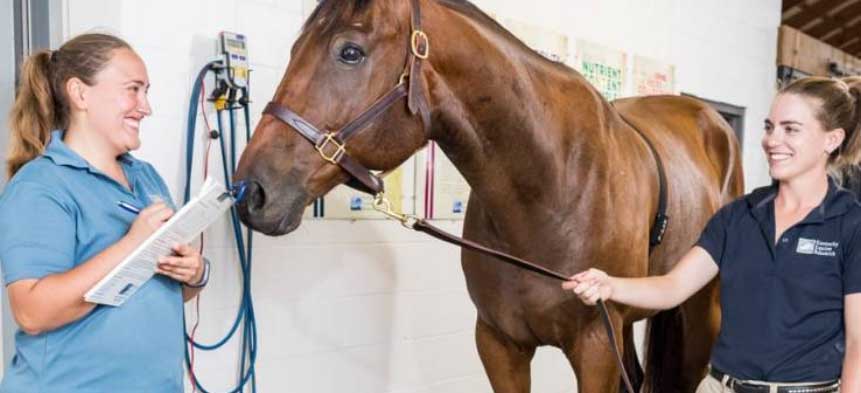
Ohio has one of the largest horse populations in the United States, with close to a quarter million horses. A recent survey of Ohio horse owners and enthusiasts gathered data on current management practices, with the goal of identifying research and educational opportunities to enhance equine welfare. In this article, Kentucky Equine Research nutritionist Ashley Fowler, Ph.D., addresses some of the survey findings related to nutrition, offering practical insights to help horse owners improve the health and well-being of their animals.
General Information
A total of 1,422 Ohio residents responded to the 52-question survey, the majority of whom were horse owners. Respondents reported owning a wide variety of breeds, with Quarter Horses being the most common (29%), followed by Thoroughbreds (9%), Paints (8%), Warmbloods (7%), and Miniature Horses (7%). Most horses (21%) were between six and ten years of age.
In terms of housing, 32% were group-housed on pasture, 31% were stalled with unlimited turnout, and 13% were either stalled full-time or had limited turnout. Despite this, horses typically had access to grazeable pasture for only about six months of the year.
Additionally, 27% of horses were classified as “at maintenance,” receiving only voluntary exercise.
Feeding Hay and Concentrates
Most survey respondents (96%) reported offering concentrates that were fed either by weight or visual estimation. The primary reason owners fed concentrates was to “meet nutrition requirements not met by forage alone,” such as vitamin, mineral, and protein needs, as well as energy requirements.
“As the researchers discussed, a limitation of this question is that horse owners were not asked to specify what kind of concentrate they fed. Ration balancers, complete feeds, and other commercial concentrates are fed for different reasons,” explained Fowler.
The reasoning for feeding a concentrate is sound, according to her, as forage rarely provides all the required nutrients. Ration balancers provide important vitamins, minerals, and high-quality protein and are appropriate for horses that do not need additional calories, such as horses in light work or easy keepers. More energy-dense concentrates help provide additional calories beyond what forage can provide, in addition to filling gaps in minerals, vitamins, and amino acids.
Forage was primarily fed by flakes, bales, or “armfuls” rather than by weight.
Read more: Horse Management Survey Results: A Nutritionist’s Perspective
by Kentucky Equine Research Staff
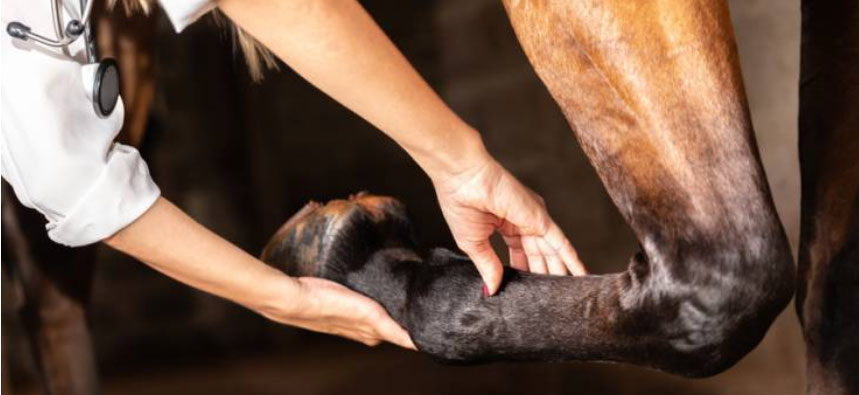
Veterinary researchers recently conducted a comprehensive review of 22 studies using platelet-rich plasma (PRP) to treat tendon and ligament injuries in horses.* These soft-tissue injuries are major contributors to lameness and result in substantial economic losses for both owners and trainers. Despite growing interest, limited controlled clinical data support the efficacy of PRP.
PRP is a type of orthobiologic therapy derived from the horse’s own blood. The blood sample is processed, usually by centrifugation, to create a concentrated suspension of live platelets and white blood cells. This mixture is then injected directly into the horse’s injured soft tissue, guided by ultrasound.
“After the PRP is injected, it transforms into a platelet-rich ‘gel’ that releases growth factors and anti-inflammatory mediators,” explained Catherine Whitehouse, M.S., a nutrition advisor for Kentucky Equine Research.
Those molecules then attract nearby stem cells and promote regenerative mechanisms that ultimately help repair and heal damaged tissues.
During the researchers’ review of the studies, they asked six questions that may help owners better understand PRP.
- Is PRP safe in horses?
Yes, across all 22 studies, no significant adverse effects were reported following PRP treatment.
- What is the most common way of producing PRP?
Across the 22 studies, fresh whole blood volumes collected from horses ranged from 15 mL to 300 mL, with most researchers using between 50 and 81 mL. The standard method for producing PRP involved a double-centrifugation protocol; however, alternative approaches were used, including single-centrifugation semi-automated kits and gravitational filtration systems.
- What is the optimal concentration of platelets?
This remains unknown. The platelet concentration in PRP in the studies ranged from 100 x 103 to 1,370 x 103 platelets/ìL. When reported (only nine of the 22 studies reported concentration), this value alternated between 1.3 to 8.7 times the concentration of platelets in whole blood.
- What “dose” of PRP should be injected and how often?
Veterinarians injected platelet-rich plasma directly into the lesions in all studies. The volumes varied dramatically, from 1 mL to 12 mL. Most studies used between 2 mL and 5 mL, and most adjusted based on the size of the lesion on ultrasound. Most studies used a single injection, but one study performed three injections into the same lesions at two-week intervals.
“Considering that the concentration of platelets varied markedly in each PRP preparation, the difference in injected volume further complicates the issue of decoding the optimal dose,” explained Whitehouse.
- What were the clinical outcomes?
Platelet-rich plasma yielded positive results in 18 of the 22 studies (86%), with researchers citing improvements in lameness, ultrasound appearance, and recovery times. However, researchers only reported positive results in two of the four randomized clinical trials when PRP was used as the only treatment. In the two randomized clinical trials with positive results, lameness scores decreased by 30% to 60% compared to 10% to 25% in the control groups.
The reviewers added, however, “PRP appears to be effective at promoting short- and medium-term recovery, but its long-term efficacy may depend on factors such as injury severity and concurrent therapies.”
- Can PRP be combined with other therapies?
Yes. All case series and clinical trials included in the review combined PRP with controlled exercise programs to enhance healing.
In some studies, PRP was also paired with mesenchymal stem cells or bone marrow aspirate concentrate. However, current data are insufficient to determine whether these combinations offer added benefit. Further research on combining PRP with other regenerative therapies, such as extracellular vesicles or gene therapy, is needed.
“Standardized reporting and methodological rigor of PRP studies should be improved to ensure reproducibility and facilitate evidence-based veterinary practice,” concluded the researchers.
“To support the horse’s musculoskeletal system, including soft-tissue structures and joints, offer oral joint health supplements,” recommended Whitehouse.
*Carmona, J.U., and C. López. 2025. Efficacy of platelet-rich plasma in the treatment of equine tendon and ligament injuries: A systematic review of clinical and experimental studies. Veterinary Science 12(4):382.
Reprinted courtesy of Kentucky Equine Research. Kentucky Equine Research is an international equine nutrition, research, and consultation company serving horse owners and the feed industry. Our goals are to advance the industry's knowledge of equine nutrition and exercise physiology, apply that knowledge to produce healthier, more athletic horses, and support the nutritional care of all horses throughout their lives. Learn more at Kentucky Equine Research.
There a more informative articles in our section on Health & Education. While you're here be sure to visit our Curated Amazon Store.
- Potomac Horse Fever
- Drinking Behavior of Horses: Six Facts About Water Intake
- Protein and Muscle Recovery for Performance Horses - an excerpt from Helping All Horses Live Healthier Lives
- Evaluating Horses for Back Pain
- Is Pasture Grazing Safe This Summer for Your Insulin-Resistant Horse
- Chewing Halters: A New Tool to Track Ingestive Behavior and Optimize Welfare
- Barn Construction: 7 Principles to Reduce Fire Risk
- Top 3 Causes of Barn Fires
- Rope Halter Safety and Adjustment with Julie Goodnight
- Crafting Diets for Easy and Hard Keeper Horses - an excerpt from Helping All Horses Live Healthier Lives
- How Horse Show Culture Has Changed (and why it’s worth preserving)
- Listening Beyond Words: The Wisdom of Horses
- More than ‘Four on the Floor’ with Equine Guelph Horse Trailer Safety Course
- Skin Problems in Horses: Culicoides Hypersensitivity
- Osteoarthritis Pain in Horses Controlled by CBD and Related Products
- Review of Roaring & Possible New Surgical Procedure
- Encourage Horses to Drink During Transport
- Be Pro-active Rather than Reactive with Biosecurity
- Is Your Horse Happy?
- Setting Up Thoroughbreds for Success One Stride at a Time