





Health & Education
We all want the best care possible for our horses. The Heath & Education section covers both Learning Institutions, Organizations as well as many sources for equine assistance including Veterinarians and Farriers.
For those who want a to formally study horses, the Education section includes College Riding, Equine Studies, and Veterinary Schools. Learn about the wide variety of horses in the Horse Breeds section. Supplements and Treatments Therapy are also included in the section.
Everyone can learn from Fine Art and there are some specialty Museums that might surprise you.
Horses as a therapy partner enrich the lives of the disabled. These facilities are listed in our Therapeutic Riding section. To help children and young adults build confidence and grow emotionally, please see the resources available on the Youth Outreach page.
Looking for a place to keep your horse? You can find it in the Horse Boarding section. Traveling? Find a Shipping company or Horse Sitting service if your horse is staying home!
Want to stay up to date with the latest training clinics or professional conferences? Take a look at our Calendar of Events for Health & Education for the dates and locations of upcoming events.
Do we need to add more? Please use the useful feedback link and let us know!
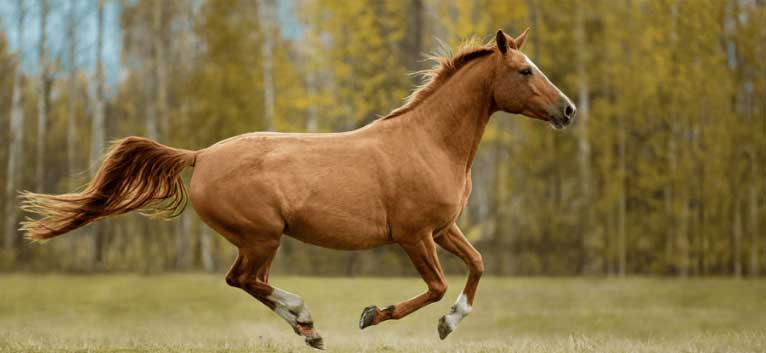
by Kentucky Equine Research Staff
Back pain occurs frequently in horses and, depending on the degree of discomfort, can limit performance. To better understand back pain in athletic horses, veterinarians examined 75 horses with histories suggestive of back problems using equipment and techniques available to most practitioners.*
Horses were first examined at rest, noting conformation idiosyncrasies and muscle atrophy, as well as skin lesions from saddle marks. Responses to digital manipulation along the spine were also recorded.
Rectal examinations performed on all horses revealed any abnormalities or pain in the pelvis (e.g., myositis, sacroiliitis, pelvic fracture, spondylosis, other sources of pain). Horses were then evaluated while hand-walking, longeing, and under saddle when ridden and jumping.
Stretching exercises were also performed, enticing horses to take part by using treats placed by the horses’ elbows or between the forelimbs.
“At the walk, many horses had restricted hind limb movement and mobility, often raising the head and arching the back,” described Kathleen Crandell, Ph.D., a nutritionist for Kentucky Equine Research.
Further, tail-swishing when transitioning from trot to canter, stiffness, and poor hind limb impulsion were frequently noted. When horses were jumping, mistakes and refusals, including sliding stops, were noted.
Lateral radiographs of the thoracic dorsal spinous process and ultrasound examinations of the supraspinous and sacroiliac ligaments were performed. When indicated, mepivacaine blocks were performed in the interspinal space between painful spinous processes or the sacroiliac joint.
In that population of 75 horses, 18 horses were diagnosed with muscular strains, 30 cases of sacroiliac pain, and 16 cases of vertebral lesions such as crowding or spondylosis.
“Sacroiliac desmopathy was highly prevalent among the presented cases while interspinous desmopathy came next,” according to the examining veterinary team.
The team noted that back disorders may be attributable to ill-fitting tack, inadequate training, improper shoeing, and unequal distribution of rider weight.
Specific diagnoses may include lesions of the supraspinous, interspinous, and sacroiliac ligaments; strains of the longissimus muscle; impinging dorsal spinous processes or kissing spines; osteoarthritis; intervertebral disc disease; and vertebral fractures.
“In addition, the veterinarians cited poor management, including inadequate nutrition, as a potential contributing factor for back pain. Low-quality feeds and forages may not supply adequate nutrients important for strength and durability of the musculoskeletal system.
Making sure your horse has a balanced diet with quality ingredients and proper amounts of vitamins and minerals is key to supporting healthy bone and muscle tissue,” advised Crandell.
Supporting optimal joint health can be achieved, at least in part, by supplementing horses with glucosamine, chondroitin sulfate, hyaluronic acid, and MSM found in quality supplements such as KER-Flex.
Horses included in this study were treated conservatively with rest for one to three months based on severity and nonsteroidal anti-inflammatory drugs (oral phenylbutazone or “bute”).
In addition, horses that responded to the mepivacaine blocks were subsequently injected with the corticosteroid triamcinolone acetonide.
“Adequate rest and early treatment were prerequisites for recovery,” concluded the veterinarians.
*Shokry, M., L.B. Ali, and M. El-Sharkawy. 2025. Relationship between back pain and poor performance in show jumping athletic horses. Open Veterinary Journal 15(3):1480-1487.
Reprinted courtesy of Kentucky Equine Research. Kentucky Equine Research is an international equine nutrition, research, and consultation company serving horse owners and the feed industry.
Our goals are to advance the industry's knowledge of equine nutrition and exercise physiology, apply that knowledge to produce healthier, more athletic horses, and support the nutritional care of all horses throughout their lives. Learn more at Kentucky Equine Research.
There a more informative articles in our section on Health & Education. While you're here be sure to visit our Curated Amazon Store.
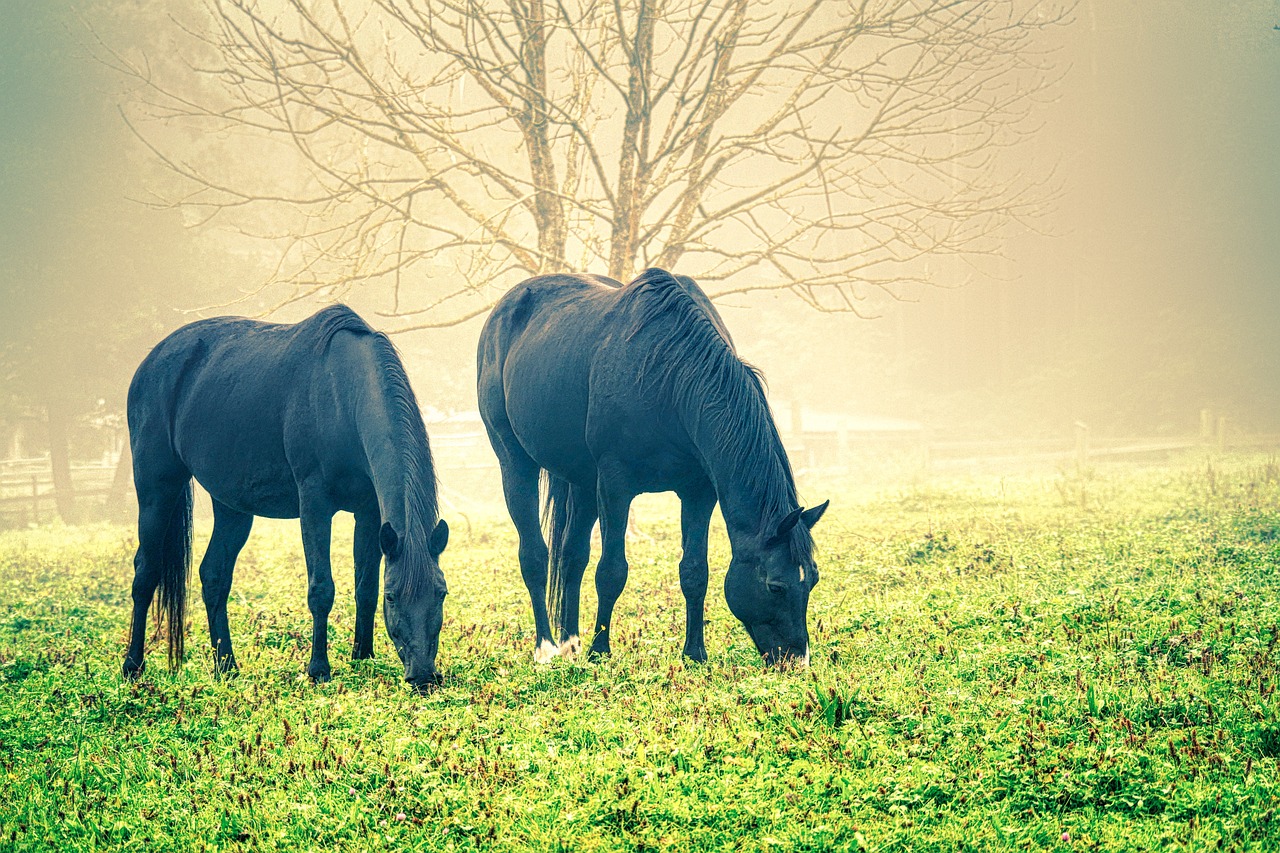
By Juliet M. Getty, Ph.D.
If you have pasture but hesitate to let your insulin-resistant horses graze, you may be pleasantly surprised. With the right approach, you can make use of your pasture, reduce your reliance on hay, and support your horse’s overall well-being. Consider this: insulin-resistant horses are under significant oxidative stress and inflammation. Restricting them to a dry lot with only hay can actually intensify that stress response. In contrast, allowing controlled access to pasture can offer natural enrichment and may be a valuable step toward healing.
Your hesitation may be well-founded, particularly if the pasture is high in sugar and starches. This concern is heightened when the grass is overly short, regularly fertilized, or consists of a single grass species without any edible weeds. Horses tend to consume copious amounts rapidly, which can cause a sharp increase in blood insulin levels — raising the risk of insulin resistance and potentially triggering laminitis.
Add in the cold nights of early spring and the cooling temperatures of fall, when grasses naturally hold onto higher levels of sugar and starch, and you have a potentially dangerous situation. When nighttime temperatures drop below 40°F, it becomes especially risky to allow pasture grazing the following morning — particularly for insulin-resistant horses — because the cold conditions cause grasses to store even more sugar and starches. These seasonal shifts make pasture-grazing management critical to protecting your horse’s metabolic health.
Summer has arrived for most of us, and with it comes greater stability in the sugar and starch levels of pasture grasses. So why assume your pasture is unsafe? Without testing, any concern is purely speculative. In fact, in many cases, pasture grasses have tested lower in sugar and starch than the hay being fed.
The only way to know for sure is to have your pasture analyzed. Testing for sugar and starch gives you a clear picture of how your pasture is behaving. Specifically, measuring ESC (ethanol soluble carbohydrates) will tell you the sugar content — the primary factor influencing insulin levels. Starch breaks down into glucose and can raise insulin as well. Knowing these numbers takes the guesswork out of pasture management, especially for horses with metabolic concerns.
Understanding carbohydrate patterns in pasture grass
Grasses generate simple sugars (ESC) and starch through photosynthesis when exposed to sunlight. On bright, sunny days, ESC and starch levels peak in the late afternoon to early evening.
As evening sets in, the grass begins using these stored carbohydrates for its own metabolic needs. This process continues overnight, and by early morning, ESC and starch levels are at their lowest.
On cloudy or rainy days, photosynthesis is reduced, resulting in lower overall sugar and starch production.
But sugar and starch can increase when:
- Grasses are under stress—from drought, overgrazing, or frequent mowing—they tend to retain higher levels of ESC and starch as a survival mechanism. To prevent this, avoid mowing shorter than 4 inches.
- Grass is allowed to grow excessively tall, leading to the formation of seed heads, which are high in carbohydrates and can pose a risk to insulin-sensitive horses.
Best- and worst- case scenarios for pasture testing
Remember, your pasture is a living, dynamic system, and any test you perform is simply a snapshot of its current condition. For more accurate insight, it’s ideal to test two or three times on your chosen day and repeat testing every two weeks. Below are guidelines for selecting times to test when managing insulin-resistant (IR) horses:
- Best case scenario: Test early in the morning, just before sunrise, following a sunny day. This timing typically offers the lowest levels of sugar (ESC) and starch and gives you the best estimate of how safe the pasture is for early-morning grazing by an IR horse.
- Worst case scenario: Test in the late afternoon, between 5:00 and 6:00 p.m., after a full sunny day. This is when sugar and starch levels are at their highest, and it represents the riskiest time for an IR horse to graze.
- Midday testing (optional): Testing around 11:00 a.m. on a sunny day can help you determine a safe time to bring horses off pasture before carbohydrate levels begin to climb.
How to test your pasture
For accurate results tailored to horses, Equi-Analytical Labs is an excellent choice, as their analysis is geared toward equine needs rather than cattle. Testing instructions are straightforward and available on their website: https://equi-analytical.com/feed-and-forage-analysis/taking-a-sample/
Here’s a summary of the process:
- Randomly select about 15 locations throughout your pasture.
- Clip the forage at the height your horse typically grazes. For instance, if the grass is 10 inches tall and your horse grazes the top 4 inches, clip just those top 4 inches.
- Cut the samples into small pieces, mix thoroughly, and place them into the bag provided by the lab.
- Freeze the sample overnight, then mail it in according to their shipping instructions.
On the order form, choose:
- “Fast Track” for carbohydrate levels (including ESC and starch), or
- “Equi-Tech #601” if you'd also like a mineral analysis.
For international submissions, guidelines can be found here: https://equi-analytical.com/feed-and-forage-analysis/submitting-a-sample/international-sample-submission/
Understanding key terms in your analysis report
It is important to understand the terminology used in your pasture analysis report:
- Percent Moisture and Dry Matter – These two values always add up to 100%. Since pasture grass contains a large amount of water, the moisture percentage will be high.
- “As Sampled” column – Reflects the nutrient content of the grass with its natural moisture. This represents what your horse is consuming in the pasture.
- “Dry Matter” column – Shows the nutrient content of the forage without any moisture. These values are more concentrated and allow for more accurate comparisons, especially when evaluating hay or other dry feeds.
- Digestible energy (DE) – Indicates how energy-dense, or “fattening,” the forage is. Expressed in megacalories (Mcal) per pound or kilogram.
- Water soluble carbohydrates (WSC) – Includes simple sugars and fructans. Fructans are not a concern for insulin-resistant horses since they do not raise insulin levels.
- Ethanol soluble carbohydrates (ESC) – Represents only the simple sugars—the main contributors to an insulin response.
- Starch – Long chains of glucose that break down during digestion into individual glucose molecules, raising blood insulin levels.
- ESC + Starch – This is the most important calculation for insulin-resistant horses. Add the ESC and starch values from your report to assess the forage’s insulin impact.
- Non-structural carbohydrates (NSC) – Often confused with more relevant values, NSC is calculated as WSC + Starch. It’s no longer used as a reliable indicator for insulin resistance because WSC includes fructans, which do not influence insulin. For this reason, ESC + Starch is now the preferred measure.
Use the Dry Matter column to compare pasture to hay
When analyzing hay for insulin-resistant horses, we aim for an ESC + Starch value of less than 10% on a dry matter basis. To evaluate your pasture in the same way, refer to the “Dry Matter” column in your pasture analysis report. Add the ESC and Starch values together—ideally, this combined number should also be below 10%.
Another key value to watch is Digestible Energy (DE), which indicates the caloric content of the grass. DE is expressed in megacalories (Mcal) per pound or kilogram. For pasture to be considered low enough in calories for an overweight insulin-resistant horse, the DE should be below 0.94 Mcal/lb (or 2.08 Mcal/kg) on a dry matter basis.
Do we still consider NSC?
Not usually—not when evaluating forage for insulin-resistant horses. Most cases of laminitis related to pasture are driven by elevated insulin levels, not fructans. However, reviewing the NSC (Non-Structural Carbohydrates) can still offer insight, particularly into fructan content.
Here’s a quick refresher on the calculations:
- NSC = WSC + Starch
- WSC = ESC + Fructans
Let’s break down an example:
- WSC = 11%
- ESC = 6%
- Starch = 2%
In the past, we would calculate NSC by adding WSC and Starch:
11% + 2% = 13%, which was considered the upper limit for safety. But today, the more accurate approach is to look at ESC + Starch, because these are the components that directly raise insulin levels:
6% + 2% = 8%, which is well under the 10% threshold—making this pasture suitable for an insulin-resistant horse.
A Real-Life Example: Best-case vs Worst-case Scenario
The following results come from actual pasture samples collected at 7:00 AM and again at 6:00 PM on the same day. Both days—prior to and including the sampling day—were sunny, and the testing took place during the summer.
7:00 AM Sample – Best-case scenario for an IR horse
(Dry Matter Basis):
- Digestible Energy (DE): 0.85 Mcal/lb
- ESC (Simple Sugars): 4.7%
- Starch: 0.2%
- ESC + Starch: 4.9%
6:00 PM Sample – Worst-case scenario for an IR horse
(Dry Matter Basis):
- Digestible Energy (DE): 0.86 Mcal/lb
- ESC (Simple Sugars): 6.9%
- Starch: 3.4%
- ESC + Starch: 10.3%
What these numbers tell us…
The morning sample is ideal for insulin-resistant horses, with an ESC + Starch total of just 4.9%—well below the recommended 10% maximum. Grazing during early morning hours under these conditions is generally safe and beneficial.
By contrast, the evening sample shows a significant rise in sugar and starch content after a full day of sun exposure. The ESC + Starch value climbs to 10.3%, which may be too high for sensitive horses, particularly those prone to insulin spikes or laminitis.
The digestible energy levels in both samples are suitably low for managing an overweight horse.
This example clearly illustrates how pasture sugar and starch levels can change significantly throughout the day—highlighting the importance of timing when managing grazing for insulin-resistant horses.
While midday values were not measured in this case, it’s well established that sugar and starch levels tend to rise steadily as sunlight increases. For added safety, consider removing your horse from pasture and transitioning to a dry lot with properly tested, low-sugar, low-starch hay around midday—when the sun is at its peak.
Bottom line
Putting in a little effort to test your pasture can make a substantial difference in supporting your insulin-resistant horse’s natural way of life—as a grazing animal. Since pasture conditions vary with weather, season, and management, it’s wise to test multiple times throughout the year to understand how your grass responds under different circumstances. You may find that your pasture is safer than expected -- good news for both you and your horse.
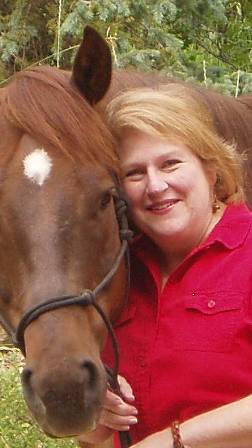
About the Author - Juliet M. Getty, Ph.D. has been working with horse owners for more than 25 years. A pioneer in free choice forage feeding, Dr. Getty’s philosophy is founded on feeding a horse in sync with his natural needs and instincts. She approaches equine health from a holistic perspective and considers nutrition a critical (and too often overlooked) element in the prevention and treatment of disease and disorders. Her unbiased opinions and recommendations are based on scientific research and are independent of feed, supplement, or pharmaceutical company influence.
Through private consultations, she designs customized feeding plans to promote horses’ health, reverse illness, and optimize performance; she believes every horse owner should include sound nutrition practices to give every horse a lifetime of vibrant health. Dr. Getty lives in Denton, Texas, in the Dallas/Fort Worth area with her husband.
This article originally appeared on Getty Equine Nutrition and is published here with permission.
Find more informative articles in our section on Health & Education. While you're here, take a look at our Curated Amazon Store.
- Chewing Halters: A New Tool to Track Ingestive Behavior and Optimize Welfare
- Barn Construction: 7 Principles to Reduce Fire Risk
- Top 3 Causes of Barn Fires
- Rope Halter Safety and Adjustment with Julie Goodnight
- Crafting Diets for Easy and Hard Keeper Horses - an excerpt from Helping All Horses Live Healthier Lives
- How Horse Show Culture Has Changed (and why it’s worth preserving)
- Listening Beyond Words: The Wisdom of Horses
- More than ‘Four on the Floor’ with Equine Guelph Horse Trailer Safety Course
- Skin Problems in Horses: Culicoides Hypersensitivity
- Osteoarthritis Pain in Horses Controlled by CBD and Related Products
- Review of Roaring & Possible New Surgical Procedure
- Encourage Horses to Drink During Transport
- Be Pro-active Rather than Reactive with Biosecurity
- Is Your Horse Happy?
- Setting Up Thoroughbreds for Success One Stride at a Time
- Five Things About Joint Care
- The Efficacy of Sponge Baths and Hosing on Exercise Recovery in Thoroughbred Horses
- Smarter Grazing: How Satellite Technology Supports Sustainable Horse Pasture Management
- Managing Energy and Motivation While Caring for Your Horses
- Five Tips for Hiring a Horse Shipper