



Health & Education
We all want the best care possible for our horses. The Heath & Education section covers both Learning Institutions, Organizations as well as many sources for equine assistance including Veterinarians and Farriers.
For those who want a to formally study horses, the Education section includes College Riding, Equine Studies, and Veterinary Schools. Learn about the wide variety of horses in the Horse Breeds section. Supplements and Treatments Therapy are also included in the section.
Everyone can learn from Fine Art and there are some specialty Museums that might surprise you.
Horses as a therapy partner enrich the lives of the disabled. These facilities are listed in our Therapeutic Riding section. To help children and young adults build confidence and grow emotionally, please see the resources available on the Youth Outreach page.
Looking for a place to keep your horse? You can find it in the Horse Boarding section. Traveling? Find a Shipping company or Horse Sitting service if your horse is staying home!
Want to stay up to date with the latest training clinics or professional conferences? Take a look at our Calendar of Events for Health & Education for the dates and locations of upcoming events.
Do we need to add more? Please use the useful feedback link and let us know!
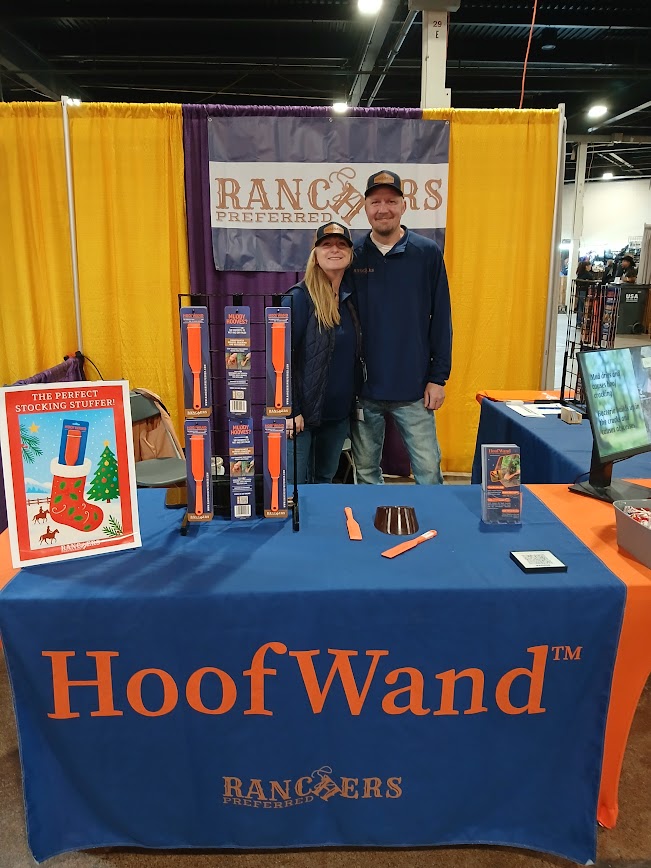
We had a wonderful time at this year's Equine Affaire in West Springfield MA. The folks at Ranchers Preferred offered an amazing tool for horse care.
The HoofWand™ is a NEW hoof cleaning tool designed to remove dry and wet mud and muck from the hoof. Its non-abrasive material ensures no scratching or damage to the outer wall or coronary band especially during the wed/dry weather cycles. Stop damaging your horses wet and soggy hooves with a traditional hoof pick, use a hoof wand! The HoofWand™ is also the ONLY safe tool on the market to remove snow and ice balls.
Read more: "HoofWand™" from Ranchers Preferred at Equine Affaire 2025
By Juliet M. Getty, Ph.D.
You’ve seen it firsthand – a decline in your horse’s overall demeanor and health following routine vaccinations. Inflammation is the reason for this reaction. A new study from the Department of Clinical Sciences, College of Veterinary Medicine, Kansas State University, monitored the inflammatory response to vaccinations using a marker known as Serum Amyloid A (SAA).[i]
SAA is protein which increases in the blood in response to acute infection, injury, or stress. Because it rises so rapidly, it is a good biomarker in determining inflammation or infection.
The study looked at thirty-six clinically normal horses. Twenty-eight horses received booster vaccinations that are commonly recommended: Rabies, tetanus, West Nile virus, Eastern and Western equine encephalitis, equine herpesvirus 1 and 4, and influenza. The control group consisted of eight horses, and they only received saline injections instead of vaccines.
Body temperature was recorded, and blood samples were collected daily for 10 days after the vaccinations.
Results:
- SAA temporarily increased for up to 10 days following vaccinations. Most horses (85.7%) returned to normal levels within 10 days.
- Most horses (78.6%) developed a fever of greater than 101.12°F (>38.4°C). Normal body temperature of horses ranges from 99 to101°F (37.2 to 38.3°C).
Elevated SAA levels did not necessarily indicate illness. Instead, the researchers advised horse owners to be aware of their horse’s overall health and provide a recovery period prior to travel or competition.
Implications for your horses
Not all horses exhibit negative symptoms, even when inflammation is present. But when the horse does not respond well, inflammation can present itself as specific symptoms, including reduced appetite, depression, irritability, sensitivity to touch, or reluctance to move. Or your horse may simply have a general malaise, where he is not feeling or acting normally.
It may be worthwhile having a discussion with your veterinarian about the necessity of certain vaccines, depending on your horse’s age, living arrangements and travel schedule. While the study showed inflammation declining back to normal levels within ten days, it can remain challenging to the immune system and horses who are already immunocompromised (such as with PPID), may experience a longer impact on their health.
Older horses often benefit from spacing out vaccinations to prevent overwhelming the immune system. As horses age, they often experience a phenomenon called immunosenescence, which refers to a gradual weakening of the immune system.[ii]
Preventive care
Feed an anti-inflammatory diet:[iii]
- Balance essential fatty acids. These are crucial for a horse’s health but are frequently underestimated. Omega 3 fatty acids, along with omega 6s, in a 4:1 ratio will improve your horse’s immunity by reducing inflammation. Chia seeds and flaxseeds are both excellent sources and mimic the omega 3 to 6 ratio found in healthy pasture grasses. If your horse grazes on pasture for more than 8 hours per day, he is likely eating enough omega 3s. But when growth slows due to seasonal changes, the level of omega 3s in pasture grasses lessens. Consequently, a source of omega 3s must be added to the diet every day since the horse’s body cannot produce them.
- Avoid soybean, corn, and sunflower seed oils. Commercial feeds typically contain these to add more fat to their formulas. However, they are exceedingly high in omega 6s with hardly any omega 3s. Too many omega 6s will increase inflammation.
- Feed a low sugar/low starch diet. Horses do not need refined carbohydrates to be healthy. Added molasses as well as starchy cereal grains are broken down to glucose when they are digested, which raises insulin. Insulin is an inflammatory hormone.
- Avoid feedstuffs that contain glyphosate. Glyphosate is the toxic herbicide found in RoundUp®. Exposure can lead to cancer and absorption problems.[iv] Soybeans and soy-based feeds are genetically modified to tolerate glyphosate unless they are organic. It’s worth noting that beet pulp and alfalfa products could potentially be contaminated with glyphosate.
- Fill in nutritional gaps. While hay is a staple in most horses’ diets, it is essential to recognize that it is not a complete source of all necessary nutrients. To address this issue, consider providing your horse with a well-rounded vitamin and mineral supplement in addition to incorporating high-quality, protein-rich whole foods into the diet. When seeking protein sources, it is advisable to avoid non-organic soy. Instead, consider including hemp seeds in your horse’s diet—they provide high-quality protein.
- Strive for organic and non-GMO. Organic feeds and most non-GMO supplements do not contain chemical preservatives. This will lessen the level of oxidative stress in the body, resulting in an improved immune system.
Reduce stress. Stress makes horses more susceptible to developing infections, allergies, and enhanced inflammatory responses. The main stressors horses experience includes intense exercise, travelling, forage restriction, isolation, confinement in a small space, not enough companionship, and inability to roam. The more you can allow your horse to live like Nature intended, the healthier he will be. For articles that discuss stress and ways to reduce it, visit the Getty Equine Nutrition Resource Library.[v]
Bottom line
This research study used Serum Amyloid A (SAA) as a measure to confirm an inflammatory response after horses receive vaccinations. Individual responses, however, vary depending on the horse’s overall health and immune system. Discuss with your veterinarian which vaccinations are necessary and which to avoid for your horse’s specific needs, and work on ways to keep your horse healthy through an anti-inflammatory diet and reduced stress.
This article originally appeared on Getty Equine Nutrition and is published here with permission.
Find more informative articles in our section on Health & Education. While you're here, take a look at our Curated Amazon Store.
Are you interested in promoting your business or sharing content on EIE? Contact us at info@equineinfoexchange.com
[i] Baumgarten, C. M., Delph Miller, K. M., Davis, E. G., Beard, L. A., Blevins, C. A., Wottowa, M., Hill, M., & Larson, R. L. (2024). Serum amyloid A increases following routine vaccination of healthy adult horses. Journal of the American Veterinary Medical Association, 262(9), 1181-1187. https://avmajournals.avma.org/view/journals/javma/262/9/javma.24.04.0244.xml
[ii] Equine vaccination Q&A. August 8, 2022. The Horse. https://thehorse.com/148729/equine-vaccination-qa/
[iii] Getty, J.M. Immunity. Resource Library at Getty Equine Nutrition. https://gettyequinenutrition.com/pages/resource-library-immunity
[iv] Getty, J.M. Organic and Non-GMO. Resource Library at Getty Equine Nutrition. https://gettyequinenutrition.com/pages/resource-library-organic-and-non-gmo
[v] Getty, J.M. Stress Prevention. Resource Library at Getty Equine Nutrition. https://gettyequinenutrition.com/pages/resource-library-stress-prevention
- Using Microchips to Measure Body Temperature in Horses
- Four Directions Amino Acids Can Take - The Importance of Feeding Several Protein Sources
- Why is the American Quarter Horse the Most Popular Breed in the World?
- Get Your Goat! A Horse Companion Option
- Western Saddle Fitting 101: Tips on Proper Fit, Selecting Saddle Pads, Cinches and More
- Biggest Barriers to Human-Led Exercise in Horses
- The Importance of Canine Oral Health - Dog Dental Powders
- Ensure Your Horse's Dental Health
- Midnight Snacks: When Do Stalled Horses Eat During the Night?
- 5 Tips About Equine Vaccines
- Five Things About Performance Horse Gut Health
- Using Ultrasound to Diagnose SI Joint Disease in Horses
- Hemp Hurd Bedding for Horses
- What Pasture Snacks Mean for Horse Health
- How would you help a rider who struggles with combinations?
- Descending Gymnastics: Why Ending Smaller Can Be Smarter
- Horse Management Survey Results: A Nutritionist’s Perspective
- Six Key Questions About Platelet-Rich Plasma for Horses
- Potomac Horse Fever
- Drinking Behavior of Horses: Six Facts About Water Intake