





Health & Education
We all want the best care possible for our horses. The Heath & Education section covers both Learning Institutions, Organizations as well as many sources for equine assistance including Veterinarians and Farriers.
For those who want a to formally study horses, the Education section includes College Riding, Equine Studies, and Veterinary Schools. Learn about the wide variety of horses in the Horse Breeds section. Supplements and Treatments Therapy are also included in the section.
Everyone can learn from Fine Art and there are some specialty Museums that might surprise you.
Horses as a therapy partner enrich the lives of the disabled. These facilities are listed in our Therapeutic Riding section. To help children and young adults build confidence and grow emotionally, please see the resources available on the Youth Outreach page.
Looking for a place to keep your horse? You can find it in the Horse Boarding section. Traveling? Find a Shipping company or Horse Sitting service if your horse is staying home!
Want to stay up to date with the latest training clinics or professional conferences? Take a look at our Calendar of Events for Health & Education for the dates and locations of upcoming events.
Do we need to add more? Please use the useful feedback link and let us know!
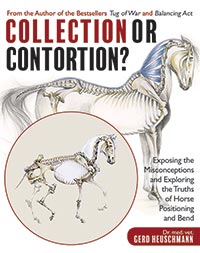
by Dr. Gerd Heuschmann
In this excerpt from his book Collection or Contortion? renowned veterinarian and advocate for the sport horse Dr. Gerd Heuschmann questions modern training methods that, while long known to be damaging to the horse’s body and mind, still find acceptance in arenas today.
Every rider dreams of having a horse that is easy to ride, supple, comfortable to sit on, elegant, and also meets the requirements of the preferred discipline. The horse should have a work ethic, be powerful and healthy, friendly, like to be with people, and be pleasant to get along with—in other words, a dream horse.
The fulfillment of this dream is largely in our hands. To achieve this, a long and very interesting path of development lies before us, and there will be many emotional moments along the way. There will be days of defeat and discouragement, but also many full of contentment and great joy!
The learning and development process of a rider takes many years, even decades, but finally puts him in the position to correctly train a horse. Over time, riding as many different horses as possible, as well as serious theoretical study, create an experienced, feeling rider. There are no young masters—even if you are considered a talented young rider!
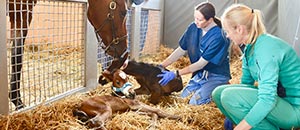
by Sacha Adorno
Excitement over a first pregnancy turned to concern for owner Adel Dukes Melson when her pregnant Holsteiner began showing signs of premature foaling. Weeks before the mare’s March 13 due date, her mammary gland started to develop and secrete milk, a typical indication that her body was preparing to soon give birth.
On February 19, Owner and horse traveled two hours from their home in Bethany Beach, Delaware to Kennett Square, arriving at New Bolton Center’s Emergency & Critical Care department at 8:30 PM.
There, they met Dr. Michelle Linton, Staff Veterinarian, Neonatal Intensive Care specialist, and part of Penn Vet’s High Risk and Healthy Mare Foaling programs.
That night, Linton and her team performed a physical exam, transrectal ultrasound, and fetal heart rate test. The next morning Treasure received an abdominal ultrasound to assess the fetus, uterus, and placenta.
Linton was expecting to find placentitis, the most common reason for premature mammary gland development and a potentially life-threatening condition for mare and foals.
“Treasure came in as a likely placentitis case, and we treated her as one,” Linton said. “But her uteroplacental measurements were normal, suggesting we were maybe dealing with something more.”
Although the ultrasounds showed one fetus and one heartbeat, Linton suspected Treasure might be carrying twins, which could also explain early udder development – and which, surprisingly, can be easy to miss in prenatal exams. She admitted the mare — 317 days pregnant at this point — to the Neonatal Intensive Care Unit (NICU) for monitoring and rest. Over the next few weeks, Treasure grew bigger and bigger but didn’t go into labor.
Four Legs... Then Four More
- Dental Surgery and Extractions
- A Rejected Foal and a Brokenhearted Mare Saved Each Other
- Miniature Horse Therapy: Great Big Good Things in Small Packages
- Man O’ War Project Helping the Soldiers of War Heal
- Is Icing Still a Valid Treatment for Injuries?
- Must-Have Secret Training Tools
- My Daughter is My Hero
- Horse Training: 7 Essential Steps for Safely Handling Your Horse's Feet
- Kinesiology Taping for Horses—It’s a Thing!
- AVMA Proposes Elimination Of Farrier Exemption From Veterinary Practice Act
- The Keys to Building Confidence in Your Horse from a Master Liberty Trainer
- What is a Shagya-Arabian?
- New Year’s Resolutions for the Senior Horse Owner
- Understanding Cold-Induced Laminitis
- Keeping Your Horse Calm Naturally During Stall Rest
- How “Let’s Do It!” Can Change Your Horse Business…and Your Horse
- Dr. David Nash and NSF Grant Moves Equine Medicine into the Future, with Wide-Ranging Visions for Human Use, as Well
- Fall Equine Wellness: What Your Horse Needs
- The Effect of Minerals on the Insulin Resistance (IR) Horse
- Hurricane Harvey and Irma Horse Rescues