




Health & Education
We all want the best care possible for our horses. The Heath & Education section covers both Learning Institutions, Organizations as well as many sources for equine assistance including Veterinarians and Farriers.
For those who want a to formally study horses, the Education section includes College Riding, Equine Studies, and Veterinary Schools. Learn about the wide variety of horses in the Horse Breeds section. Supplements and Treatments Therapy are also included in the section.
Everyone can learn from Fine Art and there are some specialty Museums that might surprise you.
Horses as a therapy partner enrich the lives of the disabled. These facilities are listed in our Therapeutic Riding section. To help children and young adults build confidence and grow emotionally, please see the resources available on the Youth Outreach page.
Looking for a place to keep your horse? You can find it in the Horse Boarding section. Traveling? Find a Shipping company or Horse Sitting service if your horse is staying home!
Want to stay up to date with the latest training clinics or professional conferences? Take a look at our Calendar of Events for Health & Education for the dates and locations of upcoming events.
Do we need to add more? Please use the useful feedback link and let us know!
Which one is YOUR horse?
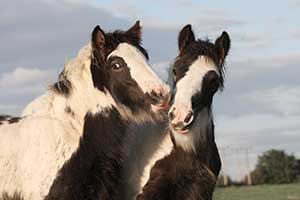
For people who haven’t spent much time around horses, it can come as a surprise that each one has their own personality and that horses can be just as expressive (if not more than) dogs or cats. As someone who spends most of my waking hours at a barn with over sixty horses, I encounter more equine idiosyncrasies than I can recount. In addition to school horses, both of my two horses have more personality than I do. Even though horses have somehow garnered a reputation as being proud and majestic, (which, sure, some of them think they are) their quirks come out the longer you spend with them. Here are different personality types you might find at any barn.
1. The Prankster. This is the horse you regularly see strolling around the property like he owns the place with a frazzled barn worker close behind. When you go out to his stall, he is likely to be on a self-guided taste-test of the hay bales you so carefully stacked the night before. By the glint in his eye when he knows he’s been caught, it’s obvious that he has no regrets and will absolutely let himself out again at the next opportunity.
2. The Hangry. This horse expects to be fed at the crack of dawn, sharp, and shows his intolerance for lateness by pawing, flinging buckets around his stall, and glaring at late feeders when they come into the barn. He is the first one done eating and will swear up and down that he hasn’t been fed yet. He will drag his riders across the arena to a single piece of hay on the ground and shamelessly chases his pasture-mates away from the best hay or grass.
Read more: The Academic Equestrian: 10 Horse Personality Types
by Chris McGrath
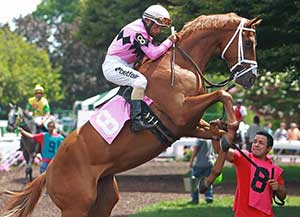
Hot blood. What, if anything, does it mean? Not in the sense that divides different breeds, as with German “Warmbloods” and so on, but within the Thoroughbred itself. Can a racehorse inherit a fiery or neurotic temperament, or indeed a mild and calm one, with the genes of its parents? Or must the spectrum of behavior, for better or worse, also reflect environmental influences on the upbringing of a foal?
Many experienced and respected horsemen are adamant that temperament can be traced through a family tree. Tony Lacy of Four Stars Sales is one. In man and beast alike, he feels, “the personality of the offspring is generally a result of their parents, and others in the genetic line.”
As with all attempts to reduce developments in science to some kind of silver bullet, however, most traits still have to be traced along a spectrum between heritability and environment. And so long as an elusive equilibrium must be sought between pedigree and preparation, then horsemen will still have to rely on their own wit and wisdom.
- Incorporating Mindfulness: Game Changer for Horse & Rider
- The Influence of Rider:Horse Bodyweight Ratio
- Debbie Roberts Loucks: The Big Power of Small Changes
- Study Suggests An ‘Emotional Transfer’ Between Humans & Horses
- Can Horses Really Smell Fear? Yes, And That’s Not All
- Boy with Autism Forms Incredible Bond with Horse After Being Bullied in School
- Horses can be affected by Zika virus, study shows
- You Are Not Alone: Mental Health in Our Equestrian Community
- Are Equine Infectious Disease Outbreaks Preventable? Are We Doing Enough?
- Horse Power: Equine Therapy for ADHD
- Colorado Women in Ranching: A spirit of nurturing, sustainability is alive at San Juan Ranch
- Do You Dare to Go Bare?
- Horse Health: Microchipping a Superior Form of Identification
- New Coat Colour in the Icelandic Horse
- Foal Q & A with Rood & Riddle’s Dr. Laurie Metcalfe
- The Equilume Light Masks Helps Pregnant Mares Foal on Time with Optimum Birth Weights
- Working with Horses to Develop Skills - Five Reasons Why It Works!
- Possible Link Between Selenium and Cribbing in Horses
- Lighting For Breeding and Performance
- Rider Biomechanics: Using Sensors to See How the Rider Influences the Horse (7:24)