




Health & Education
We all want the best care possible for our horses. The Heath & Education section covers both Learning Institutions, Organizations as well as many sources for equine assistance including Veterinarians and Farriers.
For those who want a to formally study horses, the Education section includes College Riding, Equine Studies, and Veterinary Schools. Learn about the wide variety of horses in the Horse Breeds section. Supplements and Treatments Therapy are also included in the section.
Everyone can learn from Fine Art and there are some specialty Museums that might surprise you.
Horses as a therapy partner enrich the lives of the disabled. These facilities are listed in our Therapeutic Riding section. To help children and young adults build confidence and grow emotionally, please see the resources available on the Youth Outreach page.
Looking for a place to keep your horse? You can find it in the Horse Boarding section. Traveling? Find a Shipping company or Horse Sitting service if your horse is staying home!
Want to stay up to date with the latest training clinics or professional conferences? Take a look at our Calendar of Events for Health & Education for the dates and locations of upcoming events.
Do we need to add more? Please use the useful feedback link and let us know!
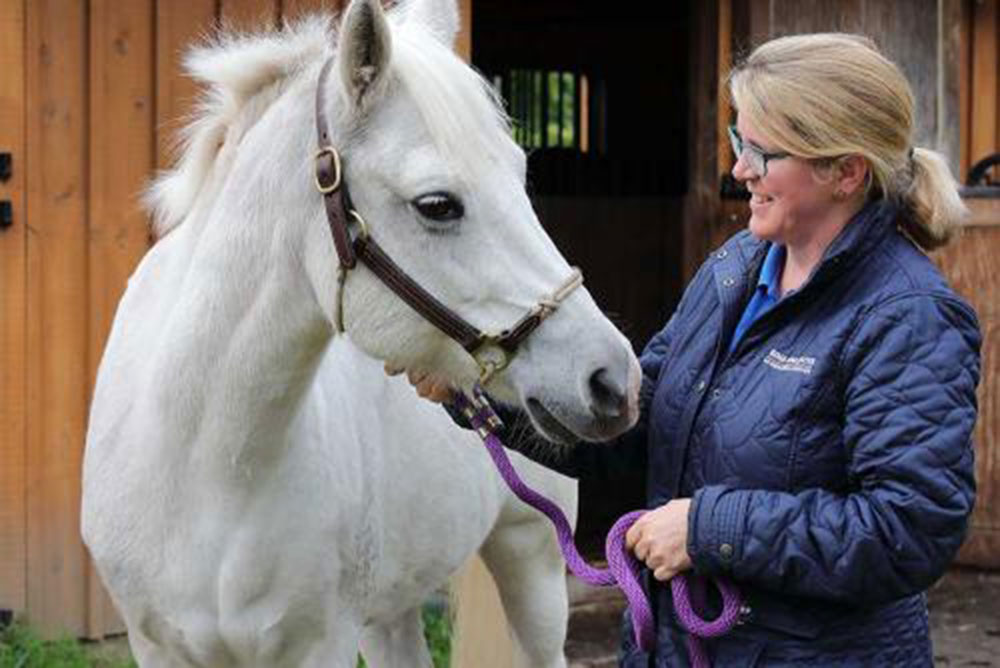
In the spring of 2019, four women with trauma histories visited a small farm in Lexington, Massachusetts, to try a new type of therapy. These sessions turned out to be quite a change of pace from typical group therapy—but not just because they involved horses.
Equine-facilitated psychotherapy (EFP), also known as equine-assisted psychotherapy, is, as the name suggests, therapy that features interactions with horses. Unlike therapeutic horseback riding, a licensed mental health professional facilitates EFP group sessions, and, in many cases, no horseback riding is involved. EFP instead focuses on caring for and working with horses to achieve goals similar to those of traditional psychotherapy.
Equine-Facilitated Psychotherapy
How does EFP work? How well does it work?
That’s what Sherry R. Winternitz, MD, clinical director of the Dissociative Disorders and Trauma Programs at McLean Hospital, and her co-investigator, researcher Stephanie A. Maddox, PhD, aim to show through the results of a McLean-led study at Lexington’s BINA Farm Center. BINA is a nonprofit focused on helping people of all ages and abilities thrive, primarily through equine-assisted activities and therapies.
Read more: Equine-Facilitated Psychotherapy: Facing Trauma With a Horse by Their Sides
by Holly Wiemers
The 2019-2020 foaling season has seen an increase in reports of Nocardioform placentitis, both in cases submitted to the University of Kentucky’s Veterinary Diagnostic Laboratory and in reports from equine practitioners in the field. Nocardioform placentitis is an equine placental disease affecting pregnant mares and their foals during pregnancy.
UK’s VDL provides real-time surveillance of this and other livestock diseases and has been sending reports updating practitioners and farms about what is being seen since positive tissue samples started appearing in late October.
Additionally, the Gluck Equine Research Center announced at its foundation board meeting Feb. 6 that it was activating Koller Emergency Response Funds to immediately augment existing research efforts and launch new projects to study the disease while it is occurring, with an aim of understanding the disease better.
Currently, early identification of the disease is a challenge, making it difficult to identify at-risk mares and treat them proactively.
- Odd Couples
- Born to Stretch — Long and Low
- Don’t Be So Hard On Yourself; 10 Ways to Stay Positive About Showing
- 3 Tips for Horse Riding With Epilepsy (and Confidence)
- Physical Signs of Damage Caused by Ill-Fitting Saddles
- Conception Failure in Mares: Seven Causes
- Horses Blink Less, Twitch Eyelids More When Stressed, U of G Researchers Find
- Maintain Your Horse’s Safety This New Year's Eve
- Caring for “Winter Woolies”
- Equestrian Programs Benefit Veterans
- New Allergens Associated with Severe Equine Asthma
- Testing a New Therapy for Horses Struggling to Breathe
- Minerals and the EMS Equine
- Straight From the Horse’s Mouth: Equine Dentistry Basics
- Nutrition for the Pregnant Mare
- Monty Roberts: I Don’t Want My Students to Be As Good As Me
- How to Choose the Right Farrier for Your Horse
- What Horses Like
- 3 Ways to Learn to Ride Better - An Excerpt from Two Brains, One Aim
- Older Horses Need Supplemental Vitamin C