





Health & Education
We all want the best care possible for our horses. The Heath & Education section covers both Learning Institutions, Organizations as well as many sources for equine assistance including Veterinarians and Farriers.
For those who want a to formally study horses, the Education section includes College Riding, Equine Studies, and Veterinary Schools. Learn about the wide variety of horses in the Horse Breeds section. Supplements and Treatments Therapy are also included in the section.
Everyone can learn from Fine Art and there are some specialty Museums that might surprise you.
Horses as a therapy partner enrich the lives of the disabled. These facilities are listed in our Therapeutic Riding section. To help children and young adults build confidence and grow emotionally, please see the resources available on the Youth Outreach page.
Looking for a place to keep your horse? You can find it in the Horse Boarding section. Traveling? Find a Shipping company or Horse Sitting service if your horse is staying home!
Want to stay up to date with the latest training clinics or professional conferences? Take a look at our Calendar of Events for Health & Education for the dates and locations of upcoming events.
Do we need to add more? Please use the useful feedback link and let us know!
Ken Najorka will demonstrate proper and effective Riding Position in both English and Western seats. This is a educational and safety video brought to you by the Certified Horsemanship Association (CHA) For more information on the largest certifying body of riding instructors and barn managers in North America, Certified Horsemanship Association, please visit www.CHA.horse.
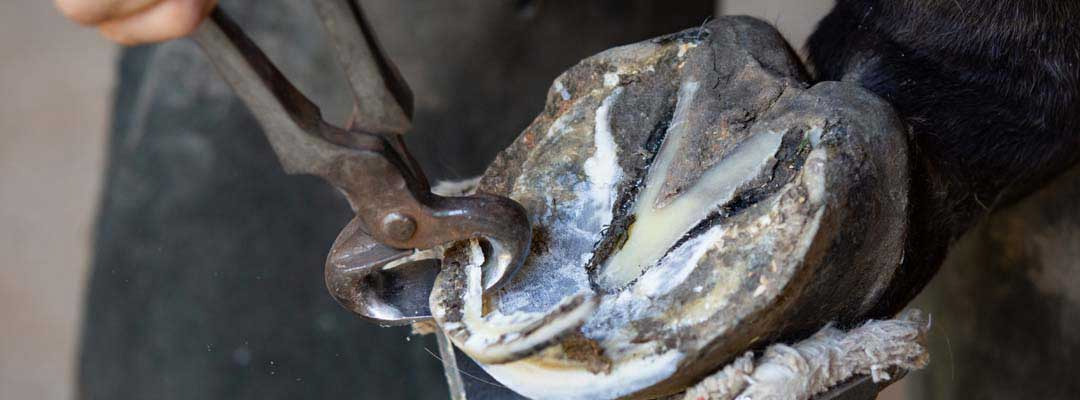
The old adage, “no hoof, no horse” is more than a saying. Keep stride with hoof care maintenance to help avoid hoof cracks.
What causes hoof cracks in horses?
There are several factors that can result in hoof cracks, including:
- Dry weather
- Frequent changes from wet to dry footing
- Overall poor hoof quality
- Prolonged trimming intervals, resulting in long hoof growth
“If you let your horse go without trimming for extended periods of time, their hooves become real long, split and break off. Because of this, they will have a greater potential to crack, especially if the weather is dry,” cautions John McGuire, a farrier of 27 years.
My horse has a hoof crack. What should I do?
Determine which kind of hoof crack your horse has and make either your farrier or veterinarian aware. They can work with you to reduce chances of lameness and infection.
What are the different types of hoof cracks in horses?
Vertical hoof cracks These are the most common of hoof cracks, running perpendicular to the ground. Vertical cracks that originate at the coronary band and grow downward are the most concerning.
Horizontal cracks and hoof blowouts This common crack can occur after injury to the coronary band or a direct impact to the hoof wall.
Toe cracks This is a common result of heel pain, as horses put more weight on the toe to avoid discomfort. These cracks occur with repeated pressure on the hoof’s front portion.
Grass cracks Usually superficial and thin, grass cracks are commonly experienced when horses have long, unshod hooves; environmental changes, lack of nutrition or impaired blood flow to the hoof also contribute. They often begin from the ground and move upward and are easily corrected with regular farrier work.
Quarter cracks Quarter cracks usually start at the coronary band and travel toward the ground. They are caused by trauma, conformational issues and lack of regular trimming. Landing unevenly can cause a quarter crack in the hoof.
Sand cracks Sand cracks extend downward and occur after a coronary band injury or from white line disease at the coronary band.
Bar cracks These painful cracks occur on the bars of a horse’s hooves (the area on both sides of the frog). Horses that have experienced direct impact to the bar, or have weak and unbalanced bars, are more susceptible to bar cracks.
How can I prevent hoof cracks?
Take steps to help ensure your horse has the healthiest hooves for his ultimate performance.
- Maintain regular trimming and shoeing schedules. A consistent schedule of every six to eight weeks is ideal.
- Ensure good hoof balance.
- Be mindful of shoeing, based on weather and footing conditions.
- Should a hoof problem present itself, immediately seek treatment options.
- Provide horses with excellent nutrition.
- Apply hoof moisturizers and conditioners, especially during dry weather, and anytime your horse’s hooves are brittle or cracking.
- Incorporate hoof supplements to improve overall hoof quality.
“I’m a firm believer in hoof products like Rain Maker, Hoof Flex and Horseshoer’s Secret. Using these products will help prevent hoof cracks more than anything, that along with regular trimming and maintenance on the horse. I’ve also had a lot of clients use hoof supplements. For those horses who are lacking in certain minerals that promote healthy hooves, I really think you can see a difference,” McGuire said.
Valley Vet Supply carries a number of high-quality hoof supplements. Good hoof supplements will include B-vitamins (mainly biotin), minerals essential to hoof strength (zinc, manganese and copper), and amino acids (methionine and lysine) for the proteins that provide the elasticity of the hoof. Examples would be Command Hoof, Command Coat and Hoof and Horseshoer’s Secret.
Look to trusted hoof care products and implement the preventive tips above to help ensure sound rides with your horse!
- Rood & Riddle Stallside Podcast - The Cost of Horse Ownership with Kate Hayes and Deb Reeder
- Equestrian Sports in Schools: Fostering Discipline, Teamwork, and Leadership Skills
- Adjusting the Rope Halter with Julie Goodnight (5:34)
- How to Safely Adjust Stirrups and Girth While Mounted on English Tack with Mitzi Summers
- Types of Western Saddles, Explained
- Know Thy Forage: Ten Forage-Related Terms That May Be New To You
- The Emergency Stop with Julie Goodnight (3:05)
- Sample Lesson on First Trot with Andrea Boone (16:49)
- Horse Heatstroke and Exhaustion
- Putting Weight on a Skinny Horse
- The Export Journey of the Icelandic Horse (22:17)
- Why Wear a Helmet? Riders Share Harrowing Close Calls
- Equine Affaire Educational Program - Monty Roberts performs Join-Up with a Wild Horse (22:37)
- Veterinarian, Equestrian Advises on Caring for the Senior Show Horse
- Rood & Riddle "Stallside" Podcast - Scratches and Hives Oh My! with Dr Julia Miller
- Your Child Wants to Ride a Horse! What Should You Do?
- Biosecurity Education & Training
- Sample Lesson: First Lope with Tara Reimer (17:12)
- Obese Equine Athletes: Are These “Unhealthy” Healthy Horses?
- Facility Design with Biosecurity in Mind