




Health & Education
We all want the best care possible for our horses. The Heath & Education section covers both Learning Institutions, Organizations as well as many sources for equine assistance including Veterinarians and Farriers.
For those who want a to formally study horses, the Education section includes College Riding, Equine Studies, and Veterinary Schools. Learn about the wide variety of horses in the Horse Breeds section. Supplements and Treatments Therapy are also included in the section.
Everyone can learn from Fine Art and there are some specialty Museums that might surprise you.
Horses as a therapy partner enrich the lives of the disabled. These facilities are listed in our Therapeutic Riding section. To help children and young adults build confidence and grow emotionally, please see the resources available on the Youth Outreach page.
Looking for a place to keep your horse? You can find it in the Horse Boarding section. Traveling? Find a Shipping company or Horse Sitting service if your horse is staying home!
Want to stay up to date with the latest training clinics or professional conferences? Take a look at our Calendar of Events for Health & Education for the dates and locations of upcoming events.
Do we need to add more? Please use the useful feedback link and let us know!
In episode #64 of StallSide, we dive into thoroughbred stallion management with Sandy Hatfield; hosted by doctors Bart Barber and Peter Morresey, this episode offers a glimpse into the life of the esteemed Stallion Manager at Three Chimneys Farm. Listeners can learn about the unique challenges and joys that come with the job of a Stallion Manager.
Sandy Hatfield discusses the importance of patience, socialization, exercise, personalities, teaser stallions, and training of breeding stallions. Her insights provide a valuable perspective for both seasoned breeders and those new to the world of thoroughbred breeding.
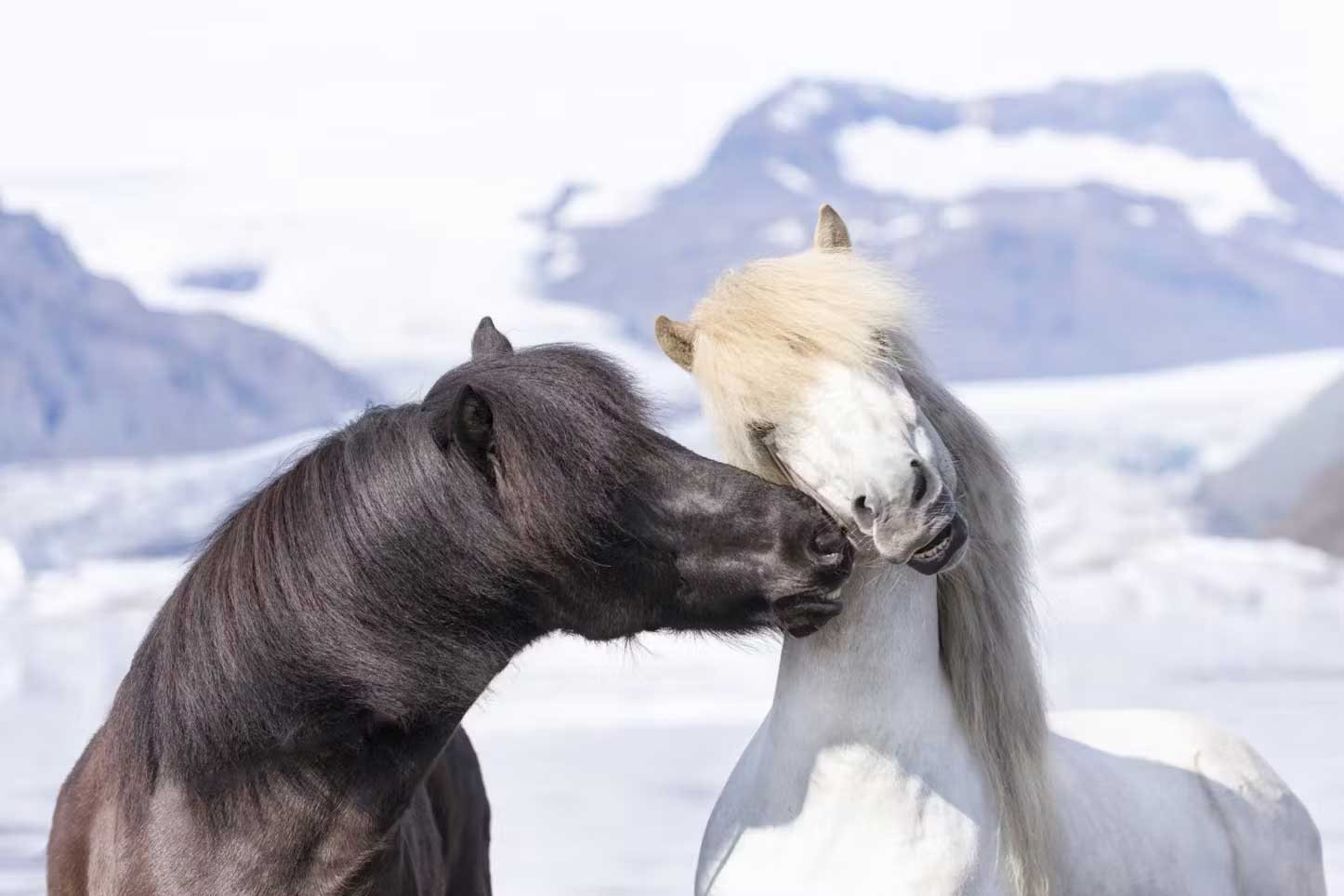
The Icelandic horse is one of the most colorful breeds in the world.
The Icelandic horse has over 40 colors and up to 100 variations and, with only few exceptions, most of the known horse colors can be found within the breed. This fact adds both to the charming look of the Icelandic horse and to variation within the breed. Not only are all colors allowed in the studbook, but variety is encouraged, as the official breeding goal is simply to preserve all colors naturally occurring in the breed.
Although the commonly known statement “a good horse has no color” is true to a degree, people often have their favourites and will discuss the range and characteristics of colors extensively.
COLORS AND GENETICS
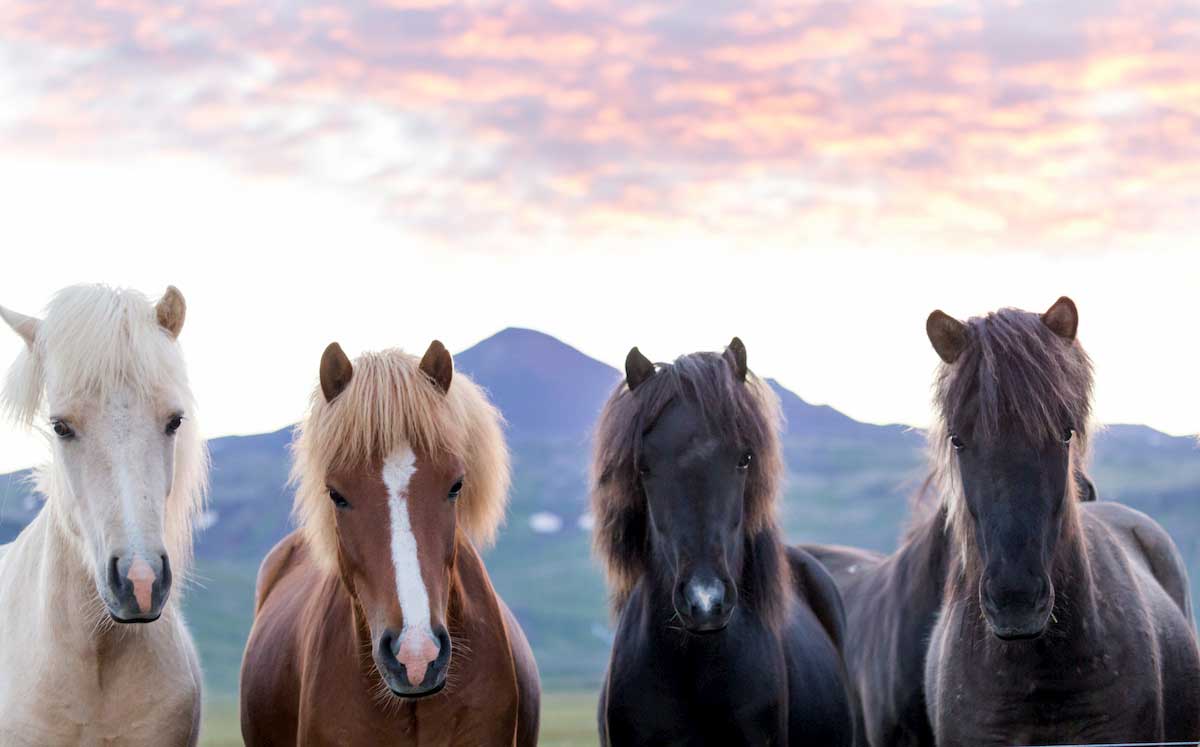
The most common colors are red (chestnut) and black (brown). All horses have a base colour that can vay from black, red/chestnut or bay. Black horses can be either heterozygote – containing both the red and black genes – or fully black, where red offspring would be impossible. The red base color comes when both parents give the red gene, but it is not a dominant gene, meaning it only shows as red when in homozygote state, that is, when inherited from both parents. Therefore, if both parents are red, the foal can only be red.
VARIATIONS OF COLOR
On top of these base colors come all the variations, like skewbald, dun, palomino, grey, silver dapple, splash-skewbald and roan. These can often also be combined so the same horse can have a black base color, but have both the dun gene and the silver dapple gene, making the outcome much lighter than the base color prescribes. Grey can come on top of all colors and basically means that the horses turn white with age.
The silver dapple variation is hidden in the red base color, so although not shown, it can be present and inheritable. In bay and black base colors, it lightens the mane and tail as well as the body to some degree, causing the famous “chocolate color” when the base color is black. Although very pretty, it is crucial to breed silver dapple horses carefully as a link has been found between multiple congenital ocular anomalies (MCOA) and this color when the horse is homozygote.
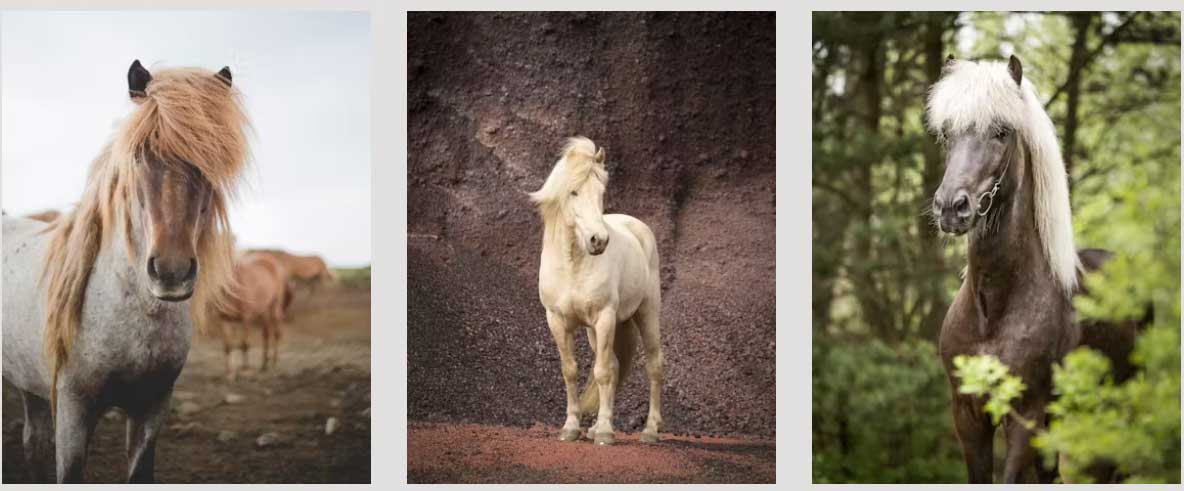
The rarest color variations found in Icelandic horses are sabino and roan. Until 2003, no sabino variation had ever been seen within the breed but a mare was then born in Germany with a specific sabino mutation. In 2013, a second, different sabino mutation occurred, this time in Iceland and in a stallion. Every Icelandic sabino horse can now be traced to one of those two horses.
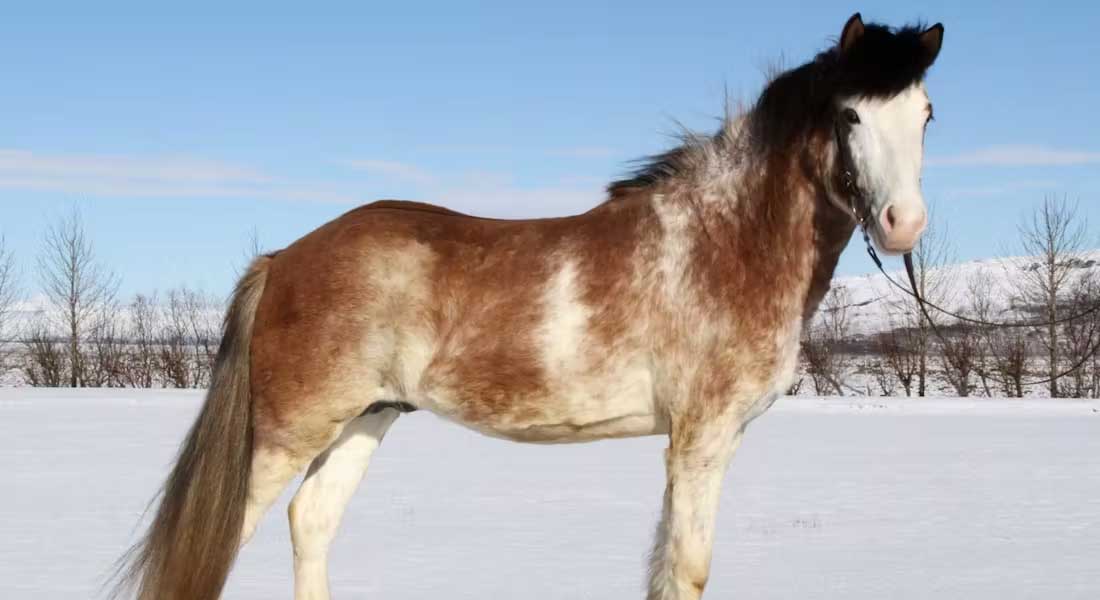
The second rarest color variation of Icelandic horses is roan. Icelandic roans are often called color-changers, because the horses with this variation show their “real” color in summer coat as well as in full winter coat, but in spring and autumn the middle layer in their coat has no color, and is, in other words, white.
On top of all the possible colors and variations, multiple add-ons such as a blaze, star, snip, socks or other markings can also be found within the Icelandic horse breed, making each horse as unique on the outside as on the inside.
This article originally appeared on The Horses of Iceland and is published here with permission.
You can find more interesting articles in our section on Health & Education.
- Minis – A Big Horse in a Little Package
- Holding the Horse for the Vet or Farrier with Julie Goodnight (7:03)
- Fitting the Martigale with Julie Goodnight (12:33)
- Colic in Horses, Explained
- Lengthening and Shortening the Horse's Strides with Ann Brzezicki (20:31)
- Equine Asthma: Current Understanding and Future Directions Research - Dr Dorothee Bienzle (14:25)
- The Real Cost of Horse Ownership - Jackie Bellamy-Zions (5:51)
- Keeping Dogs Safe around Horses and Livestock
- 5 Winter Plus Senior Horse Care Tips
- How to Measure for Hoof Boots
- The Benefit of Barn Cats!
- Treating a foal's Overbite with Dr Brad Tanner from Rood & Riddle Equine Hospital
- Biosecurity for Horse Owners
- Biosecurity: When and How to Isolate
- Do You Ride Big or Small? and excerpt from "Ride Big" by John Haime
- Rood & Riddle "Stallside" Podcast - The Science and Benefits of Equine Plasma with Sarah Myer Thompson (38:11)
- Olfactory Stimulation Enriches Horses’ Environments
- Whole Food Options to Boost Protein Quality
- Monty Roberts Gentling Your Spooky Horse (4:17)
- The Biomechanics of Engagement :The Essential Components of Self Carriage (18:19)