




Health & Education
We all want the best care possible for our horses. The Heath & Education section covers both Learning Institutions, Organizations as well as many sources for equine assistance including Veterinarians and Farriers.
For those who want a to formally study horses, the Education section includes College Riding, Equine Studies, and Veterinary Schools. Learn about the wide variety of horses in the Horse Breeds section. Supplements and Treatments Therapy are also included in the section.
Everyone can learn from Fine Art and there are some specialty Museums that might surprise you.
Horses as a therapy partner enrich the lives of the disabled. These facilities are listed in our Therapeutic Riding section. To help children and young adults build confidence and grow emotionally, please see the resources available on the Youth Outreach page.
Looking for a place to keep your horse? You can find it in the Horse Boarding section. Traveling? Find a Shipping company or Horse Sitting service if your horse is staying home!
Want to stay up to date with the latest training clinics or professional conferences? Take a look at our Calendar of Events for Health & Education for the dates and locations of upcoming events.
Do we need to add more? Please use the useful feedback link and let us know!
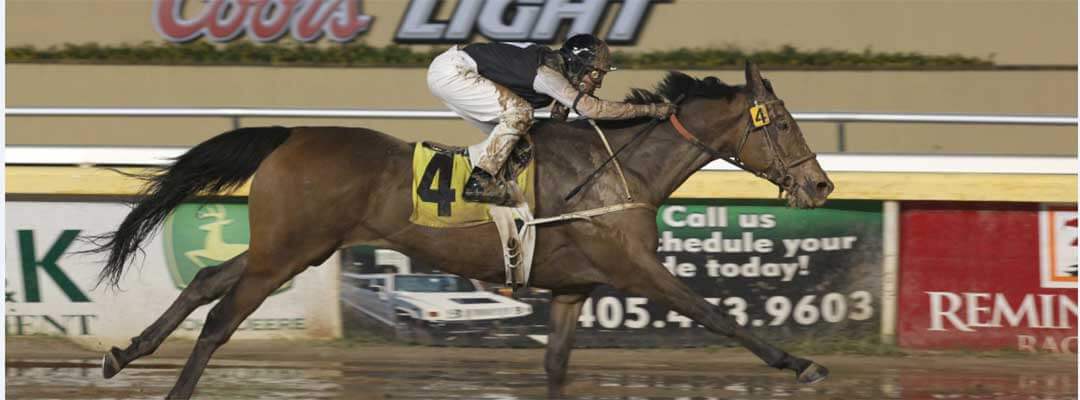
The racing career of Thoroughbred mare, Miss Hockaday, was an immediate success, with career earnings amounting to nearly $262,000, spanning across Oklahoma, Texas, Arkansas and Iowa.
With a champion bloodline harkening to Thoroughbred greats like Seattle Slew and Northern Dancer, owner-trainer, husband-and-wife duo, Jearl (Ace) and Randy Hare, decided her second career would be as a broodmare, continuing on her legacy.
“To see Miss Hockaday’s racing success, and to continue her on as a broodmare, was amazing,” said Randy Hare, co-owner of Hare Racing Stables in Oklahoma City. “She ran a lot of races and beat a lot of great horses. With such high earnings, we only paid $800 for her. It was a very exciting time, and she retired from racing completely sound.”
With her success on the track, it was a paramount decision to select the best possible sire for Miss Hockaday’s first foal.
“Living in Oklahoma, we don’t have a large pool of premier stallions to choose from,” said Hare. “I got her to the best stallion I could, and that was in Kentucky.”
Miss Hockaday was bred to a leading sire, Shackleford, who after retiring in 2012 with $3,090,101 in earnings, cashed in with an initial stud fee of $20,000. The foal, Hareraising, was sold at Keeneland and soon embarked on her racing career.
A mare’s health leading up to breeding is critical for the success of conception, as well as a healthy foal.
Consider These 6 Important Factors for Broodmares and Successful Breeding
- Suppress estrus for improved fertility with Regu-Mate®, Altren® Or Ovamed®.
Estrus suppression will help you predict estrus, as well as improve a mare’s fertility. Regu-Mate facilitates breeding earlier in the season by helping transitional mares cycle regularly. Scheduled breeding with Regu-Mate helps breeding barns manage costs of shipped semen, reduce number of stallion collections needed and schedule the estrous cycles of donor and recipient mares for embryo transplants. By administering Regu-Mate or Ovamed®, mares will return to estrus within five days following treatment. - Ensure mares are at a healthy weight.
Mares should enter the breeding season fit and gaining weight for better chances of successful conception, according to the American Association of Equine Practitioners (AAEP). - Eliminate stress as much as possible.
Stress can cause a mare’s level of Progesterone to drop. This hormone is critical to maintain pregnancy. Illness can cause the mare's system to secrete prostaglandins, which may cause foal loss (commonly referred to as abortion), according to the AAEP. - Maintain current vaccinations.
Protect against abortions in pregnant mares through vaccinations against Eastern and Western encephalomyelitis, West Nile virus, influenza and tetanus at the beginning of pregnancy. Administer booster vaccinations one month before foaling to increase the antibody level in the mare's colostrum to help protect the newborn foal from disease risk. The AAEP also recommends mares be vaccinated against equine rhinopneumonitis at five, seven and nine months' gestation. - Protect the mare and foal from parasites.
As the mare is the primary source for her foal’s parasite risk, it is important for her to be on a safe and effective deworming schedule, with guidance on frequency and timing provided by your veterinarian. - Ensure nutritional needs are met.
As the foal continues to grow, especially during the last four months of pregnancy, a mare’s energy needs will increase. Provide enough quality forage and grain to meet these heightened energy requirements. When it comes time for your mare’s big day, make sure you have everything needed with this Professional Foaling Kit.
Continue on the legacy. Ensure successful conception through excellent broodmare health and these proven solutions for improved fertility, Regu-Mate and Ovamed.
Read more: Breeding for the Next Champion: 6 Important Considerations for Broodmares
By Juliet M. Getty, Ph.D.
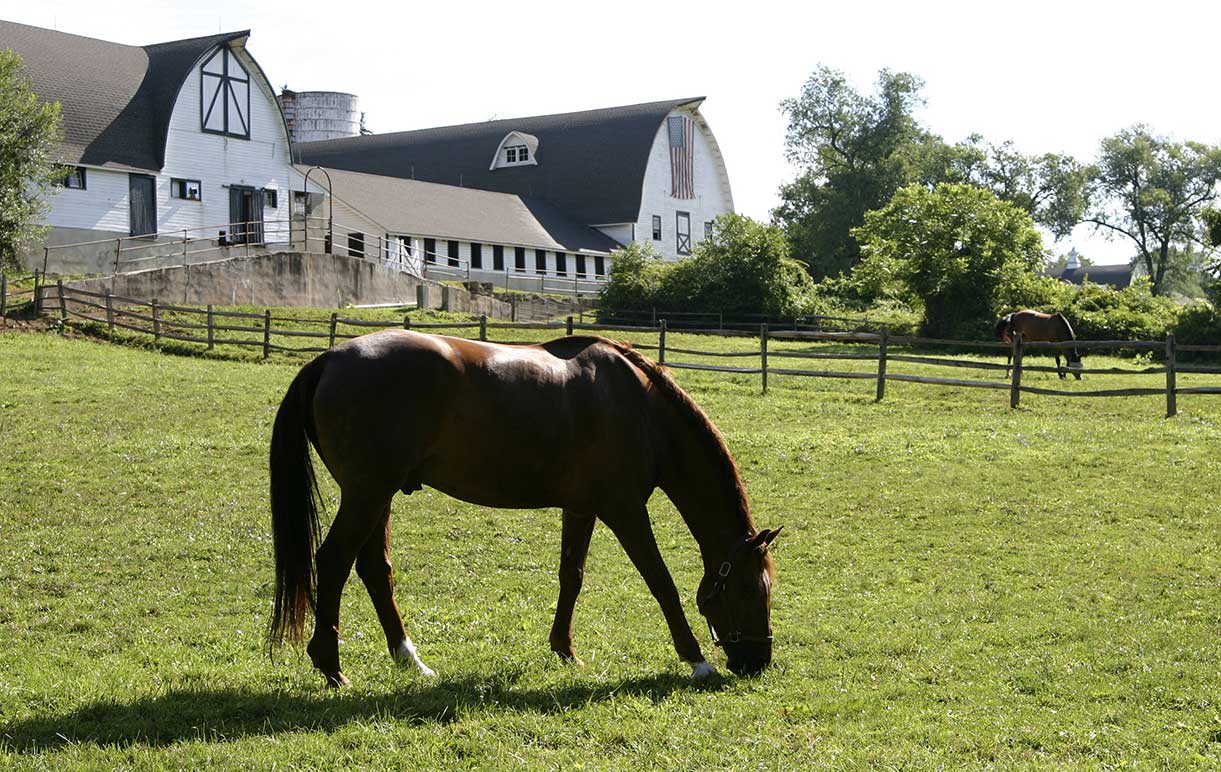
Driving through Kentucky, I passed breathtaking farms - acres and acres of meticulously manicured pastures, lined with black Kentucky-style four board fences that seemed to travel for miles. What struck me, however, was their barrenness.
Where are all the horses?
Placed high on mounds in the distance were spectacular barns, "horse hotels," where horses reside - some just during the day, some for most of the time.
While this may be convenient for the horse owner, standing in a small area for hours on end (even if part of it is outdoors) takes its toll on your horses' mental and physical health, to such a great extent, that it dramatically diminishes his quality, and length, of life.
Horses need to move.
Ever tried staying in a small room for most of the day? Likely, very uncomfortable; and we like cozy places! But horses most definitely do not! Their very survival depends on their ability to flee at a moment's notice from dangers, real or perceived. Trapped, they eventually succumb to their fate, appearing as though they are accepting and perhaps even appreciating their solitude. But the stress takes its toll on their immune system and hormonal responses, leading to a vast variety of health issues.
All body systems, including cardiovascular, respiratory, digestive, reproductive, neuromuscular, and skeletal systems depend on exercise to remain sound. If the horse cannot be ridden every day, many will benefit from simply being lunged or worked in a round pen for a short period of time to provide an opportunity to get the blood flowing. Be aware that running around in circles for prolonged periods of time is unnatural and can be detrimental physically and mentally, causing frustration and inducing a stress response. Allowing for more natural forms of movement such as free exercise by walking around in a large pasture (or dry lot with hay available) is the best way to provide needed exercise.
Consider these potential problems
Obesity. The reason is obvious -- too little activity, combined with too many calories. Reducing calories can be accomplished by minimizing or even removing concentrates from the diet, but forage must never be restricted. Doing so starts a hormonal cascade that actually keeps the horse overweight.[i]
Porous bones. Skeletal bones are made of living, dynamic tissue that is constantly being subjected to changes in mineral and protein content. The horse's large size helps him build bone mass simply by moving. Inactivity can make horses' bones porous, potentially leading to fractures when only a slight demand is placed on them.
Poor feet and hair coat. Inadequate blood circulation reduces the flow of nutrients and oxygen to the extremities and hair follicles. Don't be fooled by the shiny coat that results from added dietary fat - that is simply a result of more oil secretion from the skin's sebaceous glands. Truly healthy hair and hooves require exercise to delivery necessary nutrients.
Digestive disorders. Horses allowed to graze on pasture 24/7 rarely develop ulcers. Stall confinement is a significant cause of this painful condition, especially when forage is not available 'round the clock. In addition, digestive tract muscles suffer from lack of activity. A steady, consistent supply of forage will help exercise these muscles.
Physical activity increases blood circulation and stimulates gastrointestinal motility, keeping the entire digestive tract in good shape, lessening the chance of torsions, impactions, and intussusceptions that lead to colic. Fiber digestion is also improved. What is so disheartening is that within two weeks of changes to stall confinement (such as experienced by horses transported to training facilities), the vast majority of horses will develop ulcers and more than half of them will develop colon/fecal impactions.[ii]
Mental well-being. The stress of stall confinement and isolation often leads to unattractive behaviors, consistent with trapping any animal -- weaving, stall-walking and circling, pawing, wall-kicking, chewing, head-bobbing, self-biting, and even cribbing (which is more than just a bad habit - it is generally done to alleviate the pain of an ulcer). Horses are social animals, requiring time with each other in a herd environment to provide protection, comfort, and mutual grooming.
Metabolic impacts. Sedentary horses lose muscle mass and can become insulin resistant. Muscle uses a large amount of glucose for energy; the more muscle mass your horse has, the more glucose transporters are produced, leading to beneficial insulin sensitivity. Therefore, exercise not only burns calories, but reduces insulin resistance. Exercise also helps reduce leptin resistance.
Fitness decline. Reduced exercise results in loss of muscle and bone mass which significantly impacts the horse's fitness level and performance ability. Researchers at Virginia Intermont College[iii] found that horses on stall rest for 14 weeks lost fitness and even more interestingly, pastured horses were able to maintain the same fitness level as horses who were stalled and exercised five days per week.
Growth retardation. A growing horse requires exercise for cartilage and overall bone and joint development. Restricting exercise can result in injury, under-conditioned joints, contracted tendons, deformed legs, and osteopathic disorders.
Accelerated aging. When the immune system is suppressed, the horse becomes more susceptible to catching infections from other horses, developing insect-borne diseases, and exhibiting allergic responses to the environment. Weariness from confinement increases oxidative stress, resulting in free radicals that damage healthy tissues, inhibit repair, and alter DNA. What we once thought as age-related conditions such as degenerative arthritis, and PPID, now appear in horses at far younger ages.
Possible solutions
We need to think "out-of-the-box" (pun intended). We need to find ways to offer our horses a safe environment that encourages movement and grazing time, as well as respects their innate physiological need for forage flowing through the digestive tract at all times.
One innovative approach is to transform an area into a "Paddock Paradise"[iv] where horses seek out new batches of hay while walking from place to place. This concept is quite versatile, allowing for even small sizes of land.
Relaxing standards that require keeping a horse stalled so he will stay clean and well-groomed, in favor of having a happier, more naturally kept horse will cut back on maintenance requirements and allow more time for enjoying your horse. Think of creative ways to let your horse outside to be with other horses.
If some stall time is unavoidable, be sure to provide at least two places where hay is always provided. If your horse tends to eat very quickly, start by providing hay free-choice. Once he gets the message that he will not run out of hay, he will start to slow down his eating and be more relaxed. Commercially available "slow feeders" are a good option for many horses, if they are introduced gradually, to avoid frustration.[v]
Shelter from harsh weather is a must. This can best be accomplished by offering your horse the option to make choices. Barn stalls with open gates that can be entered at will, allow your horse to decide what is most comfortable.
Bottom line
Confining a horse to a stall or small outdoor area without the ability to exercise leads to an animal who is mentally stressed and physically limited. Exercise, walking, grazing, socializing, and freedom to flee from perceived dangers are essential parts of what makes your horse, a horse.
This article originally appeared on Getty Equine Nutrition and is published here with permission.
Find more informative articles in our section on Health & Education.
Read more: Empty Fields Everywhere Why Movement is So Important
- Hard Tying the Horse to a Rail or Post with Michal Kays (5:37) - Certified Horsemanship Association
- The Icelandic Horse - Quite the Characters!
- 4 Signs of a Happy Horse
- Stallside Podcast - Behind the scenes with the Rood & Riddle Anesthesia and Surgery Technician Team (34:01)
- Breaking the Cycle of Hoof Lameness: Navicular, Laminitis, Pedal Osteitis (14:25)
- Rood & Riddle: Advances in Equine Healthcare (6:37)
- Extending Photoperiod for Muscle Development in Young Horses
- Adopting a Wild or Feral Mustang?
- Rood & Riddle Stallside "Inside the Breeding Shed with Sandy Hatfield, Stallion Manager at Three Chimneys Farm" (31:37)
- The Horses of Iceland - Many Different Colors
- Minis – A Big Horse in a Little Package
- Holding the Horse for the Vet or Farrier with Julie Goodnight (7:03)
- Fitting the Martigale with Julie Goodnight (12:33)
- Colic in Horses, Explained
- Lengthening and Shortening the Horse's Strides with Ann Brzezicki (20:31)
- Equine Asthma: Current Understanding and Future Directions Research - Dr Dorothee Bienzle (14:25)
- The Real Cost of Horse Ownership - Jackie Bellamy-Zions (5:51)
- Keeping Dogs Safe around Horses and Livestock
- 5 Winter Plus Senior Horse Care Tips
- How to Measure for Hoof Boots