




Health & Education
We all want the best care possible for our horses. The Heath & Education section covers both Learning Institutions, Organizations as well as many sources for equine assistance including Veterinarians and Farriers.
For those who want a to formally study horses, the Education section includes College Riding, Equine Studies, and Veterinary Schools. Learn about the wide variety of horses in the Horse Breeds section. Supplements and Treatments Therapy are also included in the section.
Everyone can learn from Fine Art and there are some specialty Museums that might surprise you.
Horses as a therapy partner enrich the lives of the disabled. These facilities are listed in our Therapeutic Riding section. To help children and young adults build confidence and grow emotionally, please see the resources available on the Youth Outreach page.
Looking for a place to keep your horse? You can find it in the Horse Boarding section. Traveling? Find a Shipping company or Horse Sitting service if your horse is staying home!
Want to stay up to date with the latest training clinics or professional conferences? Take a look at our Calendar of Events for Health & Education for the dates and locations of upcoming events.
Do we need to add more? Please use the useful feedback link and let us know!
By SARAH WELK BAYNUM
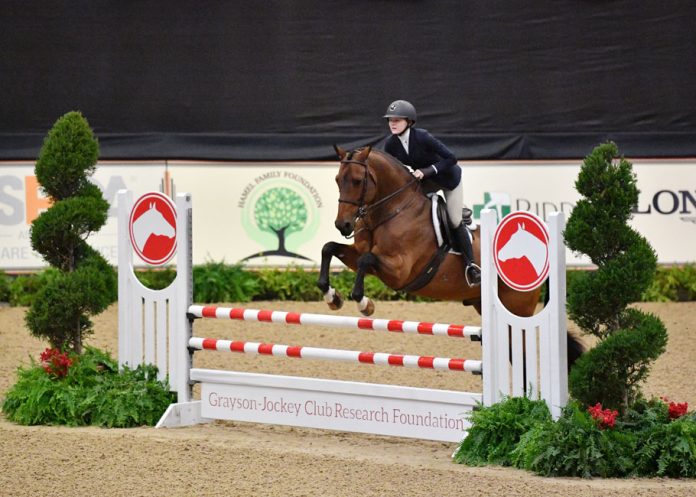
The average horse owner may not believe that the Grayson-Jockey Club Research Foundation has anything to do with them. In actuality, there are countless horses whose lives have been saved as a direct result of the group’s research.
The Grayson-Jockey Club Research Foundation was founded in the 1940’s by a group of horsemen who originally donated their first equine research grant to the University of Pennsylvania. One of the projects that is currently being researched hits close to home for performance sporthorses—namely, spinal ataxia due to neurological diseases.
The group has funded research for a wide variety of breeds and disciplines—not just those in the Thoroughbred industry. Since 1940, the Grayson-Jockey Club has provided more than $42.3 million dollars in research money and underwritten over 437 projects across 48 universities.
This year, the Grayson-Jockey Club Research Foundation board of directors announced it will fund 11 new projects, along with 13 continuing projects, with an authorized expenditure of $2,455,164.
The Diagnosis Dilemma of Spinal Cord Diseases
Other than EPM, the definitive diagnoses for the underlying cause of spinal ataxia is extremely challenging.
Neurological diseases can often be career-ending diagnoses and causes for many horses. The two leading causes of spinal ataxia are cervical vertebral compressive myelopathy (CVCM, also known as Wobbler Syndrome), and neuroaxonal dystrophy / equine degenerative myeloencephalopathy (eNAD / EDM). These two diseases are the leading causes of spinal ataxia.
eNAD / EDM results from abnormalities of certain neurons in the spinal cord and brainstem. Horses are genetically predisposed to acquiring this disease. However, environmental triggers in the form of insufficient vitamin E are also required before you see clinical signs.
Horses with eNAD / EDM have varying symptoms, ranging from mild performance issues to severe debilitation. Clinical signs commonly include incoordination, not knowing where their feet are, having an abnormal leg stance that’s too wide or too close together, difficulty with tight turns, going up hills etc. are all common.
CVCM on the other hand, is a developmental defect of the neck vertebrae that causes narrowing of the spaces in the spine. Malformation of the spine, osteochondrosis, repetitive micro-trauma, and dietary factors like copper deficiency, excessive zinc, or high carbohydrate rations can result in CVCM. Like eNAD / EDM, horses are unsteady on their feet with this disease and the symptoms can range in severity. Neck stiffness, inability to correctly place their feet, toe dragging, and decreased range of motion are also common symptoms.
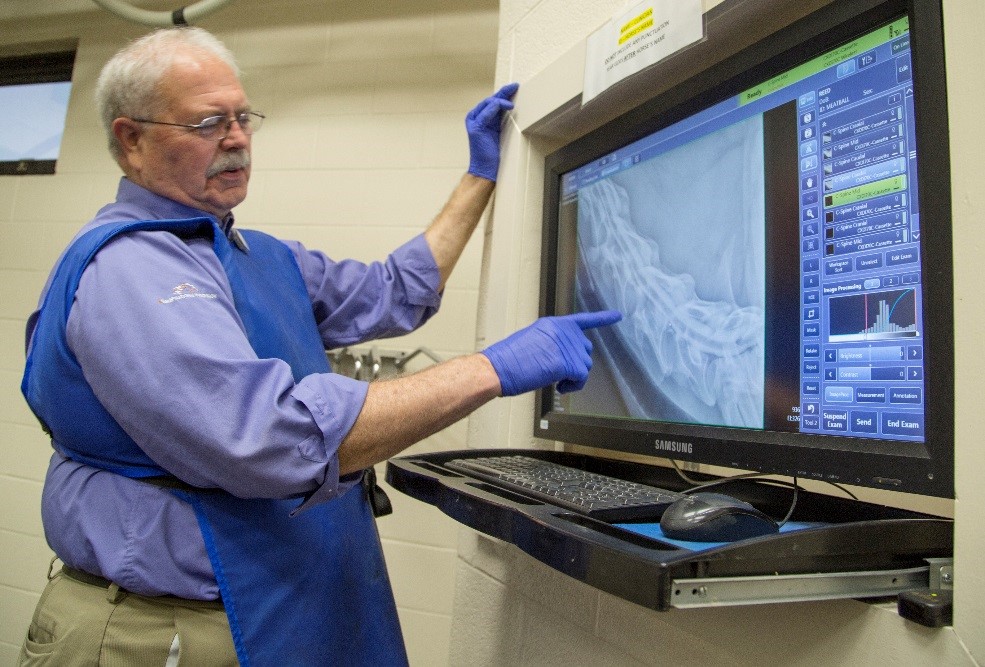
Unfortunately, CVCM and eNAD / EDM are hard to differentiate because they have such similar clinical signs. The definitive diagnosis of these diseases is challenging while the horse is alive, and is typically made after the horse is euthanized.
This is because a there is no way to truly diagnose these illnesses—there are no MRI machines large enough to accommodate the size of a horse’s neck. The current way veterinarians are diagnosing CVCM is with x-rays and CT scans.
While Warmbloods and Quarter Horses are both breeds prone to these diseases, they tend to show clinical signs quite differently. For example, Quarter Horses with eNAD / EDM will have an associated vitamin E deficiency and begin slowly showing incoordination at a young age, while Warmbloods will have a more sudden onset of incoordination and behavioral changes between 5-15 years old without this vitamin E deficiency.
Because of how challenging it is to diagnose these spinal cord diseases, it creates a stressful financial burden and a career or even life-ending decision for horse owners and trainers.
However, thanks to the current research project being done by the Grayson-Jockey Club Research Foundation, a study is being conducted that includes a highly specific and sensitive blood and spinal fluid test that can be used in conjunction with the current standard diagnostic testing.
New Developments
It is expected this study will greatly improve the diagnoses of these spinal cord diseases overall.
“Currently, a definitive diagnosis for both eNAD/EDM and CVCM can only be obtained after a horse has been euthanized. Imaging such as CT/myelogram can assist with diagnosing CVCM, but we are in need of biomarkers that can be measured in the blood or spinal fluid of horses that could help us determine which of these diseases is the most likely,” says Dr. Carrie Finno.
The investigators of this project include Dr. Finno of the University of California-Davis, Dr. Amy Johnson of the University of Pennsylvania-New Bolton Center, and Dr. Steve Reed of Rood and Riddle, KY.
Through an innovative approach, 367 proteins involved in neurologic diseases in humans were screened and defined in the blood (serum) and cerebrospinal fluid (CSF) from confirmed cases of CVCM or eNAD / EDM in Warmbloods and Quarter Horses.
Based on the results of this screening, the researchers hope to validate these findings using bench-side antibody tests from the initial sample and a group of additional confirmed cases of equine spinal cord disease.
The hypothesis is that the concentrations of five specific proteins will help them distinguish between the two diseases.
The expectation is that the concentration of certain proteins in the serum will be higher in CVCM horses as compared to those in eNAD / EDM horses and those in healthy horses. Because Quarter Horses and Warmbloods present these spinal cord diseases so differently, it’s also expected the protein concentration will be higher in eNAD / EDM Quarter Horses versus Warmbloods.
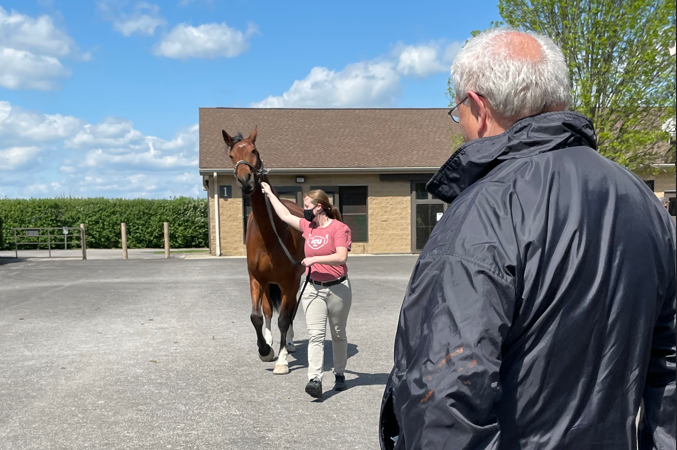
Preventing Spinal Cord Diseases
For owners who plan to breed or purchase horses susceptible to these spinal cord diseases, there are a few preventative measures they can take to decrease the odds or catch it early.
“One of the most important things that owners can do is to have a thorough prepurchase evaluation performed that includes a detailed neurologic evaluation by an experienced veterinarian. When importing horses from Europe, this should be carefully considered prior to purchase,” says Dr. Finno.
“For eNAD/EDM prevention, supplementation with vitamin E early in life (i.e. the first year) can prevent the disease in genetically-susceptible individuals. Unfortunately, most horses are older than one year of age when purchased or evaluated and vitamin E supplementation after that time frame has been demonstrated to not be effective in preventing clinical signs of disease.”
Because of this, insurance might be something concerned horse owners should look into.
“The discussion about insurance is an important one to mention, since eNAD/EDM is not treatable and CVCM treatments currently have limited success in a moderate to severely uncoordinated horse,” says Dr. Finno.
To learn more about the Grayson-Jockey Club Research Foundation, visit grayson-jockeyclub.org
This article originally appeared in the July 2024 issue of The Plaid Horse and is published here with permission.
There are more informative articles in our section on Health & Education.
The following is an excerpt from How Two Minds Meet: The Mental Dynamics of Dressage by Beth Baumert.
Horses are herd animals, and when it comes to riding horses, the importance of this fact is often overlooked and underestimated. All successful horse and rider partnerships are based on understanding the herd mentality.
By instinct, horses are “fight-or-flight” creatures, so they need a responsible leader to protect them in the face of threats. That’s how horses are in the wild, and those inclinations are still with horses that have been domesticated. They still need a leader and they will either fight or run away in the face of danger. Although your horse may come to trust you as his leader, it will serve you well to keep his innate needs in mind.
Emotionally, horses are as innately as different as people are, or as dogs are. Some are friendly, self-assured, and trusting like a Labrador; some are scrappy like a Jack Russell Terrier; others are insecure and unreasonably fearful. But unlike dogs who love you no matter what, horses require that you earn their affection.
When horses are wronged, they certainly don’t come back for more like dogs often do. They’re closer to cats on the spectrum of showing positive emotion. They might, in fact, feel love, but they don’t express it like dogs. Horses are matter of fact when it comes to what they like and what they don’t like. They’re more apt to show their fear than their positive responses. As a trainer working on gaining their trust, you try to reverse this trend. In the face of a fearful situation, a trained horse ideally turns to his rider for direction.
Being the leader isn’t always as simple as it sounds. Some horses wander aimlessly and don’t act as if they want to follow you. Others are pushy, and don’t appear to see you as the leader, either: they invade your space and don’t seem to want to be a follower. A horse might not be safe and trustworthy; you need to find a way for him to accept your leadership so you can trust him. Trust has to go both ways.
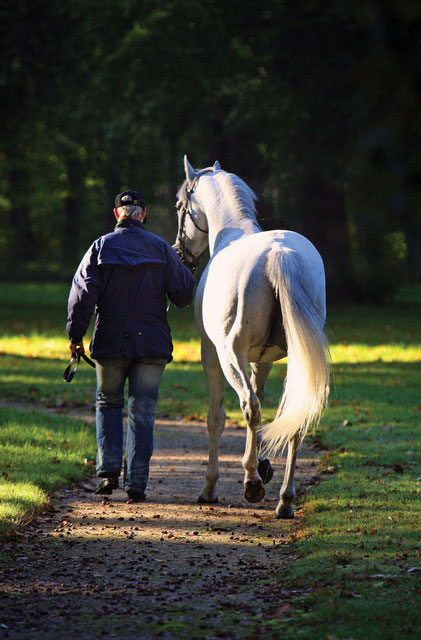
There are many different exercises and tasks that you can do to establish trust, like teaching your horse to respect your space, playing games together, being clear with your aids, and being trustworthy yourself.
The Limits of Leadership
When a new mare came into my daughter Jennifer Baumert’s life, she was eager to listen to everything the horse had to say. She wanted to get to know the new mare, so her first time in the saddle, she asked lots of questions: “How are you? How do you feel today? What’s your opinion of this and that?” The first day went well. Despite some basic connection issues, Jennifer felt she had a great rapport with the mare. The next day, Jennifer was armed with an agenda that she felt was a positive and appropriate plan. But the mare could feel Jennifer’s determination and felt threatened. In the past, other riders hadn’t been very kind and fair leaders, so the mare was immediately concerned about her rider’s position as leader. Jennifer was surprised that the mare suddenly became defensive.
Individual horses determine the limits to your leadership, especially when it comes to mares and ponies. There is a saying, “You ask a stallion, tell a gelding, negotiate with a mare, and pray with a pony.” Some might say you submit a 10-page request form to a mare! The bottom line is that all horses are different. When, over time, Jennifer’s mare grew to trust her, she was a very willing partner, but Jennifer always respected her leadership limitations—always made small talk during the warmup to check on the mare’s basic comforts.
Mares have a reputation for being opinionated because they have a keen sense of fairness. Ones with a history of less than ideal riding are particularly guarded. It isn’t simply about gender and temperament, but about history and whether the horse is trusting or not.
Fairness and Consistency are the Keys to Trust
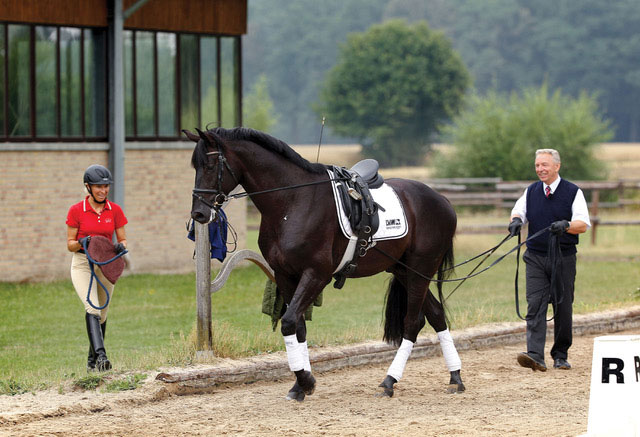
To be seen as trustworthy, you need to be consistent, clear, kind, and fair. This doesn’t mean you spoil your horse. Consistency and clarity require the physical skill and ability to follow the horse precisely, then to give exactly the same aids for the same request every time. This helps the horse better understand what, exactly, you are asking. This is important in all aspects of horsemanship, whether you are working with your horse on the ground or under saddle.
How Two Minds Meet: The Mental Dynamics of Dressage
BUY NOW on Amazon
Paperback | Kindle
This excerpt from How Two Minds Meet: The Mental Dynamics of Dressage is reprinted with permission from Trafalgar Square Books. Visit them online at Horse & Rider Books. All photos courtesy of Horse & Rider Books.
There a more really interesting books on riding and all aspects of equestrian living in our section on Books.
- CBD and other Cannabinoids – How they can benefit you, your horses, and your pets
- Foal Handling with Monty Roberts (2:00)
- Rood & Riddle Stallside Podcast: Sport Horse Medicine & Innovative Therapies with Dr Daniel Devis
- Melatonin: Can It Predict Your Horse’s Temperament?
- Summer Safety: Barn Fans & Automatic Horse Waterers
- Upper Airway Obstruction in Barrel Racing Horses
- Start Horseback Riding off on the Right Hoof
- Highlining with Fred Bruce and Stan Loewen
- Double Lunging the Horse with Mitzi Summers (10:53)
- Music Helps Horses Better Respond to Performance Demands
- What to Expect When Sedating a Horse
- Benefits of Beet Pulp for Horses
- Monty Roberts - Cinder Part 2 The Value of Force Free Training (2:19)
- Monty Roberts - Cinder Part 1: Join Up with a Wild Horse (2:04)
- Inside the In Vitro Fertilization Lab at Rood & Riddle with Dr Charlie Scoggin & Dr Maria Schnobrich (37:25)
- The Making of a Dressage Trainer
- Topline Loss - How Nutrition Can Help
- Ask Monty: Why is my horse aggressive at feeding time? (1:22)
- New Tool Recognizes Pain in Horses with Osteoarthritis
- My Horse is Gaining Weight on Free-Choice Forage! Why Isn't it Working?