




Health & Education
We all want the best care possible for our horses. The Heath & Education section covers both Learning Institutions, Organizations as well as many sources for equine assistance including Veterinarians and Farriers.
For those who want a to formally study horses, the Education section includes College Riding, Equine Studies, and Veterinary Schools. Learn about the wide variety of horses in the Horse Breeds section. Supplements and Treatments Therapy are also included in the section.
Everyone can learn from Fine Art and there are some specialty Museums that might surprise you.
Horses as a therapy partner enrich the lives of the disabled. These facilities are listed in our Therapeutic Riding section. To help children and young adults build confidence and grow emotionally, please see the resources available on the Youth Outreach page.
Looking for a place to keep your horse? You can find it in the Horse Boarding section. Traveling? Find a Shipping company or Horse Sitting service if your horse is staying home!
Want to stay up to date with the latest training clinics or professional conferences? Take a look at our Calendar of Events for Health & Education for the dates and locations of upcoming events.
Do we need to add more? Please use the useful feedback link and let us know!
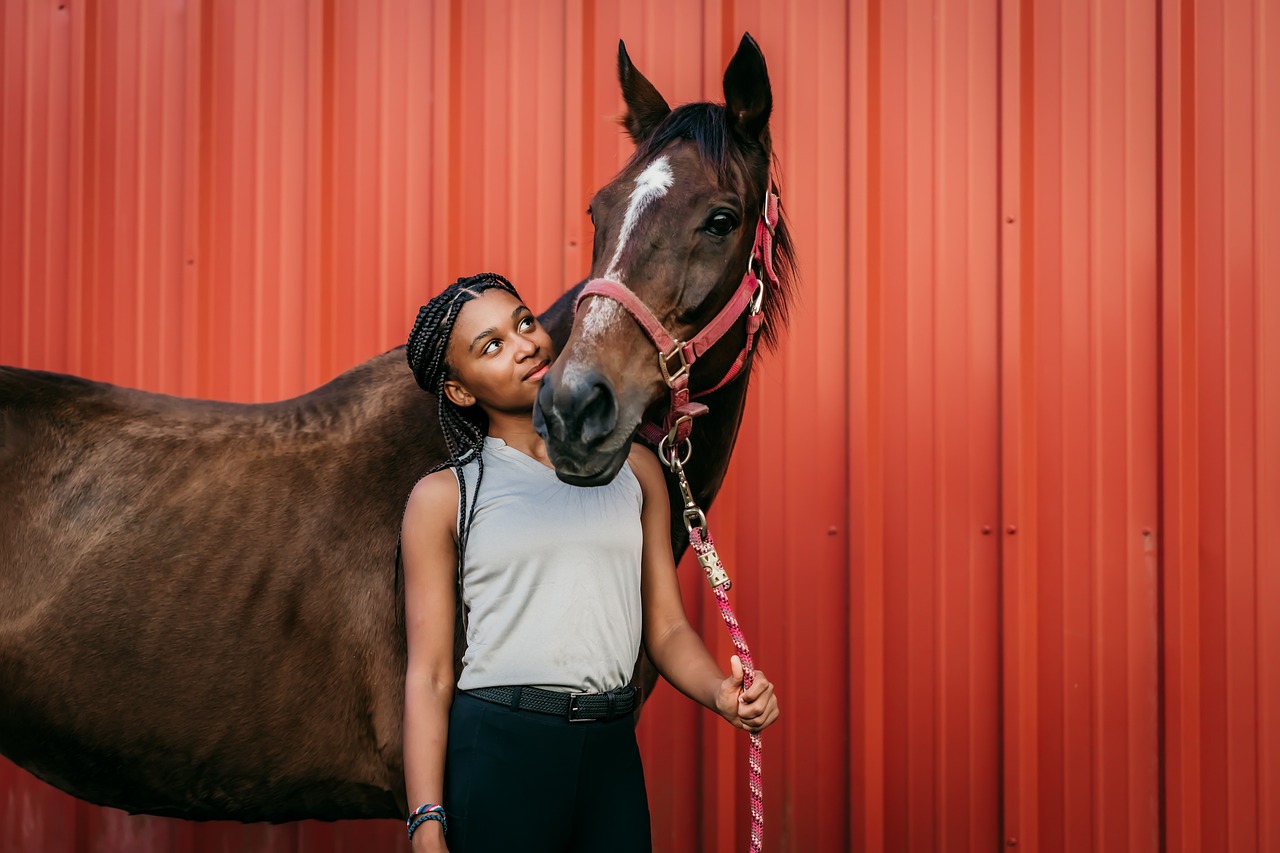
Horse facilities can provide more than just dung and hoof prints. Equine-assisted programs offer unique educational benefits that could enhance students’ experiences and improve their lives. Are you wondering about the specifics? Take a look.
1. Building Confidence
Working with horses gives students more confidence and raises their self-esteem, as learning to groom and ride such proud, noble creatures promotes a sense of achievement.
2. Improving Communication Skills
Horses are observant beings who react to non-verbal communication elements by observing one’s body language. Dealing with them helps students understand the value of expressing one’s feelings. Besides, students must work together, communicating with the horse and each other to achieve mutual goals. Such activities help enhance their social skills and foster relationships with their peers.
3. Developing Empathy
By caring for horses, students learn sensitivity and gentleness. It fosters a unique environment where emotional and social skills can flourish.
4. Stress Reduction and Emotional Regulation
Spending time with horses helps reduce stress levels. It also facilitates emotional regulation, assisting students to manage anxiety and improve their mood.
5. Encouraging Physical Activity
Horse riding is a vital part of teaching and training horses. It involves such physical activities as grooming, saddling up, and riding, which promote an active lifestyle and urge students to remain fit.
6. Boosting Cognitive Abilities
Mental stimulation sharpens our skills. What do you do when you can’t solve an academic problem? You contact the best essay service, Top Essay Writing, and ask them for help. You gain new insights once you see their work, stimulating your knowledge and critical thinking. The situation with horses is rooted in the same principles. Cognitive abilities are developed when equestrian practitioners learn to identify and remove obstacles, such as figuring out how to jump a fence and providing commands to their horses. It involves thinking critically, locating solutions, and analyzing situations.
7. Supporting Special Needs Education
Of course, equine-assisted learning can help any student, but those with special needs can benefit from the controlled environment the horses provide. When horses are understood and treated with respect, they become focused and obedient. Spending time with them can help improve students with special requirements' focus, motor, and sensory skills.
8. Teaching Responsibility and Commitment
You can’t just forget about a horse. It is what students should do daily:
- Feed a Horse: Students must give it food every day.
- Give Fresh Water: Horses love drinking, so a fresh supply must be present all the time.
- Make Sure It’s Properly Cared for: Students must watch out for their horse’s health.
- Be Attuned to Its Needs: You’ll learn how to speak with your horse and monitor its needs and wants. Fulfill them, and you’ll have a friend for life.
A sense of responsibility connects the dots for many students, so they understand that they can’t just show up to use horses for practice and do nothing in return. The sense of consistency, responsibility, and reliability is what they will take into the other parts of their lives.
9. Fostering Environmental Awareness
By learning about horses and how to care for them, students are introduced to sustainability practices related to animal welfare and the conservation of the environment. They learn to value nature and discover how to preserve it.
10. Inspiring Career Exploration
Inspiration comes in the most unexpected shapes. Seeing the base of sample essays on different topics can help you understand your subject better, allowing you to discover something new about it. Similarly, by spending time with horses, students might decide to study veterinary sciences, animal behavior, or agriculture. Equine-assisted programs can help inform your future career.
11. Artistic Expression
Plenty of art activities, such as drawing and painting, can be centered on horses. Students can express themselves visually after spending a day with their creature.
Galloping Towards Growth
Equine-assisted learning programs are a valuable part of learning environments. Their possibilities can affect students’ confidence, communication skills, and empathy. When schools open their doors to horses, it signals that school leaders are ready to nurture the development of their students in ways that go beyond standard academic curricula.There are more informative articles in our section on Health & Education.
"Why is the Mule the Most Important Member of the Horse Family?" presented by Dr. Doug Antczak, recorded Feb. 21, 2023 via Zoom.
The Mule is a hybrid animal produced by a mating between two separate species, the horse and donkey. Mules have a long history of contributions to human society as a remarkable beast of burden and source of animal power. Less well known are the many ways in which the study of mules has advanced scientific thought and our understanding of fundamental biological principles. This seminar will introduce you to the wonderful and fascinating world of mules.
Doug Antczak, VMD, PhD, is the Dorothy Havemeyer McConville Professor of Equine Medicine at the Baker Institute for Animal Health. Antczak graduated from Cornell University with a BA in biology in 1969, before receiving his VMD from University of Pennsylvania in 1973. He then completed a PhD in immunology at the University of Cambridge in 1978. At Cornell, Doug Antczak’s research program is focused on the health of horses, a passion of his from an early age. Through the Baker Institute’s Equine Genetics Center, the Antczak laboratory group has a long history of advancing basic knowledge and applying that knowledge in equine genetics, immunology and reproduction. Among other important projects, Dr. Antczak’s genetic selection and breeding of horses led to his continuing involvement in the international Horse Genome Project.
Read more: Why is the Mule the Most Important Member of the Horse Family? Cornell Equine Seminar
- Five Tips for Keeping Your Horse Sound - Cornell Vet Equine Seminar Series
- Deworming the horse using a paste syringe with Teresa Kackert
- Stable Vices: Theirs or Ours? Abnormal Behavior in Horses
- FAQ: Lameness and Arthritis in Horses
- How to Safely Pony a Horse with Teresa Kackart (6:55) - Certified Horsemanship Association
- Equine Emergencies 101: What To Do When the Worst Happens from Cornell Equine Seminar
- Pre-purchase Headaches in the Sport Horse
- Sources of Magnesium - Including Whole Foods
- The Grayson-Jockey Club Research Foundation: Improving the Ability to Diagnose Spinal Cord Diseases
- Leadership Isn’t as Simple as it Sounds - an Excerpt from "How Two Minds Meet"
- CBD and other Cannabinoids – How they can benefit you, your horses, and your pets
- Foal Handling with Monty Roberts (2:00)
- Rood & Riddle Stallside Podcast: Sport Horse Medicine & Innovative Therapies with Dr Daniel Devis
- Melatonin: Can It Predict Your Horse’s Temperament?
- Summer Safety: Barn Fans & Automatic Horse Waterers
- Upper Airway Obstruction in Barrel Racing Horses
- Start Horseback Riding off on the Right Hoof
- Highlining with Fred Bruce and Stan Loewen
- Double Lunging the Horse with Mitzi Summers (10:53)
- Music Helps Horses Better Respond to Performance Demands