




Health & Education
We all want the best care possible for our horses. The Heath & Education section covers both Learning Institutions, Organizations as well as many sources for equine assistance including Veterinarians and Farriers.
For those who want a to formally study horses, the Education section includes College Riding, Equine Studies, and Veterinary Schools. Learn about the wide variety of horses in the Horse Breeds section. Supplements and Treatments Therapy are also included in the section.
Everyone can learn from Fine Art and there are some specialty Museums that might surprise you.
Horses as a therapy partner enrich the lives of the disabled. These facilities are listed in our Therapeutic Riding section. To help children and young adults build confidence and grow emotionally, please see the resources available on the Youth Outreach page.
Looking for a place to keep your horse? You can find it in the Horse Boarding section. Traveling? Find a Shipping company or Horse Sitting service if your horse is staying home!
Want to stay up to date with the latest training clinics or professional conferences? Take a look at our Calendar of Events for Health & Education for the dates and locations of upcoming events.
Do we need to add more? Please use the useful feedback link and let us know!
In this Stallside episode, we sit down with Dr. Daniel Devis to explore his approach to equine sport horse medicine, rehabilitation, and alternative therapies including acupuncture, regenerative medicine, and laser therapy. Dr. Devis shares practical insights into his methods, discussing how he blends traditional sport horse medicine with cutting-edge techniques to optimize recovery, well-being, and performance.
By Kentucky Equine Research Staff
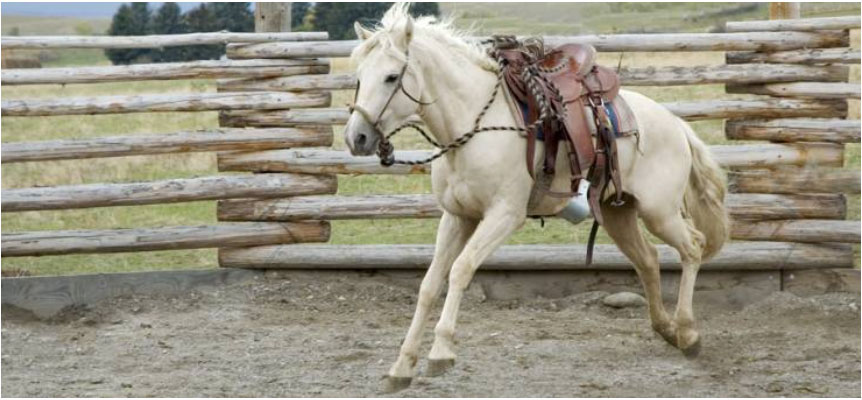
Many people are familiar with melatonin as a sleep aid, but horse owners also may be aware of its role in mare cyclicity and reproduction. Few of us, however, know that melatonin, a neurotransmitter, may affect a horse’s temperament.
In the past, melatonin has been related to aggression in some species. For example, studies show that Syrian hamsters with high melatonin levels demonstrated more aggressive behavior than those with lower melatonin levels. One human study also found that participants administered melatonin exhibited more aggression in specific situations than those receiving a placebo.
To evaluate the effect of melatonin on temperament in horses, Korean researchers recruited 32 horses, all residing in a single riding facility in Korea for a minimum of five years.* The horses were put through a series of tests by three different handlers to determine the following attributes and to assign a score from 0 to 5 with 0-1 being low, 2-3 medium, and 4-5 high:
- Docility—the time it takes to catch the horse in an unfamiliar situation;
- Affinity—the time it takes to become familiar with strangers;
- Dominance—the act of gaining the upper hand with other horses over feed; and
- Trainability—the time it takes to achieve a training goal.
The overall temperament was an average of the four scores, and those scores were compared to melatonin levels collected between 10:00 p.m. and 11:00 p.m.
No significant relationship between melatonin and any of the four temperament measures was identified, suggesting that melatonin cannot be used as a biomarker for horse temperament.
“However, melatonin levels were significantly lower in cold-blooded horses than in Thoroughbreds, which are considered hot-blooded. Those horses actively in a training program had higher melatonin levels than fully trained horses used for competition and riding lessons,” explained Catherine Whitehouse, M.S., a Kentucky Equine Research nutrition advisor.
Having a test available to potentially identify “safe” horses would be valuable to the equine industry, especially when purchasing horses for inexperienced riders or using horses as therapy partners. This could be used in combination with an evaluation from an experienced horse handler.
In addition to regular handling and training, diet and management strategies can help improve behavior-related issues in horses.
“Consider increasing turnout time with herdmates, maximizing forage availability, and supplying a concentrate feed that matches the horse’s energy needs. Some horses that tend to be hyperreactive may benefit from a feed higher in fiber and fat and lower in nonstructural carbohydrates when additional calories are needed beyond high-quality forage and a ration balancer,” advised Whitehouse.
Reprinted courtesy of Kentucky Equine Research. Kentucky Equine Research is an international equine nutrition, research, and consultation company serving horse owners and the feed industry. Our goals are to advance the industry's knowledge of equine nutrition and exercise physiology, apply that knowledge to produce healthier, more athletic horses, and support the nutritional care of all horses throughout their lives. Learn more at KER.com.
There a more informative articles in our section on Health & Education.
*Song, Y., J. Kim, Y. Park, and M. Yoon. 2023. Association between the plasma concentration of melatonin and behavioral temperament in horses. Journal of Animal Science and Technology 65(5):1094-1104.
- Summer Safety: Barn Fans & Automatic Horse Waterers
- Upper Airway Obstruction in Barrel Racing Horses
- Start Horseback Riding off on the Right Hoof
- Highlining with Fred Bruce and Stan Loewen
- Double Lunging the Horse with Mitzi Summers (10:53)
- Music Helps Horses Better Respond to Performance Demands
- What to Expect When Sedating a Horse
- Benefits of Beet Pulp for Horses
- Monty Roberts - Cinder Part 2 The Value of Force Free Training (2:19)
- Monty Roberts - Cinder Part 1: Join Up with a Wild Horse (2:04)
- Inside the In Vitro Fertilization Lab at Rood & Riddle with Dr Charlie Scoggin & Dr Maria Schnobrich (37:25)
- The Making of a Dressage Trainer
- Topline Loss - How Nutrition Can Help
- Ask Monty: Why is my horse aggressive at feeding time? (1:22)
- New Tool Recognizes Pain in Horses with Osteoarthritis
- My Horse is Gaining Weight on Free-Choice Forage! Why Isn't it Working?
- 6 Must-haves For Your Next Horse Show
- Inside the Recipient Mare Herd from the Rood & Riddle Reproduction Center with Crystal Howard" (24:28)
- Breeding for the Next Champion: 6 Important Considerations for Broodmares
- Empty Fields Everywhere Why Movement is So Important