




Health & Education
We all want the best care possible for our horses. The Heath & Education section covers both Learning Institutions, Organizations as well as many sources for equine assistance including Veterinarians and Farriers.
For those who want a to formally study horses, the Education section includes College Riding, Equine Studies, and Veterinary Schools. Learn about the wide variety of horses in the Horse Breeds section. Supplements and Treatments Therapy are also included in the section.
Everyone can learn from Fine Art and there are some specialty Museums that might surprise you.
Horses as a therapy partner enrich the lives of the disabled. These facilities are listed in our Therapeutic Riding section. To help children and young adults build confidence and grow emotionally, please see the resources available on the Youth Outreach page.
Looking for a place to keep your horse? You can find it in the Horse Boarding section. Traveling? Find a Shipping company or Horse Sitting service if your horse is staying home!
Want to stay up to date with the latest training clinics or professional conferences? Take a look at our Calendar of Events for Health & Education for the dates and locations of upcoming events.
Do we need to add more? Please use the useful feedback link and let us know!
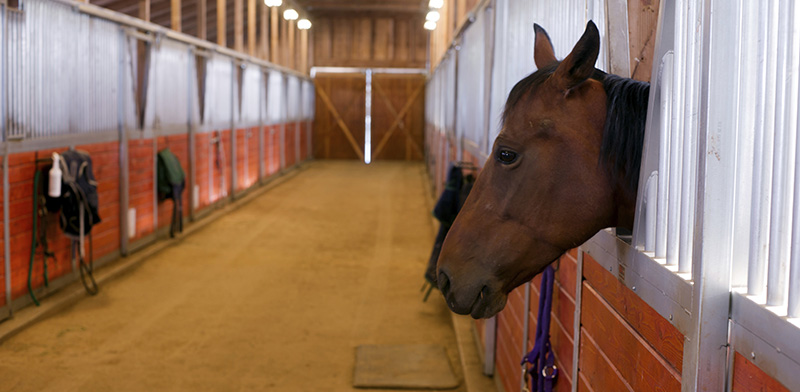
Horse Boarding
Traveling is exciting and if you want to take your horse along it can be challenging to find Boarding for overnight travel. We can help you with that in our section for Horse Motels & Overnights. For long term housing, there are wonderful facilities for boarding your horse across the United States and we offer a comprehensive listing for every state. Read more...
Horse Sitting
Put your horse in the hands of someone you trust, someone who loves horses as much as you do. If you need services for caring for your horse you can find your answer in our Horse Sitting listings, for the United States and the United Kingdom. Read more...
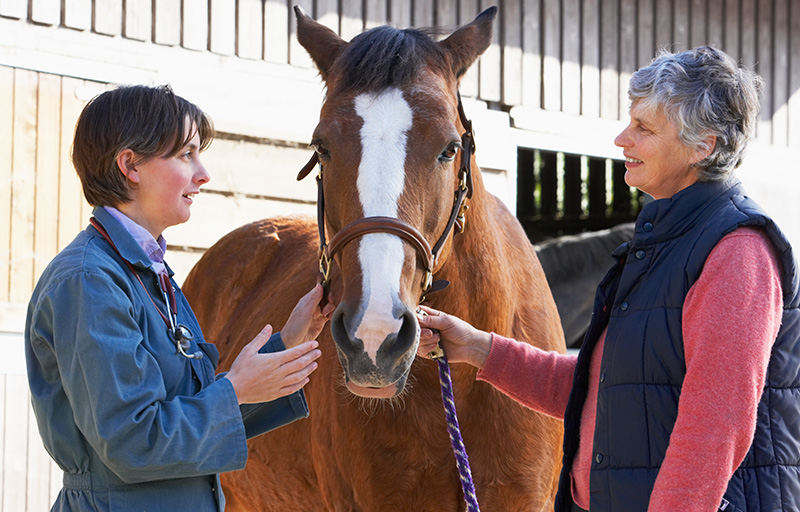
Laboratories and Diagnostics
Professional medical attention is vital for your horse's well being. You can rely on the services of qualified professionals to keep track of your horse's health from companies across the United States.Read more...
Shipping
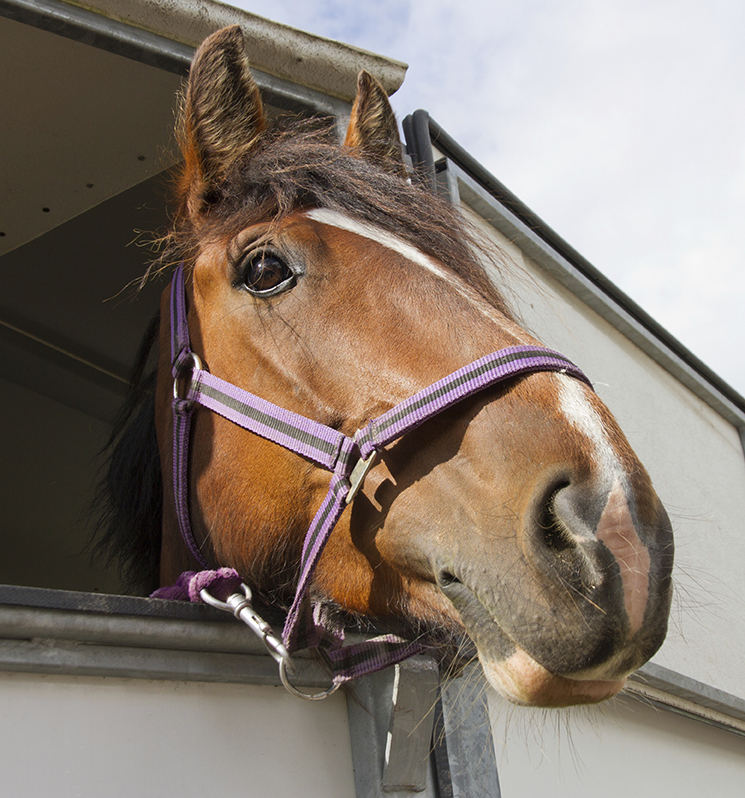
There are lots of reasons that you need expert service when you want to transport your horse by Air or Ground Shipping, within the United States or Internationally. You can also find resources for Horse Trailer Sales in our listings for Shipping.Read more...
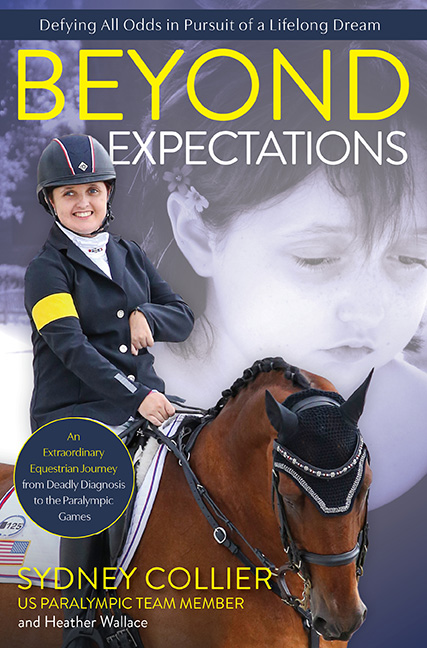
The following is an excerpt from Beyond Expectations: An Extraordinary Equestrian Journey from Deadly Diagnosis to the Paralympic Games by Sydney Collier and Heather Wallace.
Typical tweens and teenagers worry about grades, crushes, and fights with friends. I yearned to experience those things, but my life continued to be much more complicated than that.
Immediately following my stroke, occupational and physical therapy were a key part of me regaining my ability to walk and to use my left side again. With my dad for company, I had inpatient rehabilitation for that entire summer before returning home to Michigan.
Once back, I began outpatient physical and occupational therapy. I dreaded doing occupational or physical therapy. It seemed like that was all I did. I had good days and bad days. The bad days far outnumbered the good days, so much so that I grew sour and difficult to deal with.
My personality was much less “happy, social Syd” and much more of a dark, depressed teenager.
Hey, does that mean I was “typical”?
The only thing that kept me going back were my great relationships with my physical and occupational therapists. I especially loved occupational therapy because at the office, there was a kitchen. Baking and eating the gooey goodness that was the result of my labor was an added incentive.
Therapies that didn’t feel like “work” were most effective with me at this time. Repetitive exercises were boring, and it was harder for me to commit to those. But working on real-life tasks that could cause cookies to appear? Yes, please. I was willing to try.
My foray into therapeutic riding was an accident. Life has a way of bringing things to you when the timing is right, even if the reason isn’t clear in the moment of synchronicity. I was struggling personally with accepting myself and my body, and the world accepting me in return.
My mom saw how difficult reintegrating into my “new” life was. My body had been irrevocably changed, both through my trauma and the fact that I was no longer the small child I once had been. After my fall from Spirit, and then the rehab I did on him with some success, Mom suggested I take lessons at a therapeutic riding facility to help me find my balance again with horses—maybe, if found there, it would reflect on my life outside the barn.
To me, horses had always been a “port in the storm,” where I could focus my attention and forget about all the other things I couldn’t control. Horses were a safety net I clung to for peace of mind. Life, for me, was going to be harsh—but perhaps I could find some stability in this one aspect that had always brought me joy.
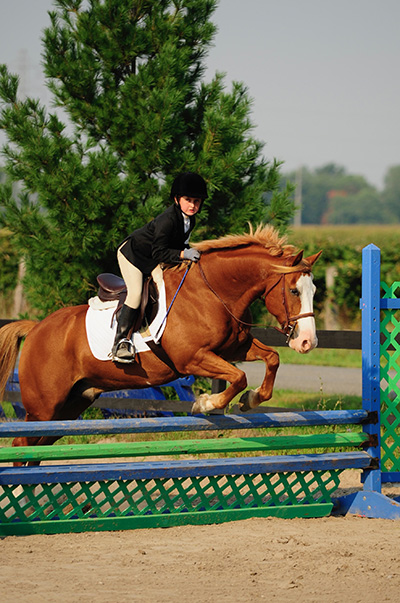
(photo courtesy of Sydney Collier)
Still, I was hesitant. I’d been eventing, which included galloping cross-country and jumping solid fences in open fields. Then, when it became necessary to scale back, I focused solely on show jumping, which even though it took place in a fenced arena still involved leaping over obstacles.
To me, “therapeutic riding” seemed a little boring. I was a little “too cool for school” and initially fought the idea of it. In the end, though, I decided to at least try, because I had nothing else to lose.
Luckily, we found that Therapeutic Riding, Inc., in my home state of Michigan, embraced my previous experience with horses and supported me completely. I started in a “traditional” way on what might be thought of as “typical” therapy lesson horses that were chosen for their stoic personalities and forgiving hearts.
Therapy horses are truly angels on this earth for the work they do and the confidence they create in so many people with physical and mental disabilities or traumas.
As I spent time at the barn, speaking with the trainers and engaging in conversations about horses, they quickly sensed my experience level. It helped that I’m not exactly the “quiet type” and openly shared plenty of thoughts and stories! Also, the fact that I was able-bodied until I was 11 meant I had a completely different perspective and was never afraid to raise my voice and ask for what I needed.
When I’d found my seat on a horse again and felt ready to push myself, I asked my trainers at Therapeutic Riding, Inc., for a challenge. The basic coordination exercises and hippotherapy were too easy for me.
The trainers were very receptive to adapting my program in a way that would improve my riding skills to meet my needs. I was in a unique position because I had come to the barn with four years of eventing experience under my belt.
I think society encourages individuals with disabilities to be quiet. Many don’t want to ask for help, cause problems, or worse, be “an inconvenience.” Moreover, therapeutic riding programs are often hyperaware of “staying within the protocol” and keeping activities extremely safe—not that there is anything wrong with that.
But I believe there is so much more potential for riders to learn and compete using adaptive measures “outside the box,” and not just focused on a prescribed program.
The cultural difference between the protective bubble placed around those with disabilities who ride horses in the United States and other countries was starkly apparent a few years later when I went to try a horse in Germany.
When it became clear that Spirit was not comfortable with my body post-stroke the way we needed him to be, we realized it was time to look for a horse for the “new” me. Outside of my time at Therapeutic Riding, Inc., I continued riding with my original trainer, a no-nonsense German with no experience with therapeutic riding or para dressage.
We planned a trip to Germany to try to find the “perfect horse.” (The United States commonly imports horses from Germany for use in equestrian sports. A 2020 article in the journal Society and Animals reported that “over $300 million dollars in horses are imported into the United States, and over a third comes from Germany.”)
None of us considered how my trainer would know what my body needed without any experience with adaptive riding—we just rolled with it. It was thrilling. I had never been out of the country other than driving through part of Canada on my way to my grandparents’ house in Maine. It was the opportunity of a lifetime.
Before you think I and my family were being dramatic, going “all the way to Germany to find a horse,” it’s important to note we had attempted to try a few horses in the United States, but my trainer and I had met with a lot of resistance when I showed up with braces on my left arm and left leg.
Immediately, sellers would refuse to go forward with the trial, informing us their liability insurance didn’t cover someone with a disability, and I couldn’t ride their horses. This was incredibly disheartening. I already felt different in a body that wasn’t yet “my own,” and now I was being judged, the assumption being that based on my appearance, I could not ride safely.
To me, it seemed everyone was just afraid of getting sued. I may not have been “able-bodied,” but I was a skilled rider.
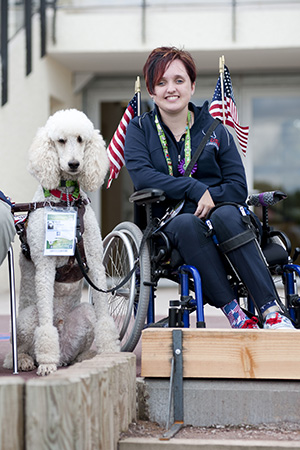
at the 2014 World Equestrian Games
(photo by Lucy Percival)
In Europe, horse sale barns were more open to me riding than those in my own country. Instead of resistance, those in Germany met us with excitement, eager for me to get on and try their horses. I didn’t need to sign a waiver to protect them or me.
When I asked, “So…I can just get on the horse?” they looked at me blankly, seemingly surprised by the question, and retorted, “You fall off a horse just like anyone else, yes?”
It was a breath of fresh air to be treated the same as other riders, regardless of my physical limitations. Individuals with disabilities aren’t porcelain dolls who have to play it safe all the time.
If someone, and especially a child, wants to push themselves to be better, then we should foster that person’s talent and desire.
This excerpt adapted from Beyond Expectations by Sydney Collier and Heather Wallace is reprinted with permission from Trafalgar Square Books.
Beyond Expectations: An Extraordinary Equestrian Journey from Deadly Diagnosis to the Paralympic Games
BUY NOW on Amazon
Paperback | Kindle
This excerpt from Beyond Expectations is reprinted with permission from Trafalgar Square Books. Visit them online at Horse & Rider Books. All photos courtesy of Horse & Rider Books.
There are more really interesting books and other gifts for equestrian living in our online Curated Amazon Store.
- Celebrity Supporters of the Seen Through Horses Campaign! (1:56)
- On to Safer Pastures: Protecting Horses from Poisonous Plants
- Survey Finds Half of Horse Owners Unaware of Lesser Known Stressors
- Study: Intestinal Microbiome of Foals May Predict Future Racing Success
- Intra-articular Approaches to Osteoarthritis - Cornell Equine Seminar (Oct 2024)
- What to Do When Your Horse Ride Goes Wrong
- ICONS, Renegades, Mavericks, & Forces of Nature - Photographer Drew Doggett’s Latest Series
- A Grand National Melee - An Excerpt from the Novel The Horseman’s Tale by Tom Equels
- Minimally Invasive Surgery in the Abdomen - Cornell Equine Seminar
- Get to know...Mette Moe Mannseth, Master Trainer (11:26) - Horses of Iceland
- Autumnal Horse Care: Six Considerations
- Uncovering Secrets | Seen Through Horses Campaign (2:56)
- We love the American Quarter Horse! Why is it such a popular breed?
- The Power of Horses | Breaking Barriers (5:26)
- Rood & Riddle Stallside Podcast - Leading the Way: Dr Katie Garrett on the Impact of the American Association of Equine Practitioners (28:42)
- Monty Roberts Equus Online University - Ace used to bite and intimidate people (2:20)
- Painful Horse Hoof - Satisfying Therapeutic Horseshoeing
- "Finding Her Voice" Story of Transformation | Seen Through Horses Campaign (3:02)
- Haynet Research in Horses: Something to Chew On
- Which Off-Track Thoroughbreds Are Most Desirable?