





Health & Education
We all want the best care possible for our horses. The Heath & Education section covers both Learning Institutions, Organizations as well as many sources for equine assistance including Veterinarians and Farriers.
For those who want a to formally study horses, the Education section includes College Riding, Equine Studies, and Veterinary Schools. Learn about the wide variety of horses in the Horse Breeds section. Supplements and Treatments Therapy are also included in the section.
Everyone can learn from Fine Art and there are some specialty Museums that might surprise you.
Horses as a therapy partner enrich the lives of the disabled. These facilities are listed in our Therapeutic Riding section. To help children and young adults build confidence and grow emotionally, please see the resources available on the Youth Outreach page.
Looking for a place to keep your horse? You can find it in the Horse Boarding section. Traveling? Find a Shipping company or Horse Sitting service if your horse is staying home!
Want to stay up to date with the latest training clinics or professional conferences? Take a look at our Calendar of Events for Health & Education for the dates and locations of upcoming events.
Do we need to add more? Please use the useful feedback link and let us know!
By Kentucky Equine Research Staff
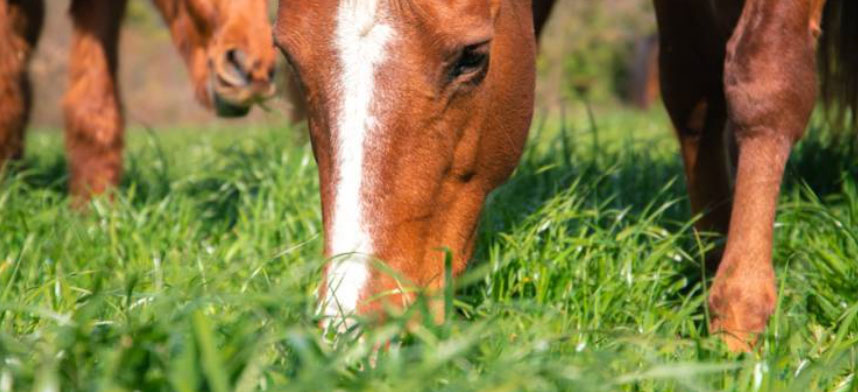
Horse owners are often advised to manage obese horses with caloric restriction, which typically includes limiting access to pasture. Because grazing, access to free-choice exercise, and social interactions all allow horses to express normal behaviors, researchers are now wondering if there is a way to restrict pasture access without affecting welfare?*
Obese horses have an increased risk of metabolic syndrome characterized by insulin dysregulation. In turn, horses with increased levels of circulating insulin are at risk of developing hyperinsulinemia-associated laminitis, a painful and life-threatening condition of the feet.
“Weight management is by far the most important and most widely recommended approach to managing insulin dysregulation and obesity,” explained Ashley Fowler, Ph.D., a nutritionist for Kentucky Equine Research. “However, restricting grazing with muzzles or drylots can sometimes be difficult for owners to implement due to lack of available land for sacrifice areas or because some horses are incredibly clever at removing their grazing muzzles.”
When given the chance, horses spend about two-thirds of their day grazing, and according to veterinary researchers, grazing is a “central and innate facet of equine behavior.”*
Restricting grazing may lead to frustration as well as problematic or abnormal behavior, including aggression and stereotypic behaviors.
Two systems are often recommended for restricted grazing:
- Strip grazing, which involves limiting horses to a specific grazing area that is increased in size over time by moving fencing to reveal ungrazed grass.
- Track systems that involve creating a track around the perimeter of the grazing area that can be gradually increased in size.
To determine the effects of these two restricted grazing systems on behavior of outdoor-living ponies, researchers used 24-hour electronic surveillance and GPS data loggers attached to a halter to track activity levels. Data was collected over four weeks.
Key findings included:
- Ponies spent most of their time grazing regardless of the system;
- More ponies showed agonistic behavior (i.e., conflict or fighting) in the strip grazing system than ponies in the track system; and
- Ponies moved significantly more in the track system. “This could be due to a more enriched environment, less competition over resources or improved social cohesion,” said the research team.
“This research highlights the potential benefits of a track system on weight management, by both limiting grass access and encouraging more movement,” explained Fowler.
“Regardless of which method horse owners use to limit pasture access for weight management, horses fed calorie-restricted diets should still be fed a vitamin-mineral supplement or ration balancer to ensure daily dietary requirements are met,” advised Fowler.
*Kirton, R., I. Sandford, E. Raffan, S. Hallsworth, O.H.P. Burnam, and R. Morgan. 2024. The impact of restricted grazing systems on the behaviour and welfare of ponies. Equine Veterinary Journal:14411.
Read more: Observing Horse Behavior in Restricted Grazing Scenarios

Acupuncture has been used to treat various medical conditions in humans and animals for more than 3,000 years. Horses were among the first animals treated with acupuncture due to their importance in warfare and farming. Today, equine acupuncture is commonly incorporated in the treatment of a number of conditions, especially musculoskeletal disorders and back pain.
The ancient Chinese discovered and described hundreds of acupuncture points (acupoints) in humans and animals. Modern research shows that acupoints are located in areas with a high density of free nerve endings, mast cells, small arterioles and lymphatic vessels. Stimulation at acupoints induces the release of beta-endorphins, serotonin and other neurotransmitters and can produce local, remote, and/or systemic effects. The use of acupuncture for pain relief is well supported by modern research studies. The effects of acupuncture on internal organs and on “balancing” the body as a whole are less understood, and more research is necessary to fully explain this ancient therapy.
The benefits of acupuncture have been widely recognized and integrated into Western veterinary and human medical practices. In November 1997, the National Institutes of Health (NIH) convened a panel of scientists to review the effectiveness of acupuncture. The result was the first formal endorsement of acupuncture by the NIH, stating: “There is sufficient evidence of acupuncture’s value to expand its use into conventional medicine and to encourage further studies of its physiology and clinical value.”
Acupuncture is a sought after treatment by horse owners due to its demonstrated safety and minimal unwanted side effects. It is well tolerated by most horses and provides a drug-free approach to address musculoskeletal pain that can enhance equine performance. This is particularly attractive for competitors who must adhere to show association-mandated prohibited substance policies. Aside from the needles, acupuncture does not require any specialized equipment, making it easier to perform in a variety of environments than some traditional methods.
Acupuncture can be used for a wide variety of issues.
Acupuncture can be extremely useful for pain. Besides pain relief, acupuncture may also have an impact on inflammation, which is ideal for horses with acute injuries and arthritis. It's thought that, by helping to return the nervous system to homeostasis, acupuncture may also help with the immune system and many other organ systems.
Your horse may also benefit from acupuncture's ability to increase microcirculation. This refers to the circulation of blood through your horse's smallest blood vessels -- the venules, metarterioles, terminal arterioles, and capillaries. They're located throughout your horse's body including in his or her organ tissue and stimulation of increased circulation can lead to improved wound healing, improvements in laminitis, and other great benefits.
Acupuncture for horses is a therapeutic technique that involves inserting fine needles into specific points on a horse's body to treat a variety of conditions:
- Pain relief: Acupuncture can help reduce pain and inflammation.
- Improved function: Acupuncture can help restore function to the body.
- Muscle relaxation: Acupuncture can help relax or stimulate muscles.
- Decreased swelling: Acupuncture can help decrease swelling.
- Organ function: Acupuncture can help affect organ function.
Acupuncture is a safe procedure when performed by a qualified veterinarian. It's often used in conjunction with other conventional veterinary treatments.
Here are some things to know about acupuncture for horses:
- Acupoints
There are 173 acupuncture points in animals, and each meridian has multiple acupoints. - De-Qi
When a needle is inserted, the patient experiences a sensation called "De-Qi" that indicates an acupoint has been stimulated. - Treatment plan
The number, size, and length of needles used is determined by observing the De-Qi reaction. - Treatment time
Some results can be seen immediately, but others may require several treatments. - Combination therapy
Acupuncture can be combined with medications such as local anesthetics or anti-inflammatories.
Photo Credit Photo Credit UC Davis Veterinary Medicine.
Acupuncture - General Information- Acupuncture - Education
- Acupuncture - Providers
- When EPM Strikes
- Evaluating Pasture Quality for Horses
- Winter Water Requirements for Horses
- Enjoy a More Serene Ride
- Lean Times, Lean Horses? Three Easy Ways Purina Can Help
- Purina's MQ Systemiq Probiotic Supplement
- Beyond Expectations - Book Trailer
- Education - Equine Health
- Health & Education Services
- Finding My Stride with Therapeutic Riding - An Excerpt from Beyond Expectations
- Celebrity Supporters of the Seen Through Horses Campaign! (1:56)
- On to Safer Pastures: Protecting Horses from Poisonous Plants
- Survey Finds Half of Horse Owners Unaware of Lesser Known Stressors
- Study: Intestinal Microbiome of Foals May Predict Future Racing Success
- Intra-articular Approaches to Osteoarthritis - Cornell Equine Seminar (Oct 2024)
- What to Do When Your Horse Ride Goes Wrong
- ICONS, Renegades, Mavericks, & Forces of Nature - Photographer Drew Doggett’s Latest Series
- A Grand National Melee - An Excerpt from the Novel The Horseman’s Tale by Tom Equels
- Minimally Invasive Surgery in the Abdomen - Cornell Equine Seminar
- Get to know...Mette Moe Mannseth, Master Trainer (11:26) - Horses of Iceland
Our Mission — Serving the professional horse person, amateur owners, occasional enthusiasts and sporting interests alike, the goal is to serve all disciplines – which often act independently yet have common needs and values.
Equine Info Exchange is totally comprehensive, supplying visitors with a world wide view and repository of information for every aspect related to horses. EIE provides the ability to search breeds, riding disciplines, horse sports, health, vacations, art, lifestyles…and so much more.
EIE strives to achieve as a source for content and education, as well as a transparent venue to share thoughts, ideas, and solutions. This responsibility also includes horse welfare, rescue and retirement, addressing the needs and concerns of all horse lovers around the world. We are proud to be a woman-owned business.