




Health & Education
We all want the best care possible for our horses. The Heath & Education section covers both Learning Institutions, Organizations as well as many sources for equine assistance including Veterinarians and Farriers.
For those who want a to formally study horses, the Education section includes College Riding, Equine Studies, and Veterinary Schools. Learn about the wide variety of horses in the Horse Breeds section. Supplements and Treatments Therapy are also included in the section.
Everyone can learn from Fine Art and there are some specialty Museums that might surprise you.
Horses as a therapy partner enrich the lives of the disabled. These facilities are listed in our Therapeutic Riding section. To help children and young adults build confidence and grow emotionally, please see the resources available on the Youth Outreach page.
Looking for a place to keep your horse? You can find it in the Horse Boarding section. Traveling? Find a Shipping company or Horse Sitting service if your horse is staying home!
Want to stay up to date with the latest training clinics or professional conferences? Take a look at our Calendar of Events for Health & Education for the dates and locations of upcoming events.
Do we need to add more? Please use the useful feedback link and let us know!
By Juliet M. Getty, Ph.D.
Apples and bananas used to be the predominant fruits available in your grocery store during the fall and winter. But lately, you can find all sorts of off-season fruits, including watermelon and blueberries, thanks to imports from more temperate climates. Your horses can also benefit from this variety. The old standbys - apples and carrots - still make nutritious treats but why limit your horse's enjoyment to just these?
Day in and day out, your horse eats the same thing. Boring?... yes. Unbalanced?... definitely. It's not likely that he has acres of unimproved land to explore, as he would in a wild setting, where he would eat flowers, seeds, edible weeds, and fruits from vines and trees. It is our job as horse owners to fortify their ho-hum diets with added nutrients from fresh foods. Sure, there are whole food supplements on the market, really nice ones in fact[i]. But why not add the real thing? Fruit tastes a lot better and is chock full of antioxidants and other valuable nutrients that can have a powerful impact on your horse's health.
Flavonoids are potent antioxidants
Dark blue and red berries, such as blueberries, blackberries, raspberries, and strawberries as well as cherries and red grapes, contain antioxidants known as epicatechins and anthocyanidins that belong to a group of antioxidants known as flavonoids. Since these flavonoids also give the fruit its color, the deeper the color, the more antioxidant-power the fruit contains. Red grapes also offer resveratrol, an antioxidant that has recently become popular as a horse supplement. (Dark chocolate also contains resveratrol, which is great for you, but never give it to your horse!)
Bananas, surprisingly, are high in anthocyanidins. Citrus fruits such as oranges, grapefruits, lemons and limes, while known for their vitamin C content, also contain considerable amounts of flavonoids such as hesperidin, rutin and quercetin, which work with vitamin C to promote antioxidant activity. Another biologically active flavonoid known as lycopene, adds a red color to watermelon, papaya, and mangos. Important to note: tomatoes are high in lycopene, but are highly toxic to horses.
Beta carotene is a flavonoid that offers an orange color to apricots, papayas, mangos, cantaloupe, nectarines, and peaches, as well as carrots. It is not only a powerful antioxidant, but is a precursor to vitamin A within your horse's body.
Fruits are also a reliable source of vitamins and minerals. Dried fruits such as figs and dates are particularly concentrated in calcium, zinc, and potassium. They also contain B vitamins, beta carotene, and vitamin K.
Fruits round out the diet beyond traditional supplements
Concentrated supplements may offer many of the nutrients found in fruits. However, it's difficult, if not impossible, to gather the entire essence of a plant in a commercial product. By feeding the whole food, you offer your horse trace nutrients that nourish his body in a way that cannot be duplicated by opening a container. It is important to note, however, that filling in the nutritional gaps created by a hay-based diet generally requires concentrated supplements; you would have to feed an unrealistically large amount of fruits and other whole foods to meet this requirement. Fruits should be offered in addition to a balanced diet, to round it out, but not to offer everything your horse needs.
Sugar content of common fruits
Fruits do contain a significant amount of sugar. If you have insulin resistant horses, you may be thinking that this article is not for you. While you do need to limit their sugar (and starch) intake, there still can be room for some tasty fresh fruit. The key is moderation, combined with evaluating how much sugar your horse is getting in his entire diet.
Horses love bananas (one of their favorite flavors[ii]). They also like watermelon, cherries, blueberries, and of course, apples. The chart below gives you an idea of how much sugar is in these and other fruits:
|
Sugar Content of Common Fruits[iii]
|
|
|
Fruit
|
Grams of sugar |
|
Apple, one medium |
13 |
|
Apricots, one (no pit!) |
3 |
|
Banana, one 7 inch |
14 |
|
Blackberries (1 cup) |
7 |
|
Blueberries (one cup) |
15 |
|
Cantaloupe, 1/8 small melon |
4 |
|
Carrot, one 8 inch |
3 |
|
Cherries, 6 (no pits) |
6 |
|
Dates, three (no pits!) |
12 |
|
Figs, one small |
7 |
|
Grapes (red, green), 10 grapes |
8 |
|
Honeydew melon, 1/8 7 in melon |
13 |
|
Mango, 1/2 fruit (without pit) |
15 |
|
Nectarines, 1 small (without pit) |
10 |
|
Orange, one medium |
15 |
|
Papaya, one small (remove seeds) |
9 |
|
Peaches, 2 3/4 inches (no pit) |
15 |
|
Pears, one medium |
17 |
|
Plums, one medium (remove the pit) |
7 |
|
Raspberries (1 cup) |
5 |
|
Tangerines, 2 1/2 inch |
9 |
|
Strawberries, 3 medium |
3 |
|
Watermelon, one wedge |
28 |
Some peels are worth eating
A wonderful way to offer your horse something tasty and nutritious is to feed the peel instead of the whole fruit. Apple, banana, and orange peels, as well as watermelon rinds, cut into bite-sized pieces, have less than 1 gram of sugar per cup. Apple peels are particularly beneficial. They contain a substance called "ursolic acid" which has been shown to stimulate muscle growth, increase carbohydrate metabolism, and reduce body fat in laboratory animals.[iv] Avoid the peels of tropical fruits such as mangos and papayas since they can be irritating to the skin.
Putting this into perspective with the rest of the diet
To reduce the sugar content of your horse's diet, you should strive to feed less than 10% of the total diet as simple sugars and starch. If you've had your hay or pasture analyzed, the ethanol soluble carbohydrate (ESC) value represents the simple sugar content.
Let's say your grass hay contains 7.10% ESC and 1.80% starch on a dry matter basis. Their sum is 8.90% - that's excellent! This would be a good hay to offer free-choice to your horse.
If your horse consumes 25 lbs per day of this hay, he/she will consume 2.225 lbs of ESC + starch (25 lbs X .0890). Convert that to grams (multiply by 454), providing your horse with 1010.15 grams of sugar and starch. If your horse also eats a cup of blackberries per day, you'll be providing an additional 7 grams of sugar. This brings the total sugar/starch intake to 1017.15 grams per day, or 8.96% of the diet. Not much of a difference.
One caveat: It is best to divide the amount of fruit you'll be serving over the course of the day, rather than feeding it all at one time. A large amount of sugar fed at once will create a higher blood glucose peak than if it were fed in smaller amounts throughout the day.
Bottom line
Fruits are bountiful sources of vitamins, minerals, and antioxidants, making them a valuable addition to any horse's feeding regimen. Diets that need to be low in sugar and starch can still safely accommodate moderate amounts of fresh fruits. This will not only be pleasing to your horse, but will offer additional nutrients that likely do not exist in the current diet.
This article originally appeared on Getty Equine Nutrition and is published here with permission.
Find more informative articles in our section on Health & Education. While you're here, take a look at our Curated Amazon Store.
[i] Whole food supplements can be found at Dr. Getty's Free Shipping Store.
[ii] Goodwin D., Davidson, H.P. B., Harris, P., 2005. Selection and acceptance of flavours in concentrate diets for stabled horses. Applied Animal Behaviour Science, 95(3-4), 223-232.
[iii] Values obtained from https://nutritiondata.self.com
[iv] Kunkel, S.D., Elmore, C.J., Bongers, K.S., Ebert, S.M, et. al., 2012. Ursolic acid increases skeletal muscle and brown fat and decreases diet-induced obesity, glucose intolerance and fatty liver disease. PLoS ONE 7(6): e39332. https://doi.org/10.1371/journal.pone.0039332

This excerpt is adapted from Newcomer to the Horse World by Andrea Sinner, Esq.,
Horses may be “just” a hobby to you, and certainly sometimes things happen that impact your ability to uphold your responsibilities. However, the best way to build a productive relationship with your barn is to fulfill three responsibilities fully and consistently as near to 100 percent of the time as possible.
• Time: A barn runs on a schedule. Know the hours they are open and abide by them unless there is a medical issue. When you have a lesson, be tacked up and ready to get on your horse at lesson start time. Only when you are capable and allowed to ride alone, you might also consider coming a bit early to have a longer warmup. But check with your trainer, as sometimes overlapping with an earlier lesson time is unhelpful.
• Attention: Pay attention to your horse (watch for bumps or scrapes, mood shifts, responsiveness when riding, and so on), your trainer (listen to what they’re saying, make sure you understand), your peers (if you are riding, it is your job to not run into anybody), your body (check your strength, balance, breath, mood, and so on), and your gear (all the things you need to take care of and ride your horse). When you’re new, it will seem overwhelming. Once you have practice, it will become more natural. In the early days, ask lots of questions, and pay attention as much as possible.
• Money: The simplest point here is to pay all your bills on time, every time, to everyone. If every member of a barn did this, things would run a lot more smoothly. Nobody wants to chase you for money; it’s not fun. And if you know you will be late, talk about it with the person you owe money to. It’s still not great, but at least they can try to plan around the negative impact to their cash flow. When you commit to something, ranging from a lesson to a show, know that if you back out at the last minute, you are still likely responsible for most, if not all, of your original financial commitment.
In addition to those three responsibilities, here is an attempt at nine principles to help you be a positive, constructive, and healthy part of your barn community.
• Take care of your horse. This remains job #1, so abide by everything below as long as it doesn’t conflict with caring for your horse.
• Say something if you see anything wrong with any horse. Even if you are incorrect about something being amiss—you will make mistakes in the early days, and likely forever—it is far better to say, “Is this right?” than to let it go and have something bad happen. Empty water bucket, stall door open, swollen leg, fly mask off one ear, blanket hanging mostly off the horse in turnout, anything…make a query to a responsible person.
• Mind your own business. Unless horse or rider safety is in question (see prior point), stay out of whatever is going on in the barn that you might find intriguing. This goes for junior meltdowns, terrible lesson happenings, a ridiculous choice in horse boot color, a dreadful mistake someone made in the ring…all of it. You have your values, other people have theirs. Let it be.
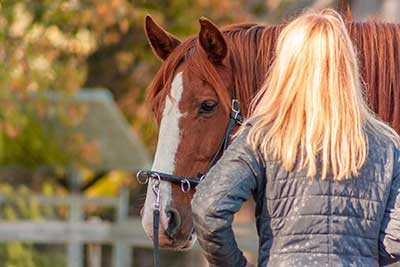
• Be kind to all the humans. All. Of. Them. Trainers, barn staff, grooms, farriers, vets, other riders, moms of other riders, visiting uncles of other riders, UPS delivery person, snow-plow person, hay-delivery person…everyone. Even in a small barn, you will meet a lot of people. 99 percent of them are hard-working people who love horses, even if some are a bit tired and jaded. Bond on the strength of that shared love of horses, and let any other concerns go.
• Be kind to all the horses. Do not feed horses that are not yours unless you have direct permission from their person, but being present and loving to every horse in the barn is always appreciated.
• Take care of your stuff. Keep your gear clean, put your stuff away, and clean up after your horse (including manure, hoof pickings, mane trimmings… all of it). Multiple trainer friends of mine requested repetition here: Put. Your. Stuff. Away. Sure, we all make mistakes and forget sometimes, but focus on this topic and apologize sincerely when you err.
• Wait your turn. If someone is talking to your trainer or barn manager or whomever, wait until they are done and then ask your question. Better yet, signal you want to chat, then walk away to give them some privacy.
• Wait, and be ready, for your turn in lessons. When you’re in a group lesson, let the trainer finish coaching the prior rider, but also be ready to go as soon as it is your turn. This can be like threading a needle; pay attention to the flow, and you’ll get in the groove.
• Share any barn concerns politely, privately, and early. Whether you are concerned about how your horse is being cared for or feel you’re not making as much progress as you like, you need to raise it politely and directly with your trainer or barn manager. This sounds obvious, but do not add your complaint to the petri dish that is the barn gossip machine. It doesn’t solve the problems and only makes it harder for the professionals trying to help you and your horse.
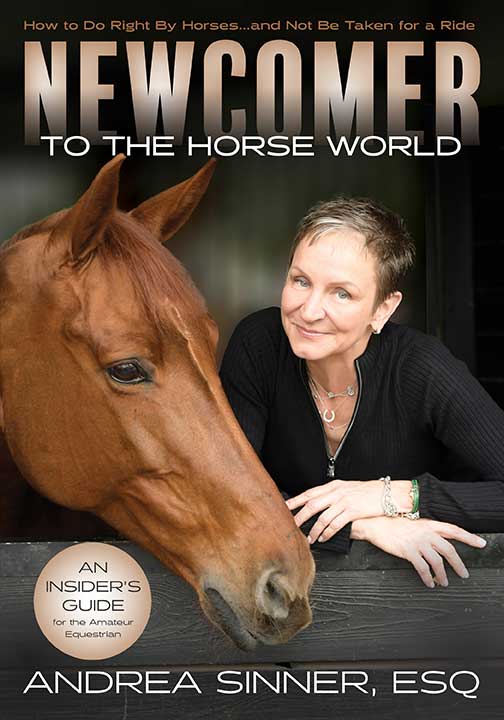 Newcomer to the Horse World: The Insider's Guide for the Amateur Equestrian
BUY NOW on Amazon
Paperback | Kindle
This excerpt is adapted from Newcomer to the Horse World by Andrea Sinner, Esq. and is reprinted here with permission from Trafalgar Square Books.
You can find more interesting reading in our section for Books. While you're here, check out our Curated Amazon Store for everything you need for a happy horse and rider.
- $10,000 Equestrian Merit Scholarship
- Non-GMO is NOT Necessarily Safe
- Consider Beet Pulp Instead of Oats
- Five Tips About Dummy Foals
- The Role of Nutrition in Managing Muscle Disorders
- Secrets of Successful Riding Instructors
- Horse Veterinarians in Alabama
- Horse Veterinarians in Alaska
- Horse Veterinarians in Arizona
- Horse Vet in Arkansas
- Horse Veterinarians in California
- Horse Veterinarians in Colorado
- Horse Veterinarians in Connecticut
- Horse Veterinarians in Delaware
- Horse Veterinarians in Florida
- Horse Veterinarians in Georgia
- Horse Veterinarians in Idaho
- Horse Veterinarians in Illinois
- Horse Veterinarians in Indiana
- Horse Veterinarians in Iowa