





Health & Education
We all want the best care possible for our horses. The Heath & Education section covers both Learning Institutions, Organizations as well as many sources for equine assistance including Veterinarians and Farriers.
For those who want a to formally study horses, the Education section includes College Riding, Equine Studies, and Veterinary Schools. Learn about the wide variety of horses in the Horse Breeds section. Supplements and Treatments Therapy are also included in the section.
Everyone can learn from Fine Art and there are some specialty Museums that might surprise you.
Horses as a therapy partner enrich the lives of the disabled. These facilities are listed in our Therapeutic Riding section. To help children and young adults build confidence and grow emotionally, please see the resources available on the Youth Outreach page.
Looking for a place to keep your horse? You can find it in the Horse Boarding section. Traveling? Find a Shipping company or Horse Sitting service if your horse is staying home!
Want to stay up to date with the latest training clinics or professional conferences? Take a look at our Calendar of Events for Health & Education for the dates and locations of upcoming events.
Do we need to add more? Please use the useful feedback link and let us know!
“32 and You: An Owner's Guide to Genetic Tests in Horses,” presented by Dr. Callum Donnelly, assistant professor in the Section of Theriogenology at #CornellVet, recorded February 20, 2024 via Zoom.
Dr. Callum Donnelly's talk focuses on horses' genetic health, discussing what kinds of genetics tests are offered, how to interpret genetic tests and what the future holds for genetics as a tool in your horse's health.
Donnelly received his veterinary degree from Charles Sturt University in Australia. He is a specialist in both reproductive medicine and internal medicine, and holds a Ph.D. in integrative pathobiology from the University of California-Davis. Donnelly’s thesis work focused on genomic and precision medicine as part of the Pioneer 100 Horse Health Project. He currently serves as a faculty member in the reproductive medicine section, and his clinical practice and research efforts are focused on maternal fetal health and medical genetics, helping to manage healthy and problem pregnancies, and providing advanced care for babies before they are born.
Read more: 32 and You: An Owner's Guide to Genetic Tests in Horses (55:02) - Cornell Equine Seminar
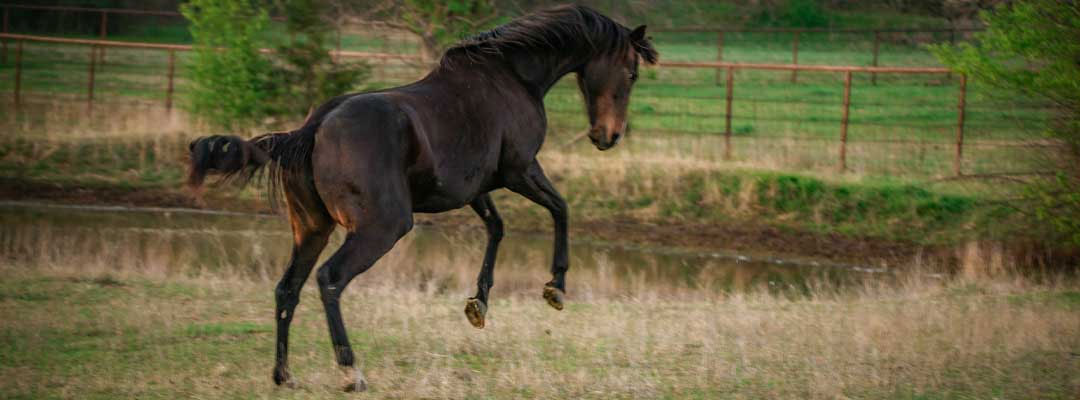
Is your horse bucking, rearing or generally misbehaving? Read up on the much-overlooked issue of pain in horses, as it relates to misbehavior.
She was asked to watch a horse move -- “Something just wasn’t right,” proclaimed the owner of a young Arabian. The mare was either “lazy” or bucking and rearing.
Robin Foster, Ph.D., certified equine behaviorist and university professor of 30 years, agreed that something was amiss. As she took note of the horse’s movement and behavior, she soon said to the owner, “I’m not a vet, but I have some ideas. You should get your vet out here to look at your horse. Something is happening in the hind end they may need to look at.” Through examination from her veterinarian, it was determined that this horse’s laziness was due to deformity in both stifles. The horse was experiencing such pain from carrying weight and moving forward that her veterinarians recommended bilateral surgery or otherwise, never ride the horse again.
Another horse, a 5-year-old off-track Thoroughbred mare, was also labeled as a “hot Thoroughbred” as she would often rear and bolt during training. When not asked to be on the bit, or when simply enjoying a light hack, her behavior was normal. The rider and trainers changed bits and switched disciplines from jumping to dressage, then to riding trails only. It was upon recommendation to involve a veterinarian that they learned the mare’s actions were not due to misbehavior. A series of X-rays revealed what the human eye could not see -- a C1 fracture of the vertebrae, nearest to the poll, causing her significant pain from bone-on-bone contact and arthritis.
“In my experience, horses almost never say ‘no.’ Horses can talk, and it is our job to learn how to speak their language and above all, to listen and be their advocate,” said Steve Allday, DVM, an equine lameness specialist with more than 35 years’ experience caring for an impressive list of equine athletes, including legendary racehorses A.P. Indy and Cigar.
Behavior vs. Pain
Dr. Foster shared how labeling horses a certain way such as “lazy” or “hot,” for example, isn’t uncommon. “When we label a horse’s behavior in a certain way, that becomes the truth about that horse,” Dr. Foster said. “And when the label becomes the truth, it’s hard to see past that and look for other explanations. What gets missed, though, can be signs of discomfort, pain and stress. The way horses express themselves when in pain and uncomfortable are seriously underrecognized.”
It is important to bring up any behavior-related issues with your veterinarian so they can look closely for any potential pain and discomfort during their regular exams. Of course, there are some signs of pain and discomfort that are more easily recognized, like limping, for instance. The milder pain states are more easily unrecognized, therefore resulting in horses commonly labeled as misbehaving, while they actually may be experiencing pain.
An Important Resource for Horse Owners
To help address the underrecognized signs of pain in horses, co-authoring Drs. Catherine Torcivia and Sue McDonnell, within the University of Pennsylvania School of Veterinary Medicine, published “Equine Discomfort Ethogram,” an incredibly detailed catalog of behaviors associated with equine physical discomfort. Drs. Torcivia and McDonnell outlined 73 specific discomfort behaviors and grouped them into eight categories: posture and weight-bearing; limb and body movements; head, neck, mouth, and lip movements; attention to area; ear and tail movements; overall demeanor; altered eating or drinking; and vocalizations/audible sounds. Interestingly, the report states, “Recognition of discomfort in a prey species is particularly challenging. Horses have evolved to show little evidence of discomfort or disability in the presence of predators, including humans.”
Their published work includes illustrations, written descriptions and even videos to demonstrate each pain-induced behavior. It is a treasure for horse owners and horse health providers, alike, and is deserving of a thorough read.
“Signs of discomfort and pain are often instead attributed to a horse’s personality. The identification of pain is an important gap commonly missed in equine welfare,” said Dr. Foster.
Managing Pain in Horses
You know your horse better than anyone else, often seeing them daily. Watch carefully for any new behaviors, and ask yourself whether these behaviors could instead be the result of pain. Work closely with your veterinarian for diagnosis and management of your horse’s pain and discomfort. There are a number of supplements for horses and prescription pain and inflammation medications available to help.
Help ensure your horse is living their healthiest, happiest and most comfortable life possible.
- The Power of Horses | Supporting Mental Health in Rural Communities (7:58)
- Tackling Thrush in Horses
- Addressing the Shortage of Equine Veterinarians: Nationwide Practices Join Together
- Rood & Riddle Stallside Podcast - Breaking Ground in Laminitis Research with Dr Andrew van Eps (38:13)
- Horse Miscarriages Offer Clues to Causes of Early Human Pregnancy Loss - Cornell Veterinary Medicine
- A 6-Step Guide to Keeping Your Horse Healthy
- Performing Treadmill Endoscopy at Rood & Riddle Equine Hospital (1:59)
- Rood & Riddle Stallside Podcast - Tall Fescue Woes: Insights on Endophyte Ingestion
- Rood & Riddle Stallside - Understanding Equine Biomechanics and Farriery with Dr Jenny Hagen
- Regenerative Medicine Therapies in Horses
- Educational Benefits of Equine-Assisted Learning Programs for Students
- Why is the Mule the Most Important Member of the Horse Family? Cornell Equine Seminar
- Five Tips for Keeping Your Horse Sound - Cornell Vet Equine Seminar Series
- Deworming the horse using a paste syringe with Teresa Kackert
- Stable Vices: Theirs or Ours? Abnormal Behavior in Horses
- FAQ: Lameness and Arthritis in Horses
- How to Safely Pony a Horse with Teresa Kackart (6:55) - Certified Horsemanship Association
- Equine Emergencies 101: What To Do When the Worst Happens from Cornell Equine Seminar
- Pre-purchase Headaches in the Sport Horse
- Sources of Magnesium - Including Whole Foods