


Health & Education
We all want the best care possible for our horses. The Heath & Education section covers both Learning Institutions, Organizations as well as many sources for equine assistance including Veterinarians and Farriers.
For those who want a to formally study horses, the Education section includes College Riding, Equine Studies, and Veterinary Schools. Learn about the wide variety of horses in the Horse Breeds section. Supplements and Treatments Therapy are also included in the section.
Everyone can learn from Fine Art and there are some specialty Museums that might surprise you.
Horses as a therapy partner enrich the lives of the disabled. These facilities are listed in our Therapeutic Riding section. To help children and young adults build confidence and grow emotionally, please see the resources available on the Youth Outreach page.
Looking for a place to keep your horse? You can find it in the Horse Boarding section. Traveling? Find a Shipping company or Horse Sitting service if your horse is staying home!
Want to stay up to date with the latest training clinics or professional conferences? Take a look at our Calendar of Events for Health & Education for the dates and locations of upcoming events.
Do we need to add more? Please use the useful feedback link and let us know!
by Paula Josa-Jones
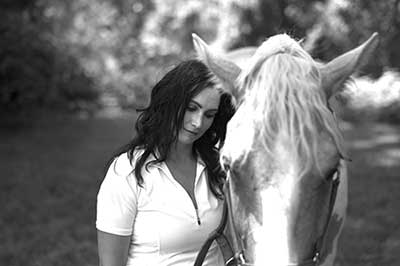
One of my teachers, the horseman Mark Rashid, is a black belt Aikido master and guides his students from the perspective that riding, like Aikido, is hard because you have to change yourself, and that it works well if you get yourself right. Through my life as a dancer and a choreographer—and a horsewoman—I’ve discovered how body-mind practices can help you get yourself right, so that when you are with your horse, you can listen to him and approach him from a place of generous and good intention, as well as an active awareness of what and how we are communicating from moment to moment.
Learning to connect with horses in this way teaches us how to develop our inner selves, become more comfortable in our own skin, be more trustworthy to ourselves and others, and gain greater skill, sensitivity, and resilience in social communication. This benefits our personal and work lives, sometimes in profound ways. Horses can help soften physical resistance and open wells of enthusiasm and creativity. Horses can help us learn that losing and finding balance is an integral part of life’s dance. That we can, like surfers, find, lose, and re-find balance on the crests and troughs of even the biggest waves, the most turbulent emotional and physical waters. They can help us to release our fears, our hesitancy, and become comfortable “on the edge,” where answers and inspiration arise spontaneously from an open, curious, and attentive mind and body.
Read more: How “Let’s Do It!” Can Change Your Horse Business…and Your Horse
By Marion E. Altieri for EIE
The National Science Foundation (NSF) doesn't give out grant money for research in the arena of animal health very often. Most of the millions of dollars that they distribute are allocated for studies in sciences, including medicine, that will benefit human health and welfare. Lexington equine veterinarian, Dr. David Nash, saw a need in horse health, and set forth to design and deliver PathTracker. The device has the potential to change not only equine health practice, but the future of human medicine, as well.
Dr. Nash and his team of scientists and engineers' PathTracker is a breakthrough so visionary, so insightful, that indeed the possibilities cross between the worlds of equine health and the future of allopathic medicine for humans. This is the sort of research and product that, 50 years ago, was envisioned only by Gene Roddenberry when first he conceived of the Universe through his own imagination via "Star Trek." (Tricorders in "Trek," used for communication and scanning patients for disease, became our smartphones and now—now have developed into Dr. Nash's PathTracker.)
The NSF received the grant application for PathTracker, and saw that this great work will move human medicine forward by leaps and bounds—and thereby granted the team a three-year grant in the amount of $999,950. The figure is astronomical—but the NSF recognizes that this project is not static, rather will advance science in ways that even the inventors may not realize yet. That which began as an advancement in equine medicine will one day become a lifesaver for thousands of humans, all around the world.
Administer booster vaccinations and target deworming treatments to help protect your horse’s health.
With fall here, it is important that you help protect your horse from emerging risks, such as equine influenza virus, equine herpesvirus (EHV) and parasites.
“If you have a horse that travels for fun or competition, it’s recommended that he be vaccinated twice a year against equine influenza and equine herpesvirus to help boost his immunity,” said Kevin Hankins, DVM, senior veterinarian, Equine Technical Services for Zoetis. “For horses at increased risk, I always suggest they booster Fluvac Innovator in the fall.”
While annual spring vaccinations help offer disease protection and can activate an immune response, the American Association of Equine Practitioners (AAEP) vaccination guidelines recommend at-risk horses be vaccinated for equine influenza and equine herpesvirus, also called rhinopneumonitis, every six months.1
How do you know whether your horse is considered at risk? Key disease risk factors include:
- Younger than 6 years old
- Older than 15 years old
- Stabled in boarding barns
- Traveling off-property or housed with horses that do
The best place to start supporting your Insulin Resistance (IR) horse is a low sugar and starch diet with a balanced intake of key minerals. Minerals have direct and indirect involvement in virtually every action in the body, and have important effects on IR and its consequences. IR is different in the horse than in the human, but the same basic principles apply, which is evidence of activated antioxidant defenses in the tissues of IR horses.
Building the horse’s own antioxidant basic defenses is most effective. This includes the SOD, catalase and glutathione peroxidase enzyme systems, as well as the antioxidants glutathione, CoQ10, carotenoids and vitamin A, flavanoids, and vitamins E and C. Glutathione is particularly widely distributed.
SOD absolutely requires copper and zinc. Catalase requires iron, which is not an issue as the typical equine diet supplies plenty of iron.
Glutathione activity depends on Selenium, a very common deficiency. Selenium is also essential for the generation of the active form of thyroid hormone, T3, from T4.
Zinc is a commonly deficient mineral. Low serum Zinc is associated with IR and type 2 diabetes in humans and rats. Supplementation of Zinc supports defenses against type 2 diabetes in rat models. Exactly why has not been determined. It is known that Zinc is important on several levels, involved in insulin release and sensitivity as well as being an antioxidant in SOD.
Read more: The Effect of Minerals on the Insulin Resistance (IR) Horse
by Marion E. Altieri for Equine Info Exchange
Hurricanes, tornadoes and other life-altering natural disasters descended on your community. You and your family were totally unprepared—or thought that you’ve been ready for years. But either way—the storm struck with a viciousness of biblical proportions—and you were left with few resources, if any. The realization that all your livestock, including horses and cattle, have been lost, disoriented or hopelessly scattered—is almost more than your human soul can bear.
You were just about to give up, to bury your face in your hands as uncontrollable tears originated in your war-scarred soul and coursed down your muddied face. Everything for which you’ve worked your entire life—seems to be gone. Your beloved horses, your priceless cattle—are gone with the wind…literally.
And then, you see a vision. Your discouragement turns to hope as you see them, a team of cowboys and their horses. Arriving in pick-up trucks and horse trailers, or actually on horseback, the brave, dedicated members of The Horseback Emergency Response Team (H.E.R.T.) has arrived—and you realize that your life’s work and love may not be lost, after all. Indeed, there is hope because the great State of Texas has official channels for dealing with your monumental problems—and, through H.E.R.T., they will do all they can to help restore your life to normal.
At some point, nearly every horse will need a leg wrap or bandage. However, an inappropriate bandage application can cause as many problems as a well-applied bandage can prevent. The key to successful bandaging begins with the proper materials and application. So, before you reach for the nearest roll of Vetrap, review some basic principles behind bandaging and wrapping legs:
- Evaluate Need
- Providing support for tendons and ligaments during strenuous workouts
- Preventing or reducing swelling after exercise or injury
- Protecting legs from impact
- Shielding wounds from contamination and assisting in healing1
For more severe cases or if you are in doubt, it’s always wise to consult your veterinarian when determining bandaging needs.

Dr. Kenton Morgan, senior veterinarian, Equine Technical Services, Zoetis, shares his answers to some of the most common questions horse owners have about controlling parasites.
Q: When is the best time to deworm my horse?
A: Horse owners need to take advantage of the environment and deworm when parasite levels can be at their highest — during the spring and fall — per American Association of Equine Practitioners (AAEP) guidelines. Horses at greater risk may need more frequent anthelmintic, or deworming, treatments. Spring is the best time to treat for encysted small strongyles (strongyles in the larval stage). Quest® Gel is a broad spectrum anthelmintic that with just a single dose, effectively treats and controls encysted small strongyles, bots and roundworms. A recent study shows Quest is nearly twice as effective in reducing egg counts as a double dose treatment of fenbendazole for five consecutive days.1
Q: How important is dosing to an accurate horse weight?
A: For your horse’s safety, and decreased risk for contributing to parasite resistance, it’s important to dose to your horse’s weight when deworming. Both under- and overdosing can contribute to safety and resistance issues. Download the Horse Weight Calculator mobile application from Zoetis to easily determine your horse’s weight.
by Patricia N. Saffran
Heather Kitching breeds stunning large spotted Thoroughbreds, at her Angrove Stud, Great Ayton, Yorkshire, UK. She began her breeding program in 2006, after a careful study of horse genetics. She says, “Sabino 1 (SB1) white patterning did not enter into our breeding program and SB1 is not a color variant for Thoroughbreds.”
Ms. Kitching explains, “I did not introduce Quarter Horses into our breeding program. We used horses who were tobiano [white on the legs and large clean white spots on the body] but that carried a high percentage of Thoroughbred. They were eventers carrying Irish blood. Our horses are over 92% Thoroughbred now, and the next generation will take them to 95.6% Thoroughbred. Although Sabino 1 does not appear in the Thoroughbred, there are many variants of the W gene [white patterning] in the Thoroughbred that I know of, at least two.”
- In Hot Pursuit of Thoroughbred and Quarter Horse High Colors
- Spring Grass Safety - A Review
- Must-Haves for Your Equine First-Aid Kit
- Tracking Down the Tobiano Legend
- Orphan Foals: Success is Possible
- Health, Horses, Healing and Hippocrates
- Broodmare Nutrition During Late Gestation
- ‘Anonymous Horses’: Kill Pen Rescues Come With Serious Health Risks
- Introducing the Rare, Colorful and Beautiful Knabstrupper Breed
- Horse Speak: The Equine-Human Translation Guide
- A Breed from the Appalachian Mountains, Introducing the Mountain Pleasure Horse!
- UHC Gelding Clinics 2017
- Walkaloosa Horses and Their Colorful Coats
- The Morgan Horse: America's First Breed
- Big, Black and Beautiful! The History of the Majestic Friesian Horse
- Unwanted Horse Coalition Releases New Operation Gelding Program Policies for 2017
- Introducing the Trakehner: The Oldest of Warmblood Breeds
- Profiling the American Quarter Horse, A Very Versatile Breed
- Small but Mighty! See the Benefits of Feed Balancers
- Is My Hay Green Enough?