





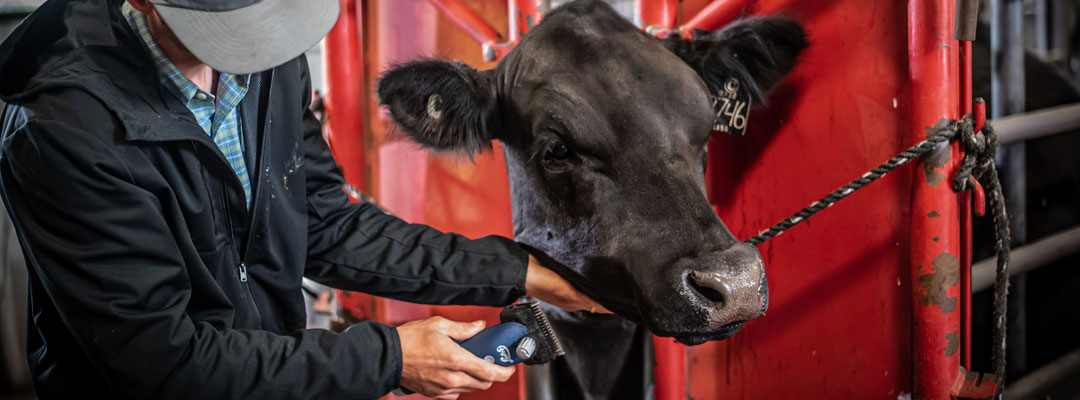
Clipping livestock or equine before a show does not have to be overwhelming. With so many clippers, blades, and styles to choose from, it is easy to get confused. Roxanne Zenner from Andis, breaks down what is needed to choose the right blades, maintain equipment, and clip effectively.
How to Choose the Right Blade?
Clipper blades can be found in detachable blades or adjustable blades.
All detachable blades are interchangeable with industry-standard clippers, including brands like Andis, Wahl, Oster, and Heiniger. Blades from different brands can also be used together, allowing flexibility for grooming needs. When changing out blades, turning the clipper on while installing ensures proper alignment. Detachable blades are made from stainless steel or ceramic. With ceramic, blades stay sharper longer, heat up slower, and leave fewer track lines, helping prevent going over the same spot multiple times. Blades are also available in wide or fine-tooth versions.
Adjustable blades, usually found on trimmers, allow manual changes to the cutting length and work best for cleanup rather than full-body clipping.
The numbers on the blades indicate hair length. Lower numbers leave hair longer, while higher numbers cut it shorter.
New to clipping? Start with guards on the blades. Guards provide a forgiving cut, reducing the risk of taking too much hair at once, and help develop a feel for the clippers and blades. Once confident, remove the guards for more precise, controlled strokes.
Corded or Cordless Clippers?
The choice between corded and cordless clippers often comes down to convenience, budget and preference. Cordless clippers match corded units in power and are ideal for barns or areas without easy access to electricity. Corded clippers provide uninterrupted power, which can be reassuring for longer clipping sessions.
Clippers are available in a range of speeds, from 2,500 - 6,500 strokes per minute, and can feature one-speed, two-speed, or five-speed options depending on the model.
How to Properly Maintain Clippers and Blades?
Proper blade maintenance prolongs the life of both the blade and the clipper. Oiling blades after each use is essential to prevent rust and preserve performance. For extended clipping sessions and disinfection, Cool Care Plus can be applied to blades to keep them cool and reduce the risk of spreading viruses.
Blade Care Plus can be sprayed directly on the blade or used to gently immerse and run the blade, rinsing away excess hair and buildup. Store blades properly, protected from the elements, to prevent rust and damage.
Blades should be replaced or sharpened if they leave track lines, snag or fail to cut smoothly. Slow performance or unusual noises may indicate that the Blade Drive or Hinge Assembly, located under the Drive Cap, need replacement.
How to Make Clipping Less Stressful for the Animal?
Before clipping, bathe and brush the animal thoroughly. This reduces stress for the animal, the clipper, and the handler. Introduce the clipper gradually, letting the animal feel the vibrations and hear the noise. Placing the running clipper gently against the animal helps them adjust before full clipping begins.
Understanding clippers, blades, and proper technique ensures a smooth grooming experience and helps animals look their best for any show.
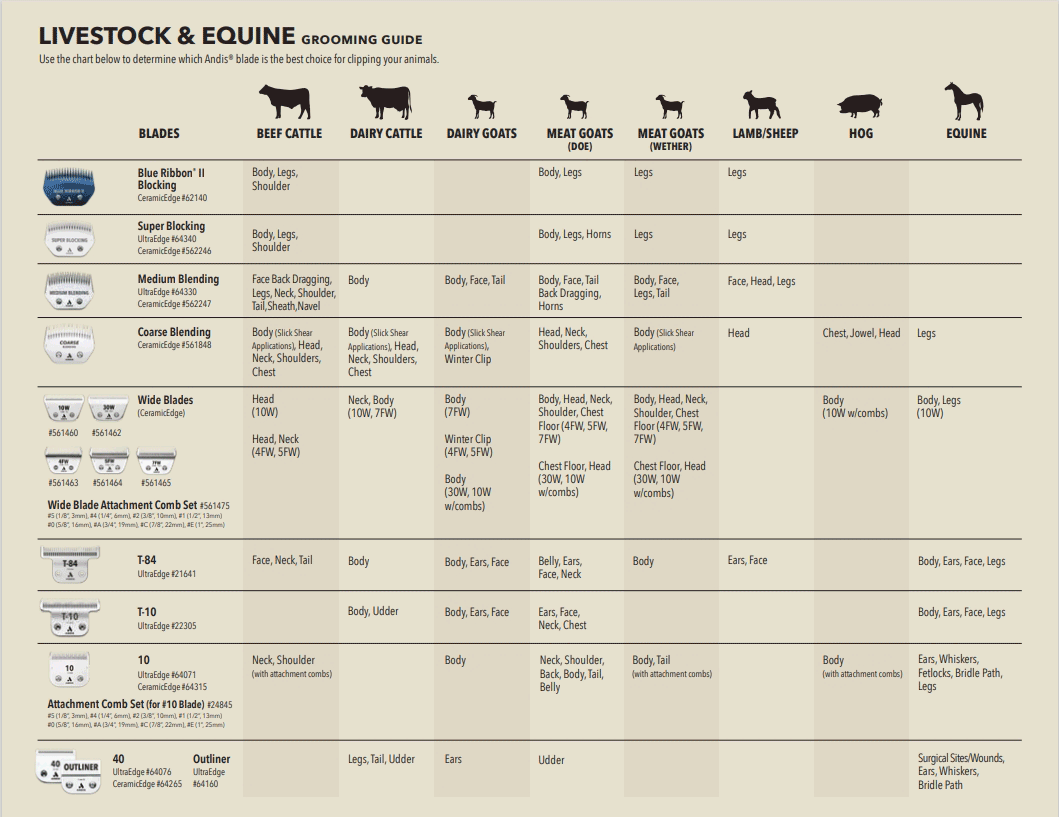
The chart below provides a quick guide to the best blade choices for different areas of the animal. Chart provided by Andis.
Whether for horse, livestock or pet, Valley Vet Supply is your one-stop shop for trusted care. Explore more of our show / grooming supplies category at ValleyVet.com.
All photos courtesy of Valley Vet.
There are more informative articles in our section on Health & Education. While you're here, take a look at our Curated Amazon Store.
Are you interested in promoting your business or sharing content on EIE? Contact us at info@equineinfoexchange.com