




Health & Education
We all want the best care possible for our horses. The Heath & Education section covers both Learning Institutions, Organizations as well as many sources for equine assistance including Veterinarians and Farriers.
For those who want a to formally study horses, the Education section includes College Riding, Equine Studies, and Veterinary Schools. Learn about the wide variety of horses in the Horse Breeds section. Supplements and Treatments Therapy are also included in the section.
Everyone can learn from Fine Art and there are some specialty Museums that might surprise you.
Horses as a therapy partner enrich the lives of the disabled. These facilities are listed in our Therapeutic Riding section. To help children and young adults build confidence and grow emotionally, please see the resources available on the Youth Outreach page.
Looking for a place to keep your horse? You can find it in the Horse Boarding section. Traveling? Find a Shipping company or Horse Sitting service if your horse is staying home!
Want to stay up to date with the latest training clinics or professional conferences? Take a look at our Calendar of Events for Health & Education for the dates and locations of upcoming events.
Do we need to add more? Please use the useful feedback link and let us know!
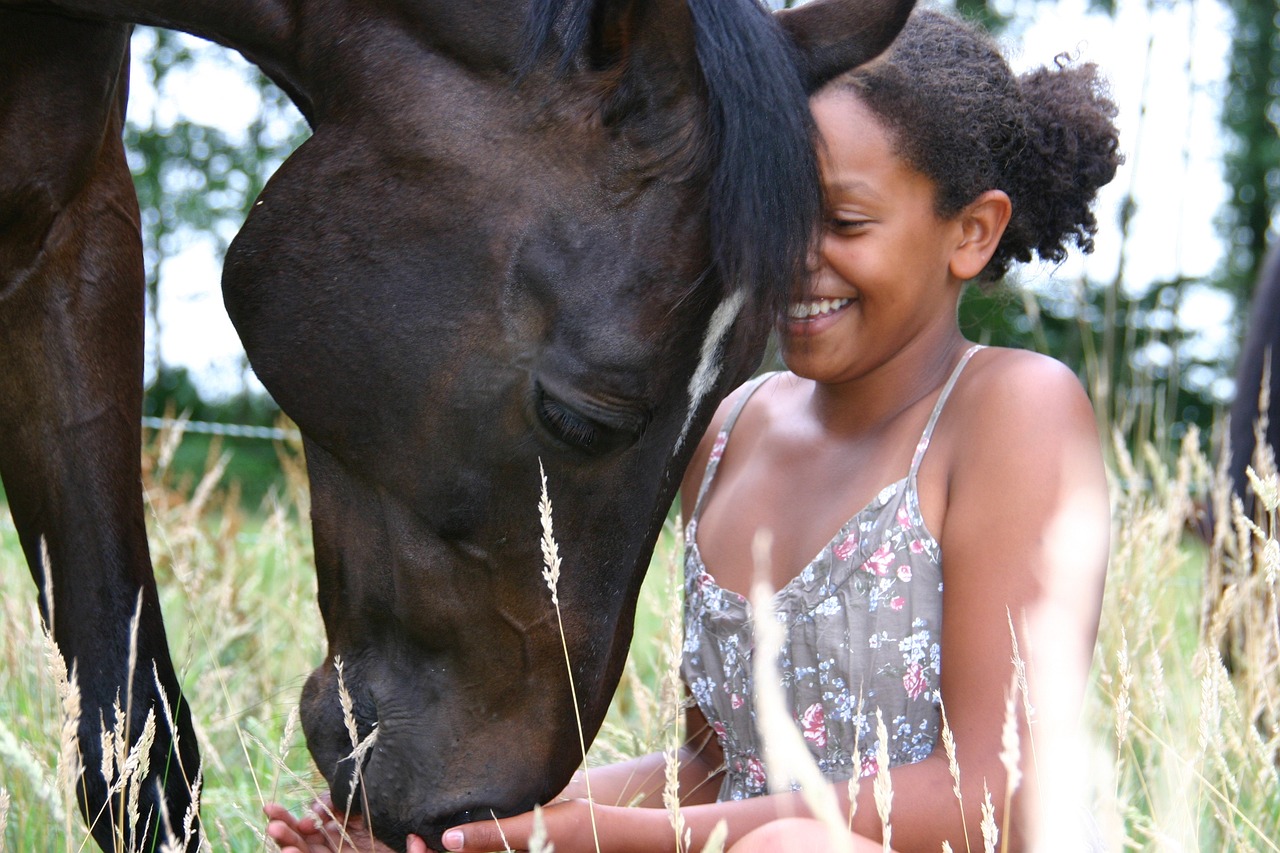
Cheerful horse behavior is encouraged through equine enrichment, such as toys for horses, social interactions and movement.
Four Signs of a Happy Horse
You love your horse and do everything possible to ensure his health through equine vaccines, horse wormers, the best supplements and more. And of equal importance to horse health, is horse happiness.
We asked Robin Foster, Ph.D., certified equine behaviorist and university professor of 30 years, how horse owners can know whether their horses are as happy as they are healthy. She shared with us four key characteristics of happy horses -- engaged, enriched, social and moving -- and explained more about each unique component.
Engaged
Happy horses are engaged with life going on around them. They are active members in their social groupings and attentive to, and eagerly willing to, explore their environment.
Enriched
“Enrichment opportunities for horses have really grown dramatically,” Dr. Foster said, crediting positive changes made in zoo environments for large animals in confinement. “Minimizing the effects of isolation, stress and limited movement -- zoos have these same challenges, and the equine industry has borrowed from that,” she said.
Enrichment falls under different categories, such as sensory, movement and feeding enrichment, which offers horses the opportunity to enjoy treats and work for food, such as with problem-solving horse toys. Cognitive enrichment keeps their mind working and burns energy,” Dr. Foster said.
“The first job is to make sure it’s something your horse will work for. Some horses love certain enrichment items, while for other horses, they just sit there. Shop around and experiment,” suggested Dr. Foster. Horses can learn the game rather quickly through their curious nature or by watching another horse. “When they can see other horses, they learn very quickly that food comes out of that thing and they will give it a good try,” continued Dr. Foster.
Social
It’s important that from an early age, horses have social interactions with other horses to meet their social needs. Depending on how horses are housed, they often have limited social time even at a barn with other horses. This is also true in the human-horse interaction.
“No matter how much you care for your horse, humans have very complex lives with many demands -- the horse being only one of many. Your life with your horse is maybe an hour a day. The amount of time a person spends with their horse can be limited, and what does the horse do the remaining 24 hours? If horses do not have a social life with other horses, and a rich, complex environment, you can bet that affects their overall behavior,” Dr. Foster said.
Moving
“Horses need the ability to move freely,” Dr. Foster strongly encouraged. Happy horses are free to run, roll, turn wildly, race around and kick up their heels -- not just move in a fixed way, such as lunging. All of this can play a role in a horse’s behavior.
“Horses able to move more freely are usually more physically fit for competition or riding. And mentally, they are more resilient and buffered against stressors,” Dr. Foster said. For example, think of how a barn-kept horse under saddle might react to a large owl spreading her wings to swoop from a tree, compared to a pasture-kept horse or one with intermittent turnout.
Consider these four characteristics as they relate to your own horse’s happiness. Is your horse displaying each of the four signs, or could a few changes be needed? Learn more information at ValleyVet.com to help keep your horses healthy and happy.
This article originally appeared on Valley Vet and is published here with permission. Valley Vet Supply was founded in 1985 by veterinarians for people just like you - people who want the very best for their four-legged friends and livestock.
There are more informative articles in our section on Health & Education.
What is it, when is it a problem, how to treat it.
- Core Conditioning for Horses - Book Trailer
- Respiratory Challenges in Horses, Part 1: Equine Influenza
- Horse Blanketing Guide
- FAQ: Is Your Horse Choking?
- Every Horse Needs These Five Things (2)
- Every Horse Needs These Five Things
- Horse Gentler Monty Roberts Tames a Wild Horse In Front of 30,000 Brazilians
- Body Condition Index: New Tool for Objectively Assessing Body Fat in Horses
- 5 Gaits of the Icelandic Horse (2:24)
- Respect the Power of the Horse's Instincts
- Rood & Riddle Stallside Podcast - Pioneering Equine Podiatry with Dr Scott Morrison (38:49)
- Time for a Change: Overwhelmed by the Pyramid? Try the Spiral!
- Three Supplements All Horses Need
- Monty Roberts' Join-Up in Brazil at the Barretos Rodeo Festival 2023 (2:54)
- Biomechanics Experiment: The Equine Spine - Neutral vs. Engaged
- What To Do If Your Horse Is Sick - A Checklist
- Good Riding Position with Ken Najorka (8:07)
- Horse Hoof Cracks 101
- Rood & Riddle Stallside Podcast - The Cost of Horse Ownership with Kate Hayes and Deb Reeder
- Equestrian Sports in Schools: Fostering Discipline, Teamwork, and Leadership Skills